
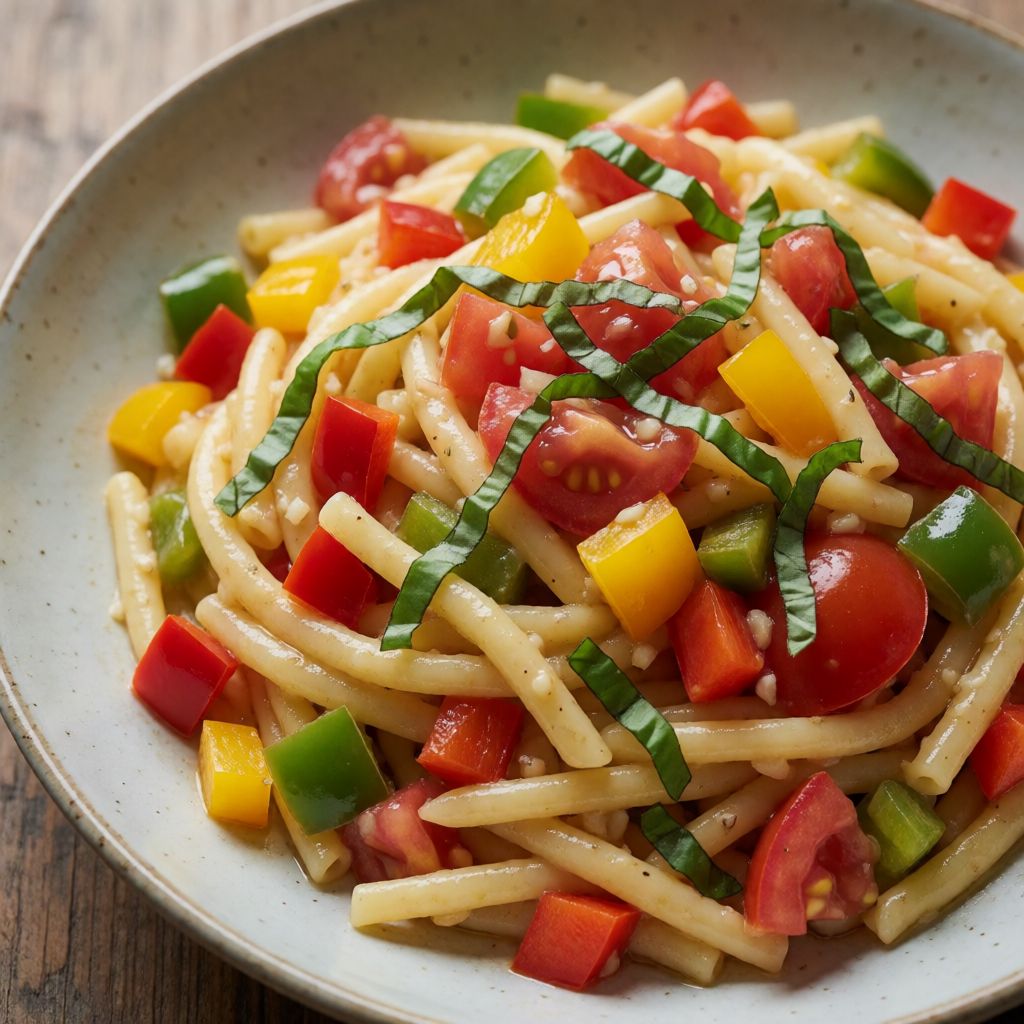
 AI photo
Cold Pasta with Peppers
A refreshing cold pasta dressed with sweet peppers, tossed and chilled before serving.
Labels are worked out automatically from the ingredients and can be wrong. Check the packaging if it matters to you.
Ingredients
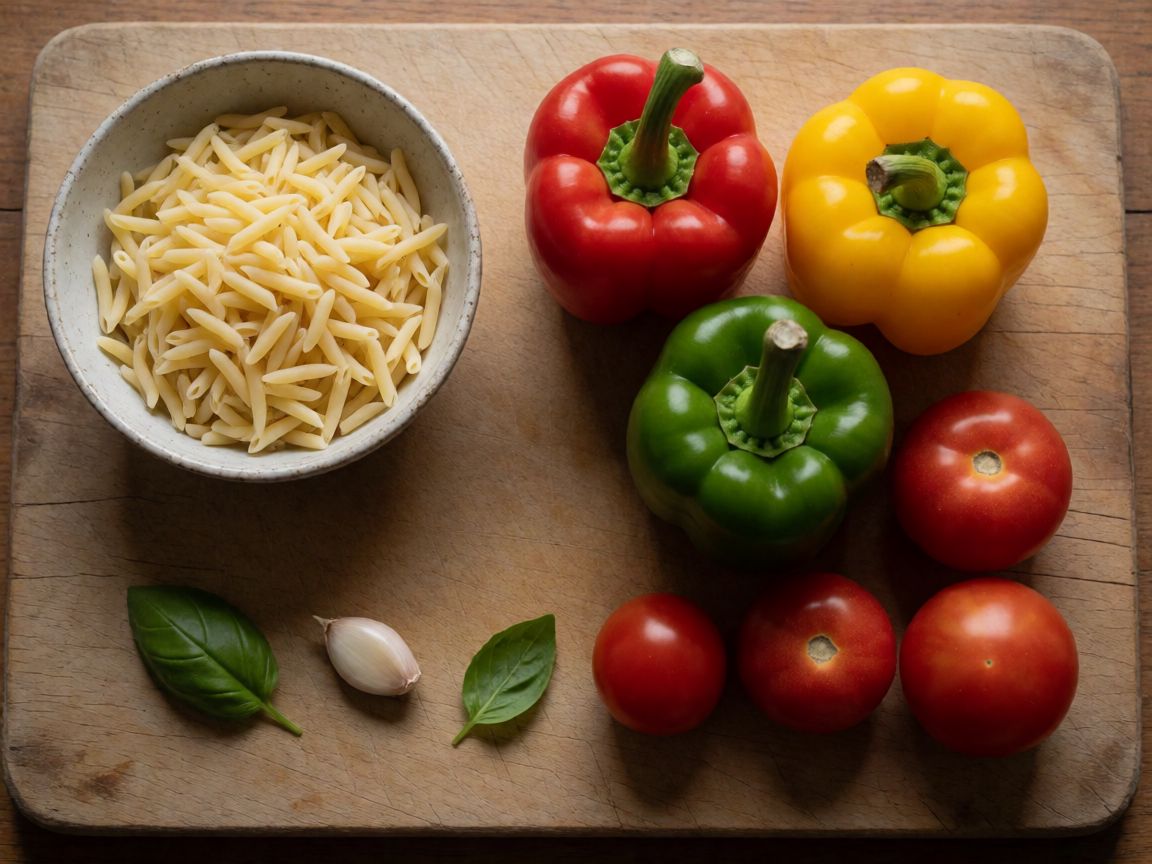
- 180 g Pasta short
- 3 pcs Peppers
- 8 pcs Cherry Tomatoes
- 1 clove Garlic
- 5 pcs Basil leaves
- Salt to taste
- Black Pepper to taste
- Extra Virgin Olive Oil to taste







Steps
Wash the peppers under running water, pat dry, cut in half and remove the white core and small seeds. Slice into thin strips.
10 minPut the peppers in a pan with the garlic and olive oil. Cover and simmer gently, adding a few spoonfuls of water from time to time.
15 minSeason the peppers with salt and remove from the heat.
1 minCook the pasta in plenty of salted water until al dente, then transfer to the pan with the peppers and toss gently, adding a little of the pasta cooking water.
10 minLeave to cool in a cool, dry place, then refrigerate for a few hours.
120 minServe the cold pasta with peppers, finished with a drizzle of extra virgin olive oil and garnished with cherry tomatoes and fresh basil.
This isn't leftover pasta that happened to go cold – it's pasta cooked specifically to be eaten cold, which is a different piece of engineering. The peppers are the engine of the dish; the pasta is really just there to carry them. If you get the peppers right, you have a dish; if you don't, you have warm (now cold) spaghetti with raw-tasting vegetable on top.
What decides it is how those peppers are cooked. Covered, low, with garlic and a splash of water added now and then – that's not a random instruction, that's the whole method. You're not frying the peppers, you're stewing them in their own steam plus a bit of borrowed water, so the flesh breaks down from the inside instead of blistering on the outside. That's what turns pepper from "raw and squeaky" into "soft and sweet." Some say peppers need a hard char, a blackened skin, to taste good – no, that's a different dish entirely, the smoky one you get off a flame or a grill. Here you want the opposite: no smoke, no bitterness from burnt sugars, just the pepper's own sweetness coaxed out slowly. Rush it with high heat and the outside collapses to mush while the inside stays stiff and bitter – that's the actual fault people blame on "bad peppers," when it was really bad heat.
Pasta: go for a short shape – fusilli, penne, something with a ridge or a hollow. Long strands rely on heat to stay loose and separate; once the oil cools, they clump into a single damp block, and no amount of tossing fixes that after the fact. Short shapes keep their own space even cold, and their ridges hold onto bits of pepper and oil instead of letting it pool at the bottom of the bowl. 180 g dry for two is a generous plate rather than a mean one – call it 90 g a head, which is on the fuller side of a normal UK portion.
Peppers: you want thick-walled, sweet ones – the blocky bell type, red or yellow leaning sweeter than green, which is really just the unripe version of the same fruit and carries more bitterness for it. Thin-walled chilli-type peppers won't do this job; they haven't got the flesh to collapse into softness, they'll just go stringy. Three peppers for two people sounds like a lot until you remember how much water cooks out of them – they shrink hard.
Garlic: one clove, in early, with the oil – its job is to perfume the fat, not to fry and brown. Garlic that catches colour turns bitter fast, and in a covered, gentle stew like this it has no business browning at all; if it does, your heat's too high for the peppers too, which is as good a warning sign as any.
Olive oil, extra virgin, doing two separate jobs. The oil that cooks with the peppers is a carrier – it takes up the garlic's flavour and the pepper's released sugars, and some of its own more delicate aroma cooks off in the process, which is fine, that's not its job here. The oil you drizzle on at the end is doing the opposite job: it's there raw, for its own smell, grassy or peppery depending on the bottle, and that smell is exactly what heat destroys. That's the whole reason for a finishing drizzle existing as a separate step rather than just using more oil in the pan. If you don't have extra virgin, any oil with genuinely no smell of its own will carry the peppers fine for the cooking stage, but skip the finishing drizzle with it – a neutral oil has nothing to contribute raw, it'll just sit there being oil.
Basil and cherry tomatoes go in raw, at the very end, and stay raw. Basil's smell lives in oils that are easily knocked out by heat – cook it and you get a faint, bruised, slightly bitter ghost of basil instead of the real thing. Tomatoes here aren't cooked down into the sauce; they're a cold, sharp, sweet counterpoint to pepper that's been slow-softened into something almost jammy. Halve them if you want them to actually release some juice onto the plate rather than roll off the fork.
This kind of dish exists in the first place for a practical reason, not a romantic one: in hot countries you don't want to be lighting a stove at lunchtime in August, so you cook once, in the cooler morning, and eat cold later. In a British kitchen that urgency isn't there in quite the same way, but the convenience still is – it's a dish built to be made ahead, which suits a Sunday where the oven's already busy with something bigger. Salt and black pepper are both "to taste" because the sweetness of the peppers varies with the batch – taste before you season at the end of the stew, not after, since you can't fix a dish once it's cold and in the fridge without everything tasting of afterthought.