
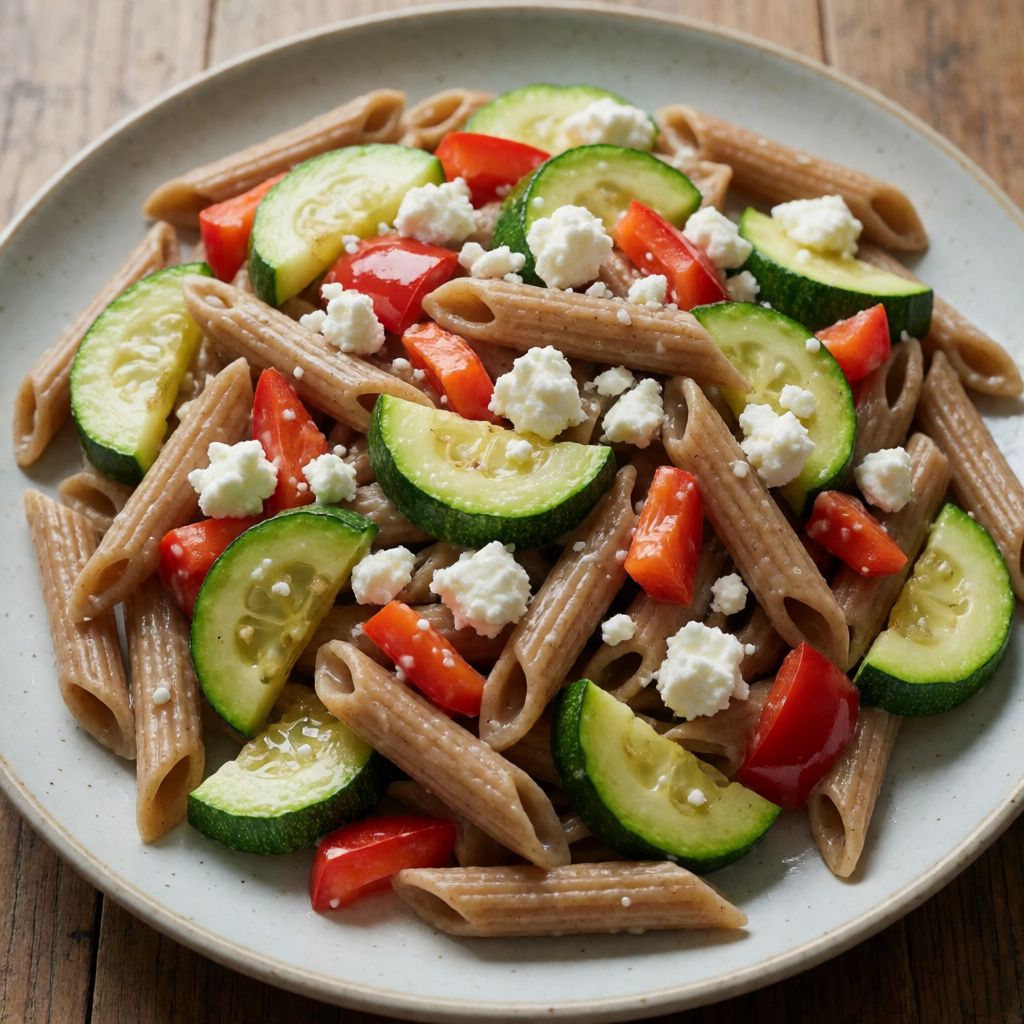
 AI photo
Cold Wholemeal Pasta with Courgettes and Feta
A refreshing cold wholemeal pasta salad with courgettes, pepper, feta and basil, perfect for warm days.
Labels are worked out automatically from the ingredients and can be wrong. Check the packaging if it matters to you.
Ingredients






Steps
Thoroughly wash the vegetables, trim the ends off the courgettes and cut them into small cubes. Deseed the pepper and cut it into medium pieces.
Heat the olive oil in a frying pan, add the courgettes, after 4–5 minutes add the pepper, season with salt and cook, stirring, for 10–15 minutes.
15 minBring a pot of water to the boil, add salt, add the pasta and cook until al dente.
Cool the pasta under cold water in a colander, transfer to a bowl, add olive oil and mix.
Add the cooked vegetables to the pasta.
Cut the feta into small cubes and add to the bowl, then mix.
Tear the basil (or mint) leaves by hand and add to the dish.
Chill in the refrigerator for about 30 minutes, then serve.
30 min
This isn't a pasta dish that happens to be eaten cold - it's a salad that happens to use pasta. The whole thing is built, then rested, then served cold, and that changes what "doneness" even means here. What decides whether it works: whether the pasta still has a spine once it's chilled, whether the courgette gave up its water before it ever touched the pasta, and whether you actually give it the half hour in the fridge rather than treating that as optional downtime while you lay the table.
Some say you never rinse pasta under cold water - a chef taught you that, and for good reason, but only for one situation: hot pasta going straight into a hot sauce, where the starch clinging to the strands helps the sauce grip. Here you want the opposite. You want each piece cool, separate, not gluing itself to its neighbours as it sits in a bowl in the fridge for half an hour. Rinse it. That's not a shortcut, it's the correct move for a dish that's going to be cold.
The courgette is doing more work than it looks like. Cut small, it cooks through fast without needing real heat - you're not browning it, you're driving water out of it in the pan so it doesn't drive that water into your salad later. Skip that, or rush it, and you get a bowl that's swimming by the time it's chilled, because cold watery vegetable plus salt plus time in the fridge is exactly how you make more liquid, not less. The pepper goes in later for the opposite reason: it doesn't need to lose water, it needs to keep some crunch, so less time in the pan is correct, not lazy.
Wholemeal pasta isn't here for virtue, it's here for structure. White pasta, once it's cooled and sat in oil and gone a bit limp, tends toward sticky and a little slick - the surface starch and the softer gluten network don't hold a shape once the heat's gone. Wholemeal has more bran and fibre running through it, and that gives it a firmer bite that survives cooling. If you only have white pasta in the cupboard, use a short sturdy shape - fusilli, penne - not spaghetti, which has no body to lose once it's cold. Cook it properly al dente, if anything slightly under, because it carries on softening a touch as it cools and sits dressed in oil.
Courgette: pick ones that feel heavy and firm for their size, not soft at the ends - a courgette that's starting to go soft is already losing its own water before you've even cut it, and you'll be fighting a wetter dish from the start. Cut it small and even, because big chunks cook unevenly - the outside softens before the inside's released anything, and you end up with watery outsides and raw middles in the same piece. No courgette, no real substitute that behaves the same way - a firm aubergine cut small and cooked the same way is the closest thing, but it drinks more oil, so go lighter on the pan.
Pepper is mostly colour and a clean crunch against the softer courgette and the salty cheese - any colour works, it's a textural and visual contrast, not a flavour you're building the dish around. If you don't have one, a handful of raw cherry tomatoes halved at the end does a similar job of waking the dish up, though it brings its own water, so add it right before serving, not at the chilling stage.
Feta: buy the block, not the pre-cubed tub - pre-cubed sits in brine that's often thinner, and the cheese dries out faster once it's exposed to air in your fridge. Cut it yourself, cubes the same rough size as your courgette, so you get a bit of everything in each forkful rather than one bite that's all cheese. If feta's not to hand, any firm salted white cheese that holds a cube shape without crumbling to dust will do - a similar Mediterranean brined cheese works, but skip anything soft or very mild, since the whole dressing here leans on feta's saltiness rather than any added salt beyond what's in the pasta water.
Basil or mint, torn by hand rather than cut with a knife - a blade bruises the leaf along a clean line and the cut edges go dark and bitter-tasting faster, especially sitting in oil in the fridge. Tearing is rougher on the leaf in one sense but it means the damage is scattered, not concentrated, and the leaf keeps its colour and its smell longer through the chilling time.
The thirty minutes in the fridge isn't there to make the dish cold - it's already cooling as you rinse and mix. It's there so the oil, the courgette's released liquid, and the feta's salt actually move through the pasta rather than sitting as separate layers in the bowl. Dishes like this - olive oil, courgette, feta, built cold and kept in the fridge - made sense once those ingredients became ordinary supermarket shelf items rather than imports for the few, and they suit a kitchen built around the week's planning: cook once, eat across a couple of days, no reheating needed, no fuss on the day you actually want to eat it. That's not nostalgia, that's just a sensible use of a fridge.