
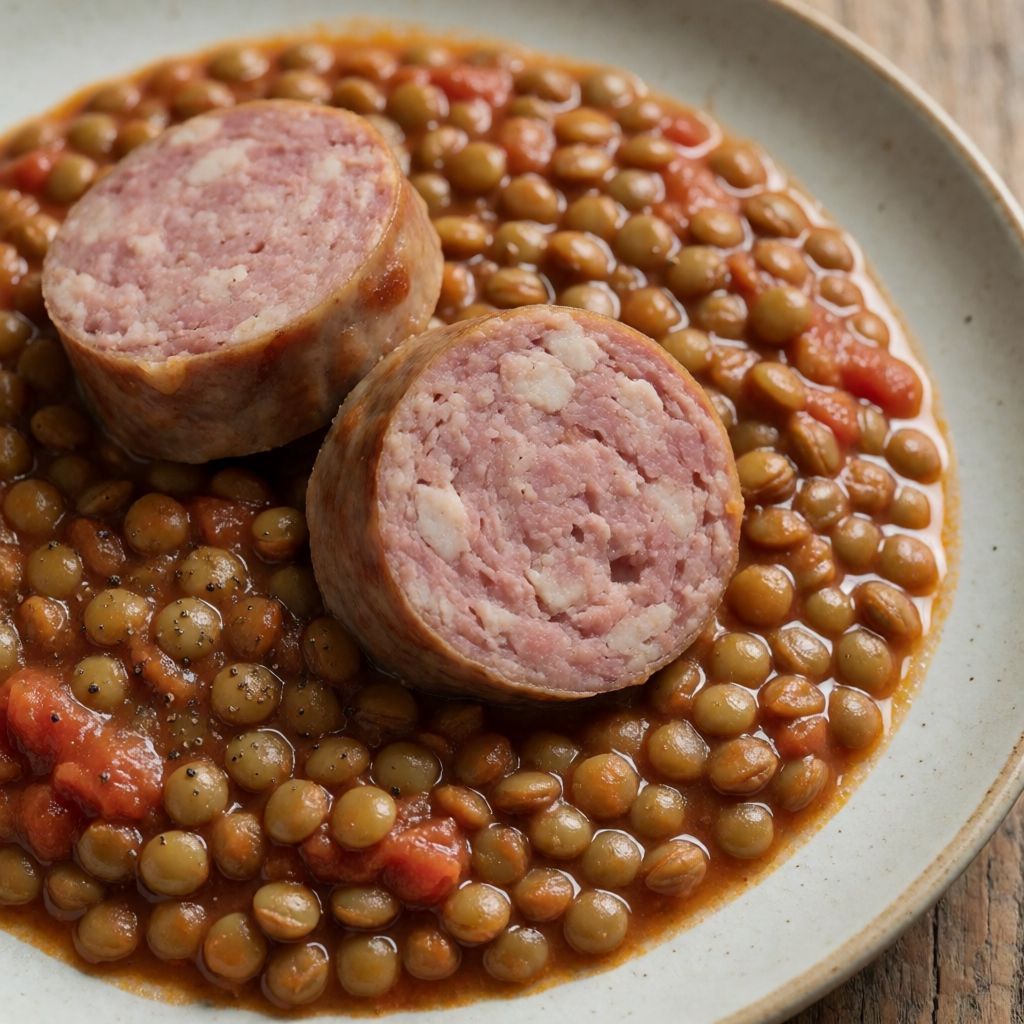
 AI photo
Cotechino with Lentils
A hearty Italian-style sausage simmered and served over slow-cooked lentils in a garlicky tomato sauce.
Ingredients
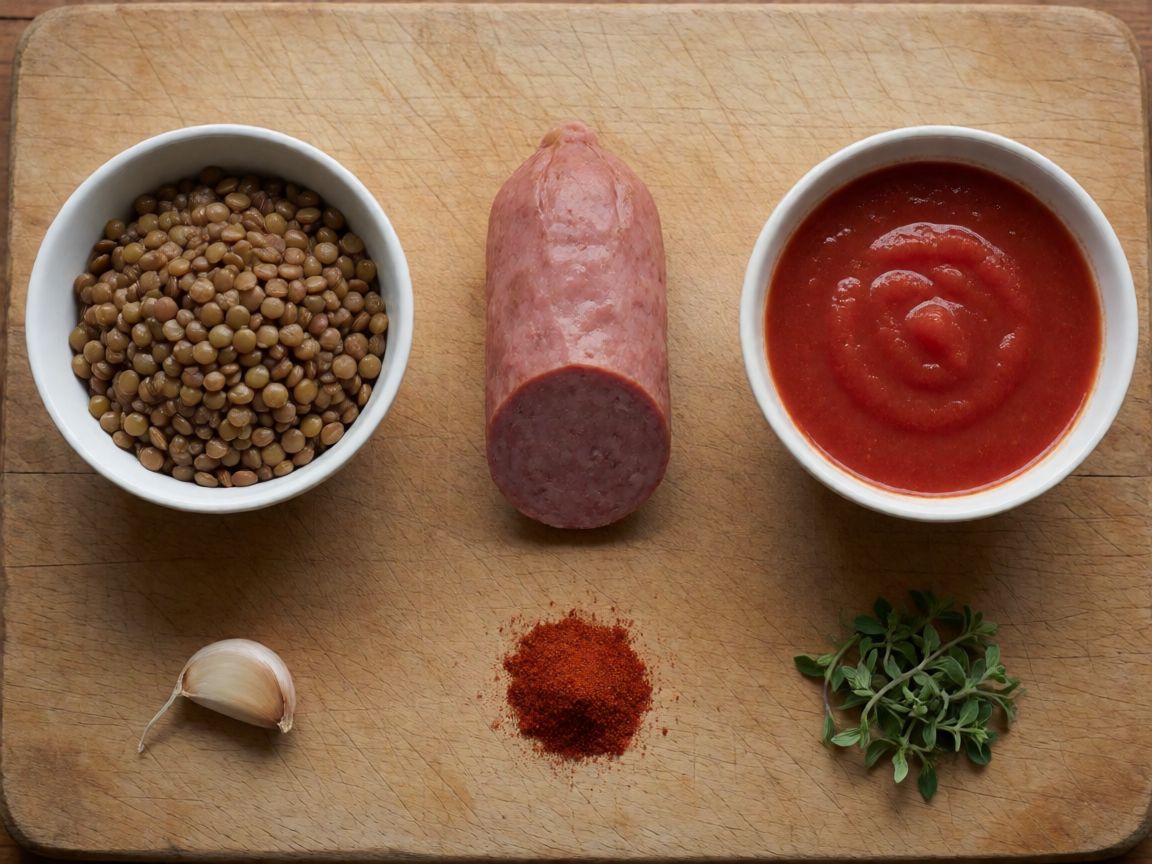
- 250 g Lentils, hulled
- 1 pcs Cotechino sausage
- Salt to taste
- Black pepper to taste, freshly ground
- Olive oil to taste
- 300 ml Tomato passata
- 1 clove Garlic
- 1 tsp Paprika
- Marjoram to taste, fresh or dried, for serving









Steps
Heat the olive oil in a saucepan, fry the garlic until golden, then add the paprika.
Pour in the tomato passata and cook over medium heat.
5 minBlanch the lentils for a few minutes or soak them in cold water, then drain.
Add the lentils to the sauce with a glass of hot water.
Cook over low heat, checking the consistency.
40 minBring water to the boil, lower the cotechino in its packaging and cook for 20 minutes from boiling.
20 minDrain the cotechino, remove the packaging and slice it.
Add the cotechino slices to the lentils, stir gently and cook for a further 5 minutes.
5 minServe drizzled with olive oil and seasoned with black pepper and marjoram.
Cotechino with lentils is New Year's dinner in Italy, and the whole dish is built on a superstition that happens to be good economics. Lentils look like small coins, so eating them on 31 December is supposed to bring money in the year ahead. Nobody's getting rich off a bowl of pulses, but the pairing survives because it's genuinely sound cooking: a fatty, intensely savoury pork sausage needs something starchy and a bit earthy to soak it up, and lentils do that without competing for attention. This isn't a dish that photographs as fireworks — it's brown, it's humble, it's exactly what you want after you've already eaten too much that week.
What decides whether it works is restraint in two places: the sauce and the sausage. The tomato-paprika base is there to carry the lentils, not to become a separate stew — cook it down just enough that the paprika stops tasting raw and starts tasting warm, then let the lentils take over the pot. And the cotechino must never be boiled hard. It's a casing stuffed with coarsely ground pork, skin, and fat; a violent boil will split that casing and you'll be fishing sausage out of your cooking water. A gentle, steady simmer, lid half on, is what keeps it whole.
Cotechino itself is a specific thing, not just "a sausage" — it's a Modena speciality traditionally made from the less noble cuts of the pig: skin, rind, fat, and some lean meat, seasoned and stuffed into a casing, sold raw and needing a long simmer before it's edible. The name comes from cotica, pig skin. That's the whole reason it comes pre-wrapped and gets cooked in its own packaging: the collagen from the skin needs slow, wet heat to turn soft and almost gelatinous, and the plastic-and-string wrap holds the shape together while that happens. If you can't get real cotechino in a British shop, a good fresh Italian-style pork sausage with high fat content and some coarse texture will get you closer to the spirit of it than a lean British sausage will — the fat is not a flaw here, it's the point, because the lentils need something rich to cut through.
The lentils should be the small brown or green type that hold their shape — not the split red ones that dissolve into soup. Hulled lentils, as the recipe calls for, cook faster and more evenly because the tough outer coat that slows water absorption is gone; that's also why you don't need to soak them overnight the way you might with dried chickpeas. A quick blanch or a short soak in cold water does the same job on a smaller scale: it softens the surface so the lentils don't fight the tomato sauce for cooking time.
The garlic and paprika are there to give the tomato base a backbone before the liquid dilutes everything. Fry the garlic only until it turns gold, not brown — past gold it turns bitter, and no amount of tomato will mask that bitterness later. Paprika goes in straight after, off the harshest heat, because paprika scorches fast and scorched paprika tastes like ash, not spice. Any mild, flavourless oil works for the frying — olive oil is traditional and gives its own character, but if you only have sunflower or a neutral vegetable oil, that will do the frying job; just use olive oil for the drizzle at the end, where its flavour actually gets tasted raw.
Tomato passata is simply sieved, smooth tomato pulp — no seeds, no skin. If you can't find it, a tin of good plum tomatoes blitzed and strained will give you nearly the same consistency; just don't substitute tomato purée straight from the tube undiluted, because that's concentrated and will throw off the salt and acid balance of the whole dish.
Marjoram at the end is a finishing herb, not a cooking one — its flavour is light and disappears if it goes in with the sauce at the start. Scatter it on at the table, the same logic as finishing a roast with fresh thyme rather than cooking it to death in the gravy. If you don't have marjoram, oregano is its closest relative and will do the job, though it's a touch more assertive, so use less.
On patience: this is not a dish you rush by turning the heat up. The lentils need forty minutes of low, steady simmering to take up the sauce and go tender without turning to mush, and the cotechino needs its full twenty minutes in barely-bubbling water to render properly. If you're impatient with either, you get grainy lentils sitting next to a sausage that's still tight and underdone in the middle. Put the kettle on for your tea, sit down, and let the pot do its slow work.