
 AI photo
Custard and Cream Baskets
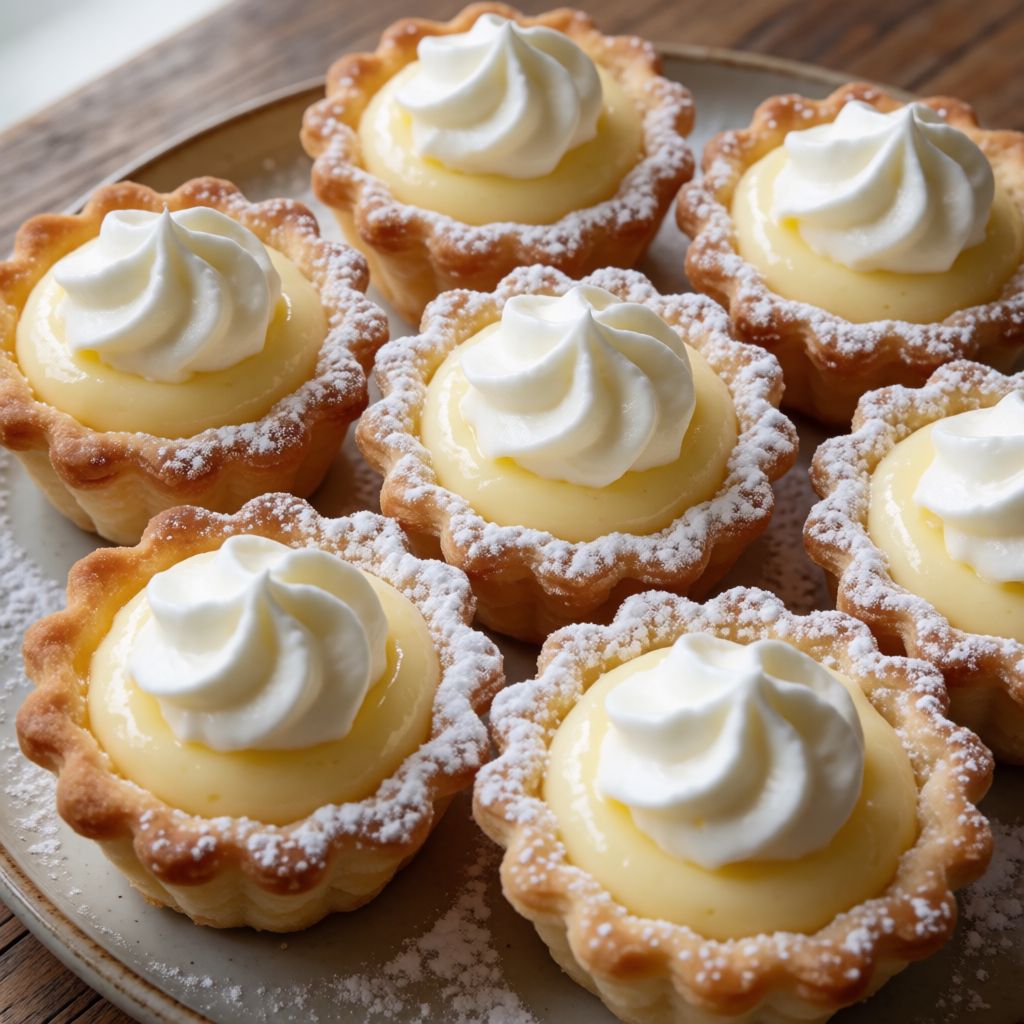
Delicate sponge baskets filled with custard and whipped cream, finished with a piped cream swirl.
Labels are worked out automatically from the ingredients and can be wrong. Check the packaging if it matters to you.
Ingredients
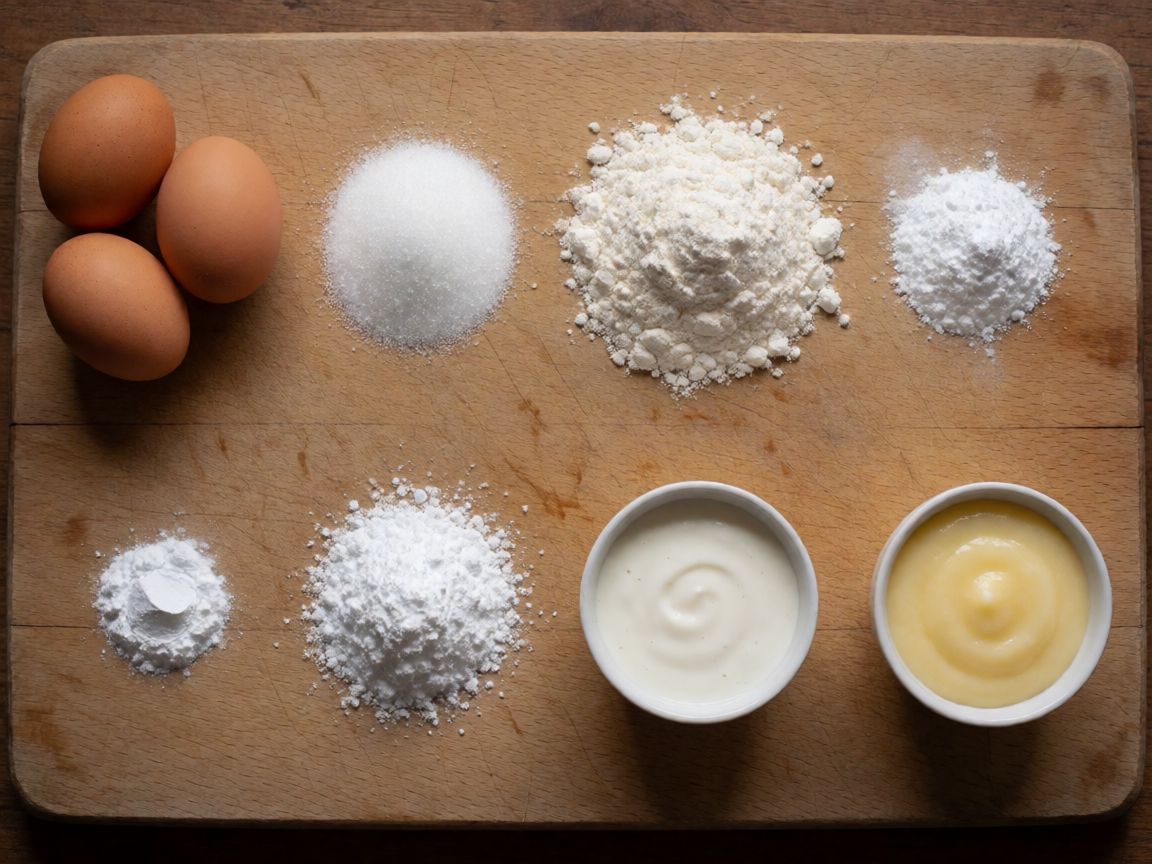
- 4 pcs Eggs
- 200 g Caster sugar
- 250 g Plain flour
- 250 g Vegetable oil
- 1 package Baking powder one standard sachet
- Icing sugar to taste
- 0.5 l Double cream
- 1 l Thick custard (crème pâtissière) a set, spoonable custard, not the pourable kind








Steps
Beat the eggs in a bowl, add the sugar, flour and oil, and mix until smooth. Stir in the baking powder at the end.
Fill paper cases about halfway with the batter and bake at 180°C.
15 minOnce baked, let the little cakes cool completely.
Make a wide hole in the centre of each cake and lightly soak it with liqueur, cream or coffee.
Mix the thick custard with half of the whipped cream and fill the centre of each cake.
Using a piping bag, pipe an S shape with cream in the centre of each cake.
Cut the reserved sponge discs in half and use them as two wings on either side of the S.
Dust with icing sugar.
What you're building here is a British butterfly bun wearing different clothes. Take away the custard and cream, and the geometry is exactly the one in every school tea: a small risen cake, a disc cut from its crown, the hole filled, the disc halved and stuck back in as two wings, a swirl piped between them to look like a body. Only here the swirl is an S instead of a buttercream dollop, and the filling is custard lightened with cream instead of plain butter icing. Someone clearly looked at the old fairy cake and asked: what if the filling actually had some substance to it?
What decides whether this works has nothing to do with decoration and everything to do with two separate structural jobs. First, the sponge has to rise cleanly and then go completely cold before you touch it with a knife — cut into a warm crumb and it collapses instead of holding a cavity. Second, the custard has to be thick enough to sit in that cavity and hold a piped shape on top without slumping; if it's the pourable kind, it runs out of the hole the moment you turn your back, and no amount of whipped cream folded in will save it.
The batter itself is forgiving by design: oil, not butter, carries the fat, baking powder carries the lift, eggs are there for structure and richness, not for aeration. That's worth knowing before you start whisking the eggs like you're making a sponge that depends on trapped air — you're not, and tired arms won't buy you anything here.
Eggs here do a structural job, not an aeration job. Beat them just enough to break them up and loosen the sugar into them — you're not chasing ribbon stage, because the rise in this cake comes from the baking powder, added last, not from whipped-in air. That order matters: baking powder starts reacting the moment it meets moisture, so it goes in right before the tin, not at the start of mixing. Mix it in early and by the time the cake reaches the oven, half the lift has already fizzed away into the bowl instead of the crumb.
Oil instead of butter is not a modern shortcut, it's the right tool for a cake that's going to sit filled with cream in a fridge. Butter sets hard and waxy once cold — bite into a butter sponge straight from the fridge and the fat feels like a film on your teeth. Oil stays liquid at fridge temperature, so the crumb stays soft no matter how long these sit on a plate under a napkin before tea. Any oil with no smell of its own does the job — sunflower, rapeseed, a plain vegetable oil. Olive oil is the wrong substitution here; it brings its own flavour to a cake that's meant to taste of custard and cream, not of itself.
180°C is the point where the egg protein and the starch in the flour set fast enough to hold the crumb's shape before the gas from the baking powder can escape and let it fall. Fill the paper cases only halfway — the batter still has to rise into that empty top half, and a case filled to the brim either overflows onto your tray or domes and cracks before it's cooked through. Fifteen minutes is where you start checking, not where you stop: press the top and it should spring back, or push a skewer in and pull it out clean. A fan oven runs hotter for the same dial number than a conventional one — knock the temperature down if that's what you've got, or you'll get a cake with a set crust and a wet middle.
The hollowing and the soak are where people usually overdo things, so let me name the myth: some say soaking a sponge makes it soggy — no, because a light brushing of liqueur, cream or coffee into the cut crumb isn't drowning it, it's seasoning a dry surface that's about to sit next to a wet filling. A sponge with no moisture at all against custard tastes like cardboard next to cream; a sponge drenched in syrup is a different fault, and the fix for both is the same restraint — brush, don't pour.
The custard has to be the set kind, the sort you'd spoon out of a bowl, not pour from a jug — that's the starch doing its job of gelling the milk and egg into something with enough body to sit in a cavity and hold a piped shape. Folding in half its volume of whipped cream isn't decoration either: pure custard on its own is heavy and a little eggy on the tongue, and whipped cream carries air that custard can't carry by itself. Fold gently, because that trapped air is the whole reason the filling feels light instead of stodgy, and overworking it after whipping just beats the air straight back out.
The discs you cut from the centre of each cake aren't offcuts to throw away — halved and pressed in either side of the piped S, they become the wings, and that's the whole dish built on not wasting the part you removed. I don't know who first decided to pipe an S instead of the usual swirl, but the thrift of reusing the cut-out crumb is the same logic behind every fairy cake and butterfly bun going back generations in this country — sugar and eggs were never cheap enough to throw bits of cake in the bin for the sake of looks. The icing sugar at the end is just contrast on the eye and a last touch of sweetness on a filling that's otherwise all custard and cream — it does nothing structural, so don't worry about exact amounts, only about not burying the S underneath it.