
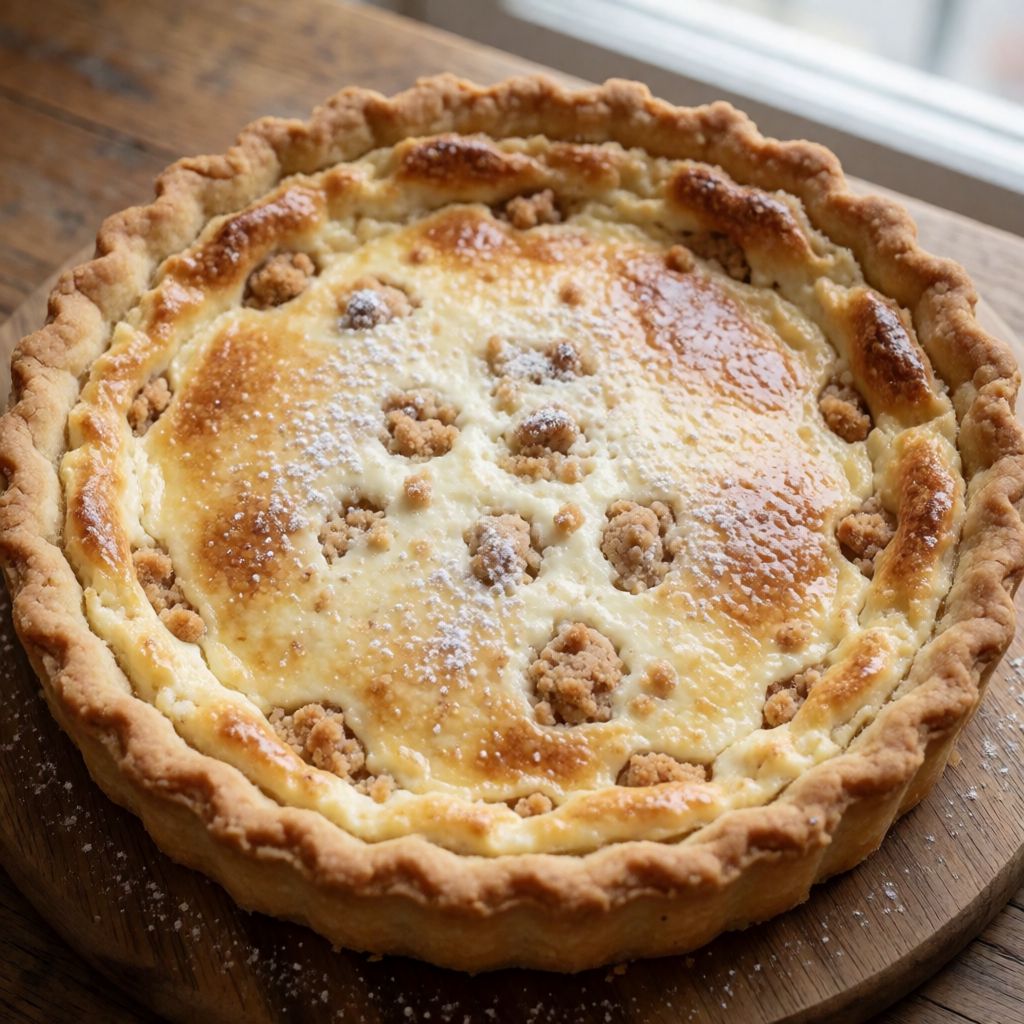
 AI photo
Crostata with Ricotta and Amaretti
A crumbly Italian shortcrust tart filled with a sweet ricotta and crushed amaretti cream, topped with a lattice crust.
Labels are worked out automatically from the ingredients and can be wrong. Check the packaging if it matters to you.
Ingredients
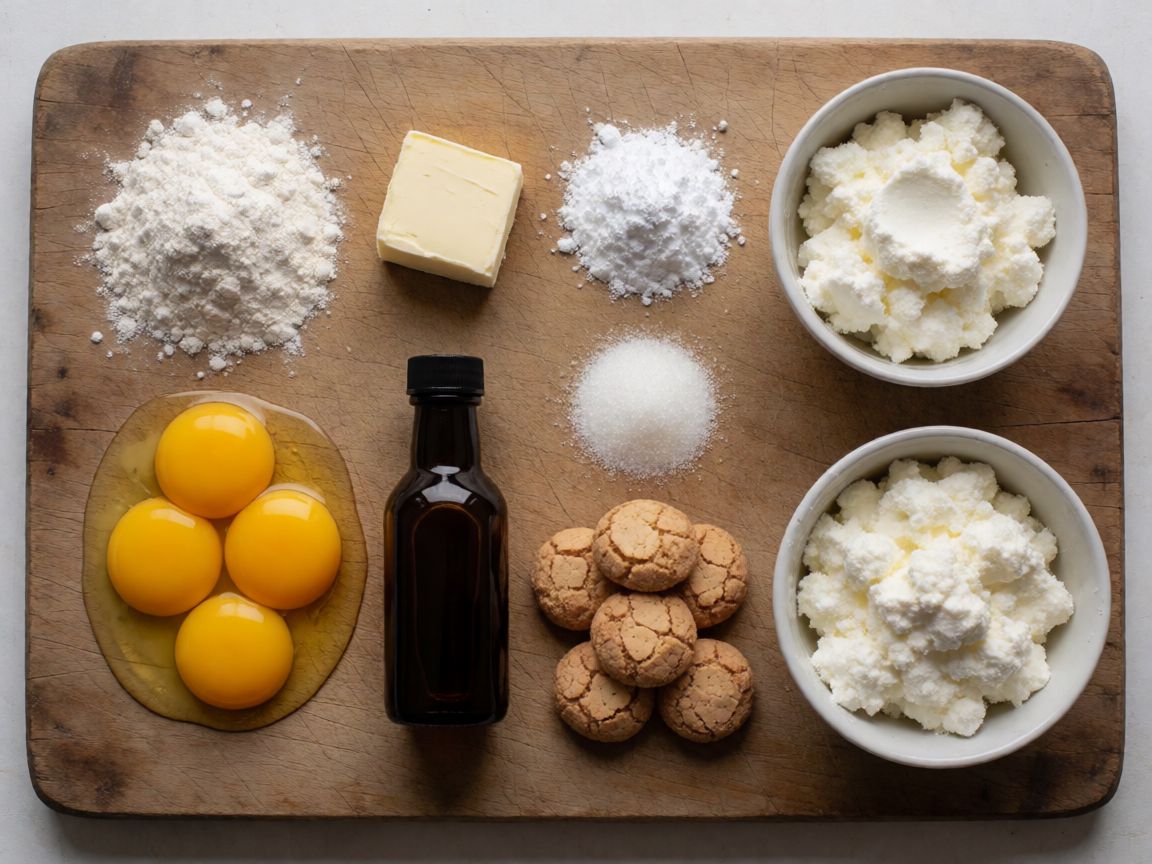
- 375 g Plain flour
- 250 g Butter cold
- 125 g Icing sugar
- 4 pcs Egg yolks
- pinch Salt
- 1 tsp Vanilla extract
- 300 g Ricotta sheep's milk
- 150 g Amaretti biscuits
- 75 g Caster sugar
- 50 g Dark chocolate chips
- 2 tbsp Amaretto liqueur











Steps
Make the shortcrust pastry: tip the flour and icing sugar into a bowl, add the cold butter in cubes, the egg yolks, salt and vanilla extract, and mix quickly.
Shape the dough into a ball, wrap in cling film and chill for at least 1 hour.
60 minMake the filling: put the ricotta, sugar and egg yolks in a bowl and whisk until smooth and creamy.
Crush the amaretti biscuits and fold them into the cream with the dark chocolate chips and amaretto liqueur; mix gently.
Butter and flour a 24cm tart tin, and preheat the oven to 180°C.
Roll out 2/3 of the dough to a thickness of 4-5mm and line the tart tin with it.
Spoon the filling into the tin and smooth the surface with a spoon.
Roll out the remaining dough, cut into strips with a fluted pastry wheel and lay them over the crostata to form a lattice.
Bake the crostata at 180°C.
40 minLeave the crostata to cool for at least 1 hour before serving.
60 min
A crostata is a tart that doesn't try to be delicate. Underneath, a pastry that behaves more like shortbread than puff — called pasta frolla — and on top, a lattice that lets you see the filling breathe through the gaps. Here the filling is ricotta beaten with sugar and egg yolks, lifted with crushed amaretti, chocolate chips and a slug of amaretto. It feeds six, no heroics required, and the whole thing is forgiving if you respect two things: cold butter and a cold rest.
What decides whether this works is temperature discipline in the dough, not skill. Pasta frolla has a high ratio of butter and sugar to flour — almost half the flour's weight in butter here — and that fat has one job: coat the flour proteins so little gluten forms. Gluten is what makes bread chewy; in a tart base it makes the crust tough and biscuit-unfriendly. Cold butter in cubes, mixed quickly, stops the butter melting into the flour before it's rolled — melted butter soaks in, warm hands smear it, and either way you lose the short, sandy crumb that gives the tart its name. The hour in the fridge isn't a pause for your convenience; it's the dough relaxing and the butter firming back up so it rolls without cracking or sticking.
Some say you can skip the chill if you're in a hurry — no, because warm dough shrinks unevenly in the oven and the lattice strips go soft and droop instead of holding their shape. Patience here isn't tradition for tradition's sake; it's the only thing standing between you and a crust that slumps.
Flour is just flour here — plain, nothing fancy, because this isn't a dough that needs strength from protein, it needs calm. If you only have strong bread flour, use less of it or add a spoon more butter proportionally; otherwise you'll fight gluten the whole time you're rolling.
Butter has to be cold and in cubes, not softened, not melted — the opposite of what you'd do for a Victoria sponge. Cold cubes stay as distinct lumps until the last second, then shatter into the flour as fine crumbs when baked, which is what gives pasta frolla its "short" bite instead of a chew. If your kitchen is warm, work fast and don't knead longer than it takes to bring the dough together — overworking melts the butter with hand heat and undoes the whole point. Any neutral, firm fat with no smell of its own in theory stands in for butter, but here butter's flavour is doing real work alongside the amaretto, so don't bother substituting it for taste reasons — only for allergy ones, and then expect a flatter finish.
Icing sugar rather than caster in the pastry is not fussiness — icing sugar dissolves without grit, so you don't get sugar crystals interrupting the crumb structure as it melts in the oven. Caster sugar, coarser, goes into the filling instead, where there's enough moisture from the ricotta to dissolve it properly and where a slight grain doesn't matter.
Ricotta should be the proper curdy kind, drained, not a smooth processed tub — sheep's ricotta if you can get it, because it carries more flavour and less wateriness than cow's milk ricotta, which tends to be wetter and can make the filling slump. If you can only find cow's ricotta, tip it into a sieve lined with a paper towel for twenty minutes first and let the whey drip off; skip this and you risk a filling that weeps once the tart cools and the lattice sits on top of a puddle instead of a set custard.
Amaretti biscuits are there for crunch that survives baking and for bitter almond notes ricotta alone doesn't have. Crush them by hand or with a rolling pin in a bag rather than a food processor if you want some texture left rather than dust — dust disappears into the filling, chunks give you something to bite into. No amaretti to hand — any dry almond biscuit works as the same mechanical role: dry crumb that absorbs moisture and adds almond flavour.
Dark chocolate chips and the two tablespoons of amaretto liqueur are flavour, not structure — amaretto doubles down on the almond note already in the biscuits (amaretti literally means "little bitters," named for the bitter almond taste, not for actually containing almonds in most recipes — a myth worth knowing before you go hunting for marzipan in the ingredient list). If you don't drink, or don't have amaretto, a few drops of almond extract in a splash of water gets you the aroma without the alcohol, though you lose a little of the liqueur's sweetness, so add a touch more sugar if you go that route.
On the British kitchen side: you won't have a kazan and don't need one — a standard fan oven at 180°C and a normal 24cm loose-bottomed tart tin handle this fine, just know your oven's hot spots, since fan ovens often run a touch fierce at the edges and can catch the lattice strips before the centre sets. Keep an eye on colour, not the clock — the pastry wants to go from pale to the colour of a digestive biscuit, and the filling should look set with a slight wobble, not liquid, when you nudge the tin. That hour of cooling afterwards is not optional waiting around for show: a ricotta filling is still finishing its set as it cools, the way a baked custard firms off the heat, and cutting into it hot gets you a tart that falls apart on the plate rather than holding a clean slice next to your tea.