
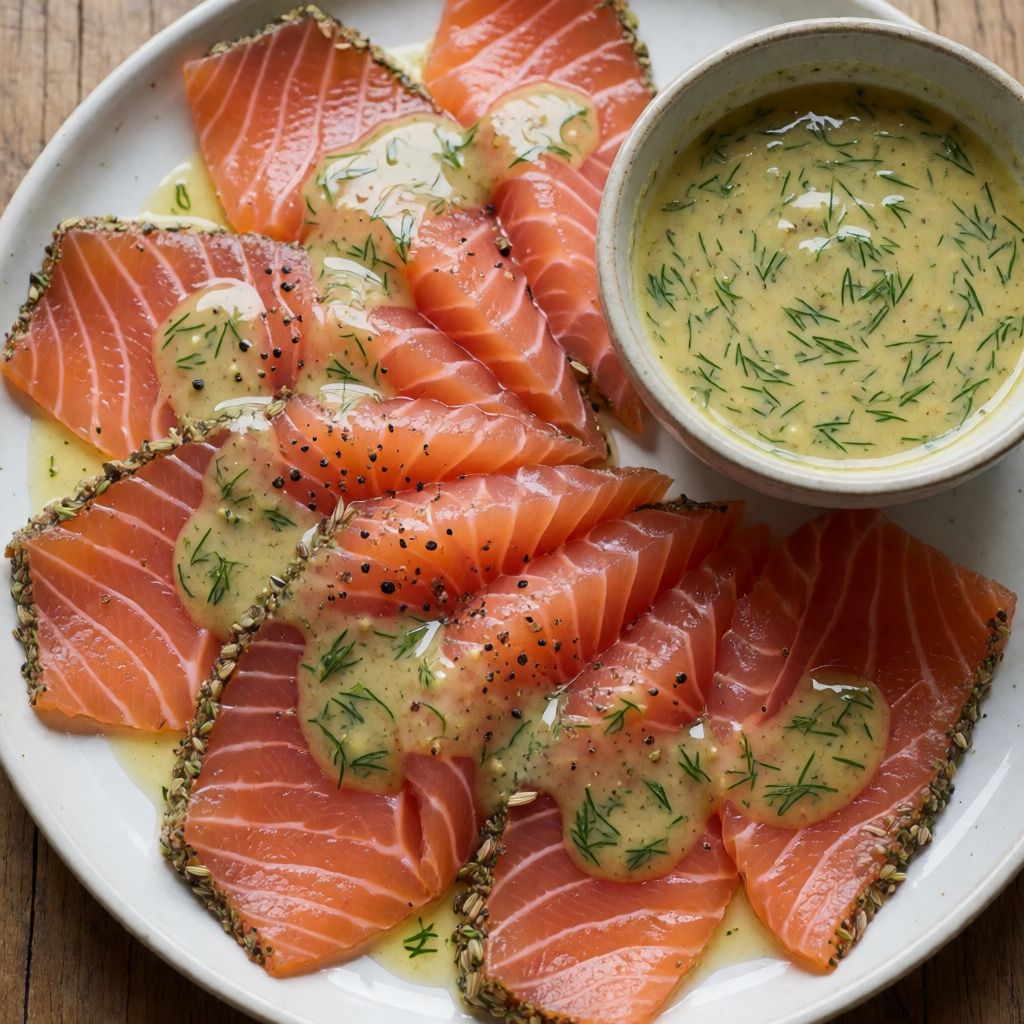
 AI photo
Home-Cured Salmon with Mustard and Dill Sauce
Home-cured salmon, gently spiced and left to firm up in the fridge, served with a tangy mustard-dill sauce.
Labels are worked out automatically from the ingredients and can be wrong. Check the packaging if it matters to you.
Ingredients
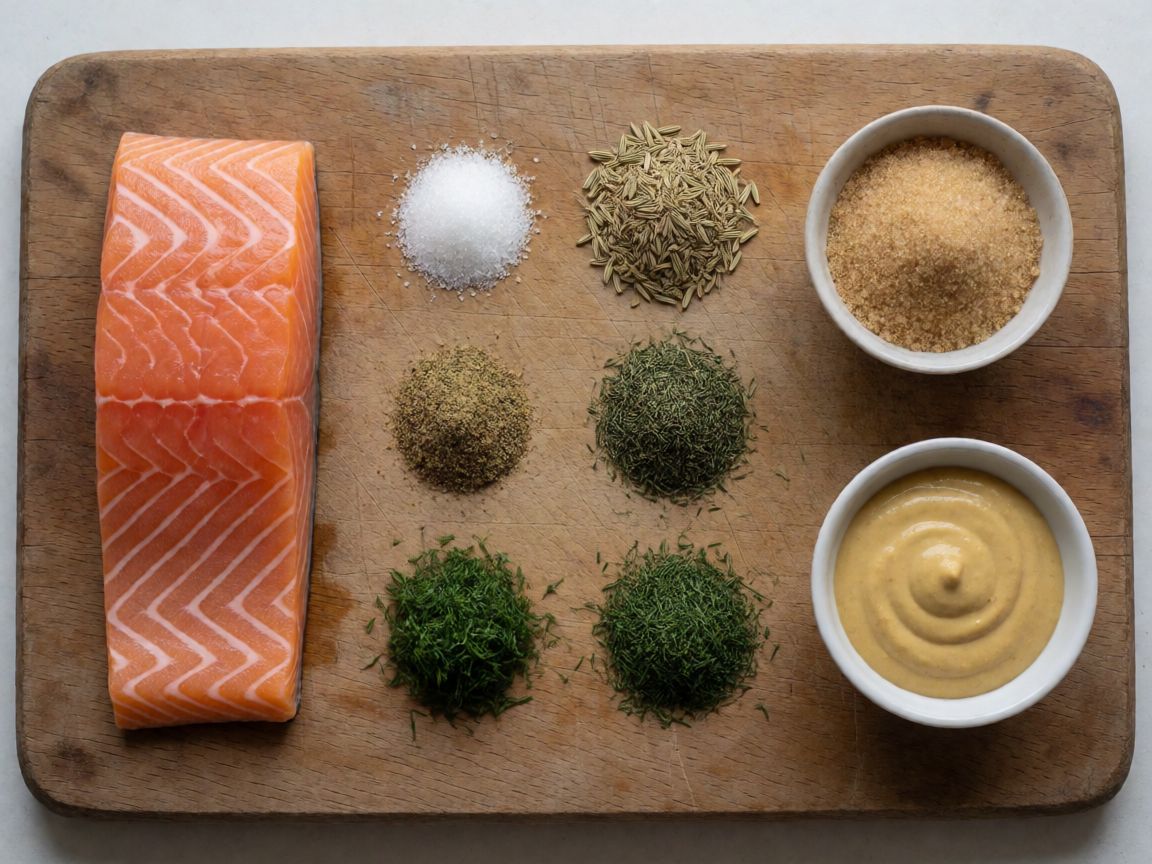
- 700 g Salmon side, skin on
- 50 g Salt
- 60 g Sugar
- ½ tsp Black pepper freshly ground
- 1 pinch Fennel seeds ground
- 1 pinch Ground coriander
- 4 tbsp Dried dill
- 1 bunch Dill fresh, finely chopped
- 100 ml Olive oil
- 20 g Brown sugar
- 2 tsp Dijon mustard
- 1 tbsp Apple cider vinegar
- 1 pinch Salt to taste
- 1 pinch Black pepper freshly ground, to taste
- 1 tbsp Dried dill
- 50 ml Crème fraîche 18%
- 1 bunch Dill fresh, for garnish












Steps
Mix the salt, sugar, pepper, fennel, coriander and dried dill well in a bowl.
Trim the bones, skin and any visible fat from the salmon and place it skin-side down on a dish of suitable size.
Cover the salmon generously with the spice mix over the whole surface, then sprinkle with the chopped dill.
Cover the salmon with cling film and place the dish in the fridge for 2 to 3 days, after which it is ready to serve.
2880 minFor the sauce, whisk all the ingredients together in a bowl and taste. Depending on how sharp the mustard is, you may need a little more sugar, mustard or vinegar.
Before serving, drain off the liquid that has come out of the salmon and pat the flesh dry.
Slice the salmon thinly and serve with the sauce, good bread, salad and fresh dill.
This is gravlax by its proper name, though nobody in your kitchen needs to say that word to make it well. You are not cooking the salmon at all — you are dehydrating it with salt and sugar, and that's the whole trick. Salt pulls water out of the fish by osmosis; sugar softens the salt's bite and feeds a gentle sweetness into the cure. No heat, no flame, no kazan, no pan — just a dish, cling film, and the coldest shelf of your fridge doing the actual work over two or three days.
What decides whether it works is not flavour, it's moisture. The fish needs to lose enough liquid that its texture turns from raw and slack to dense, slightly springy, almost like a cured ham of the sea. You'll see this liquid pool at the bottom of the dish — that's not a mess, that's the proof the cure is doing its job. Some say gravlax is "raw fish", and people get nervous about it the way they'd get nervous about steak tartare — no, because the salt has already done a harsher job on bacteria and texture than a quick pan-sear ever would. It's not cooked by heat, but it is absolutely not raw in the sense of untreated.
Patience is the one ingredient with no substitute here. Rush it to a day and the centre stays wet and tastes of nothing but salt on the surface; give it the full three days and the cure reaches all the way through, the flesh turns an even, deep coral colour, and slicing it thin becomes easy instead of mushy.
Start with the fish itself: a side of salmon, skin on, with the pin bones and any grey fatty layer trimmed off. The skin stays on through curing because it holds the fillet together as it firms — you peel it off only at the end, when slicing. Fresh is non-negotiable for something that's never heated: buy from a counter you trust, or use a fillet that's been previously frozen (freezing to a proper domestic -18°C for a few days kills the parasite risk that raw fish carries, which farmed fresh fillets straight off the ice may not have had). This is the one place where "ask your fishmonger" isn't a throwaway line — it's the actual safety step.
The cure itself is salt, sugar, pepper, fennel, coriander and dried dill, all mixed before they touch the fish, so the ratio is even everywhere rather than one patch getting all the salt. Salt is the engine — any coarse or fine salt without added iodine taste works, sea salt or regular table salt, it doesn't need to be fancy. Sugar's job is to balance that salt and start its own gentle draw on moisture; white sugar is fine, this isn't the place to hunt for a specific kind. Fennel and coriander are there for a background warmth, not a dominant flavour — if you don't have them, leave them out rather than substitute something stronger; this cure is meant to taste of salmon and dill first.
Dried dill in the cure and fresh dill on top do two different jobs. Dried dill mixes evenly into the salt without turning soggy; fresh dill, chopped and pressed onto the surface after, gives the aroma and the traditional green crust gravlax is known for. If fresh dill is out of season or pricey, you can lean harder on the dried and skip the fresh layer — you'll lose the look, not much of the taste.
The sauce is a cold mustard-dill cream, and it's built the way most European mustard sauces are: oil to carry fat and smooth the sharpness, mustard for bite, a touch of vinegar for acid, sugar to round all of it off, and crème fraîche at the end to give it body without making it heavy. Dijon is specified because its heat is clean and not overly vinegary itself — English mustard would fight the vinegar already in the recipe, so don't swap it in without expecting a much sharper result. Taste and adjust at the end, because mustards vary brand to brand in how aggressive they are — this is the one place in the whole recipe where your palate, not a measurement, has the final word.
Serve it on good bread with a simple salad — the salmon is rich and salty-sweet on its own, so nothing around it needs to compete. A bread knife, not a chef's knife, gives you the thin, clean slices this fish wants; a thick-bladed knife tears the firm flesh instead of gliding through it. This feeds about ten as a starter course — think Sunday lunch where everyone gets two or three slices, not a main course portion.