
 AI photo
Faux Snails (Egg and Chard Roll)
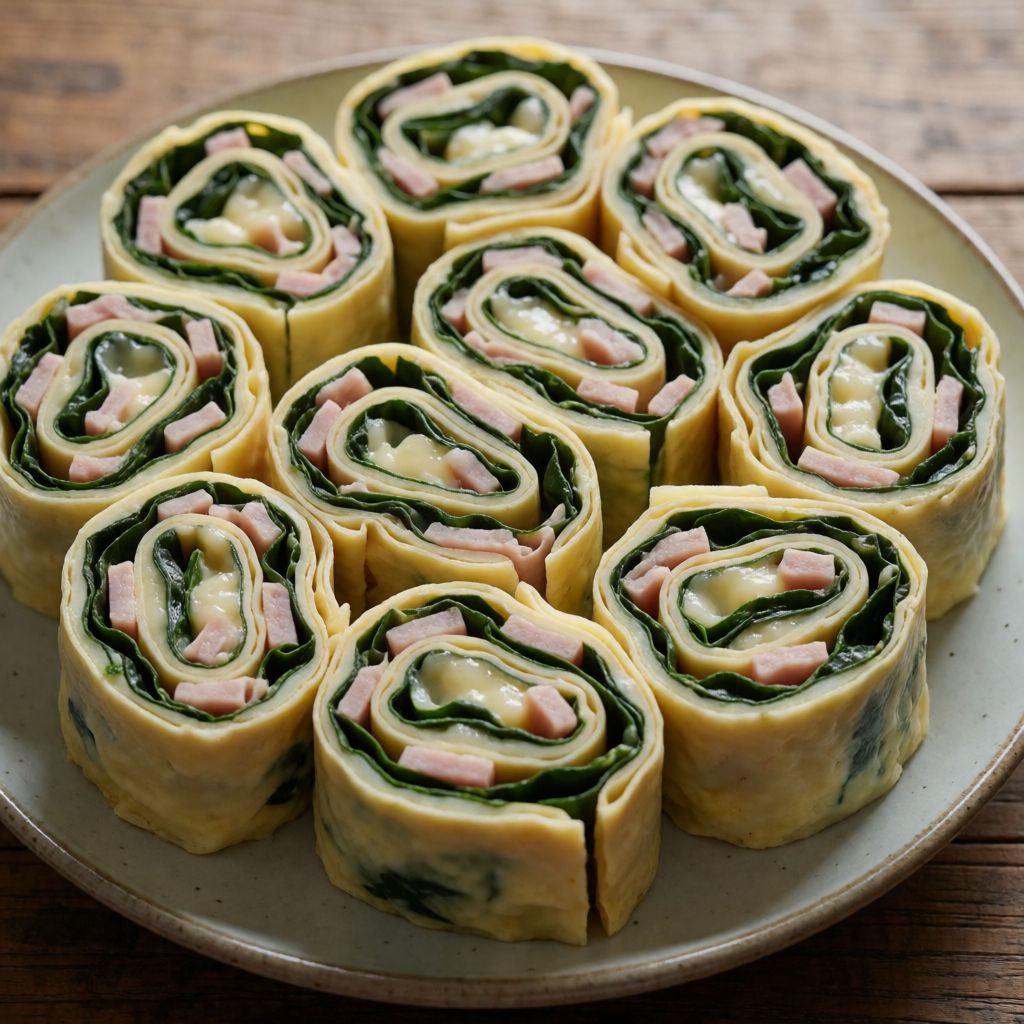
A playful dish where egg-and-chard frittata rolls and halved carrots are arranged on a bed of lettuce to look like little snails.
Labels are worked out automatically from the ingredients and can be wrong. Check the packaging if it matters to you.
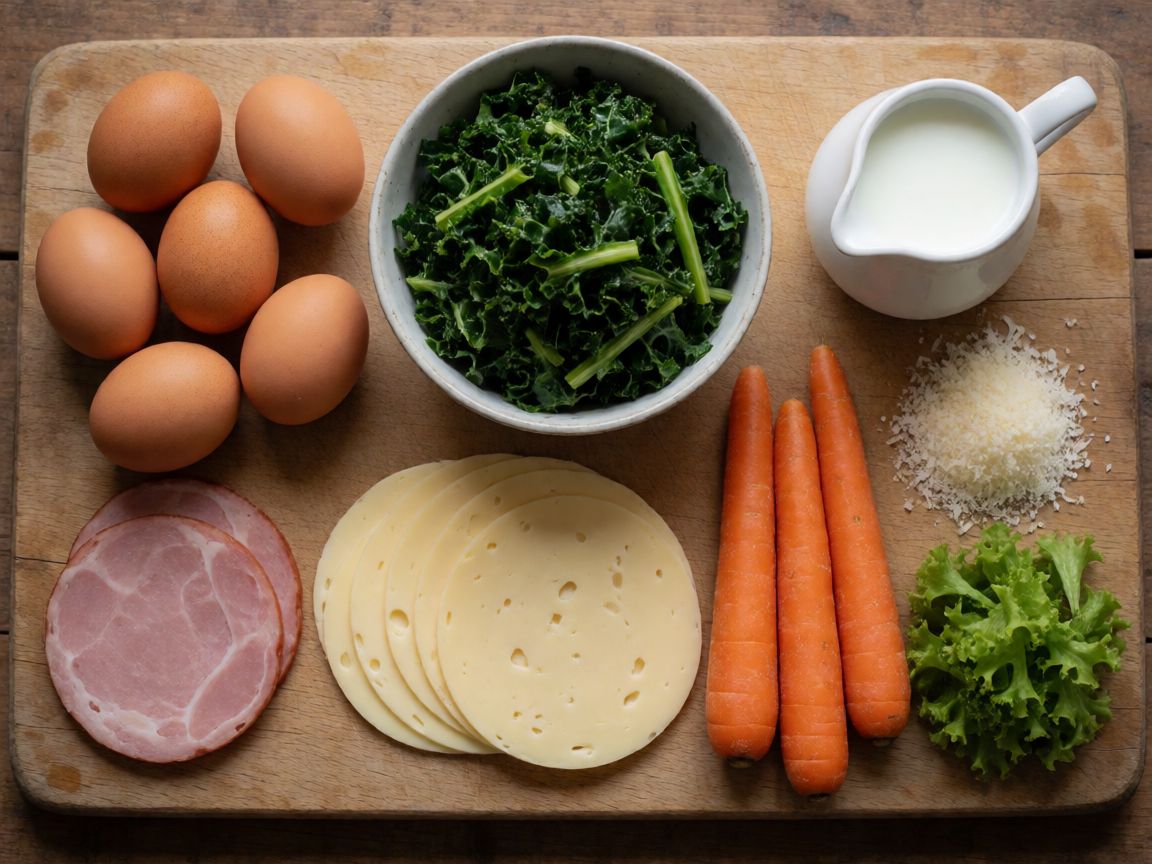
Ingredients












Steps
Pour a little olive oil into a frying pan and add the chard. Lightly sauté it and season with salt.
Mix the eggs with the milk, Parmesan and two pinches of salt.
Move the sautéed chard to a board, chop it roughly and add it to the egg mixture. Stir everything together.
Pour the mixture into a tin lined with baking paper and bake at 180°C.
12 minAfter baking, turn the frittata out onto a board so the paper stays on top.
Lay the processed cheese slices and ham slices over the frittata, roll it up, wrap it in cling film and leave it in the fridge.
Prepare the plate: lay lettuce on the bottom to make a 'grassy lawn'. Carrot, cut in half, becomes the snails' bodies, and rosemary the antennae.
Slice the frittata roll into rounds. Use cocktail sticks to join the frittata rounds to the carrot.
Mix olive oil, a few drops of balsamic vinegar and a little salt. Drizzle the dressing over the dish before serving.
This isn't really a snail recipe — it's a roulade recipe wearing a costume for children who'd otherwise refuse to eat chard. The whole dish stands or falls on one thing: whether your frittata base bends without cracking. Everything before the fridge is there to make a flat, flexible sheet of baked egg strong enough to roll around cheese and ham like a Swiss roll. Everything after the fridge is theatre — carrot bodies, rosemary antennae, lettuce "grass" — and the theatre works precisely because the eating part is a pinwheel of ham, melted cheese and greens, which needs no disguise to be good.
So the mechanism is: egg plus milk plus a little starch-free cheese, baked thin and flat, cooled under a chill so it sets firm enough to roll instead of tear. A frittata straight from the oven is soft and tender — lovely on a plate, useless as a roll. It's the fridge rest that turns it from "food" into "material you can work with." Skip that step and you'll find out why, with egg mixture squeezing out both ends like toothpaste.
Some say you need a proper Swiss-roll tin for this. No — you need a flat surface and a straight edge, and baking paper does the rest. A domestic oven dish lined with paper is exactly the same shape principle a snail-shell tin is chasing, just without the cute silicone grooves.
Eggs are the structure, not just the flavour. Six eggs for three people sounds generous until you remember most of that volume is going to become a thin baked sheet, not a fluffy omelette — spread thin, egg loses the puff you'd get from a deep pan, and that's the point: you want sheet, not cake. Whisk them properly before adding anything else, so the milk and cheese disappear into the liquid rather than sitting in streaks that bake unevenly.
Milk does one job: it softens the set. Egg alone, baked at 180°C, goes rubbery and tight — fine for a tortilla you're going to eat warm with a fork, wrong for something you want pliable later, cold, off the fridge. The milk keeps the protein network looser, so when you roll it, it bends instead of snapping along a seam. If you've only got cream in the fridge, thin it with water first — cream alone makes the egg too rich and too soft, and the roll won't hold its line.
Parmesan is seasoning and savoury backbone both — a little goes further here than salt alone would, because it carries umami into eggs that are otherwise just eggs and milk. Any hard, dry grating cheese with real age on it does the same job — a mature Cheddar, finely grated, is the obvious UK stand-in, and nobody will accuse you of heresy for using it.
Chard gets a quick sauté before it ever meets the egg, and that step is doing real work: raw chard holds water in its cells, and if you chopped it in raw, that water would leak out during baking and turn your flat sheet into a soggy, tearing mess with puddles under it. A short hot toss in oil drives some of that water off as steam and collapses the leaf, so what goes into the egg mixture is concentrated greens, not a water balloon. Spinach does the same trick if chard isn't to hand — same quick wilt, same squeeze of excess liquid if you're using frozen.
Processed cheese slices aren't a compromise here, they're chosen for behaviour: they melt into a smooth, holding layer rather than splitting into oil and solids the way a hard cheese would under gentle residual heat. If you want to use something with more character — a mild melting cheese, nothing too sharp or too dry — fine, but test a slice in a warm pan first; you want glue, not grease.
The carrot and rosemary are set-dressing with a practical rule behind them: the carrot must be cooked enough to half-cook the body of the snail into something a cocktail stick can skewer without splitting it, but it still needs enough bite to look like a shell and not a sad orange tube. Judge it by bend, not clock — it should curve under light pressure, not flop. And the dressing at the end — oil, a few drops of vinegar, salt — exists to cut the richness of melted cheese and ham with something sharp, which is the oldest trick in the book and doesn't need balsamic specifically: any vinegar with a bit of fruit to it will do the same job of waking the plate up before it reaches the table.
Patience here is the fridge, not the oven. Rolling warm, skipping the chill, trying to rush three portions out before a Sunday roast needs the oven back — any of that and you'll get crumbled snails instead of clean rounds. Give it the rest; it's doing the structural work the oven can't finish alone.