
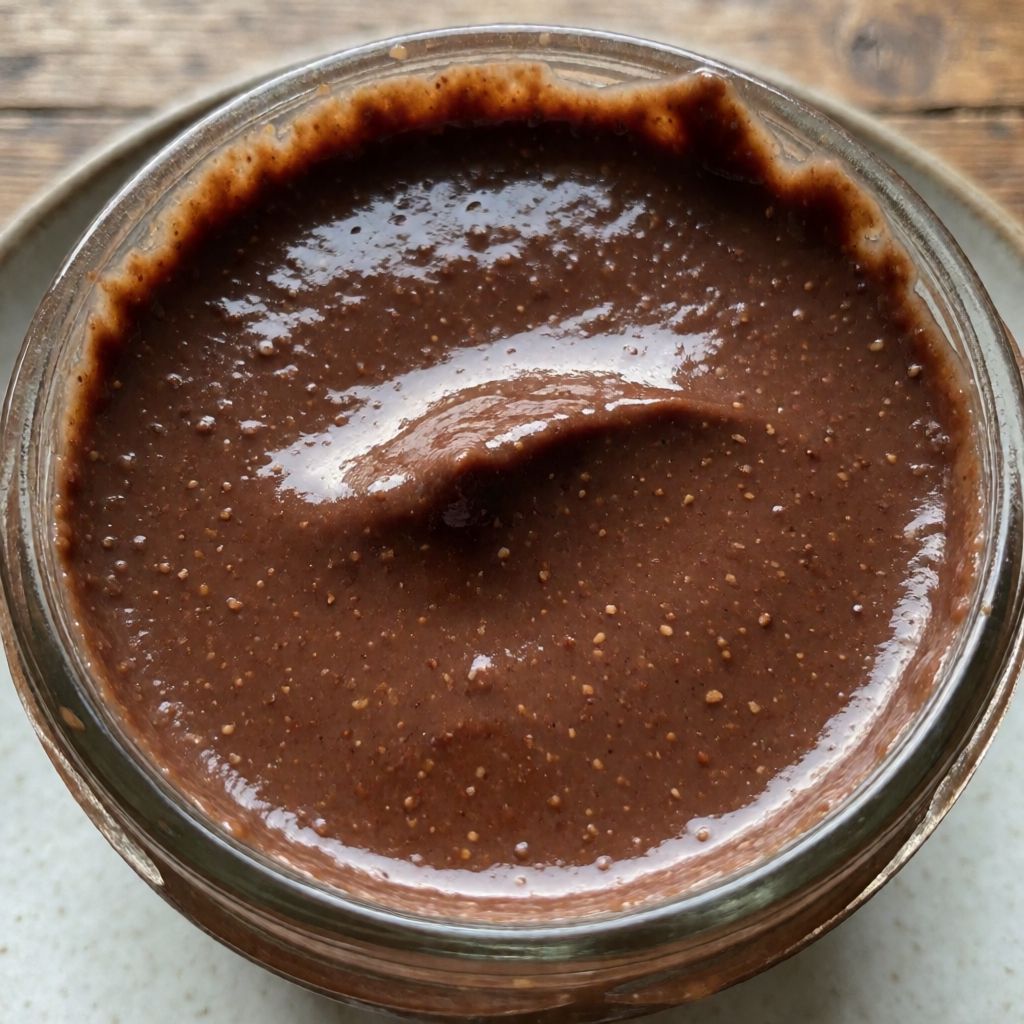
 AI photo
Homemade Nutella
A rich homemade hazelnut and chocolate spread, similar to Nutella, ready in about 20 minutes.
Labels are worked out automatically from the ingredients and can be wrong. Check the packaging if it matters to you.
Ingredients
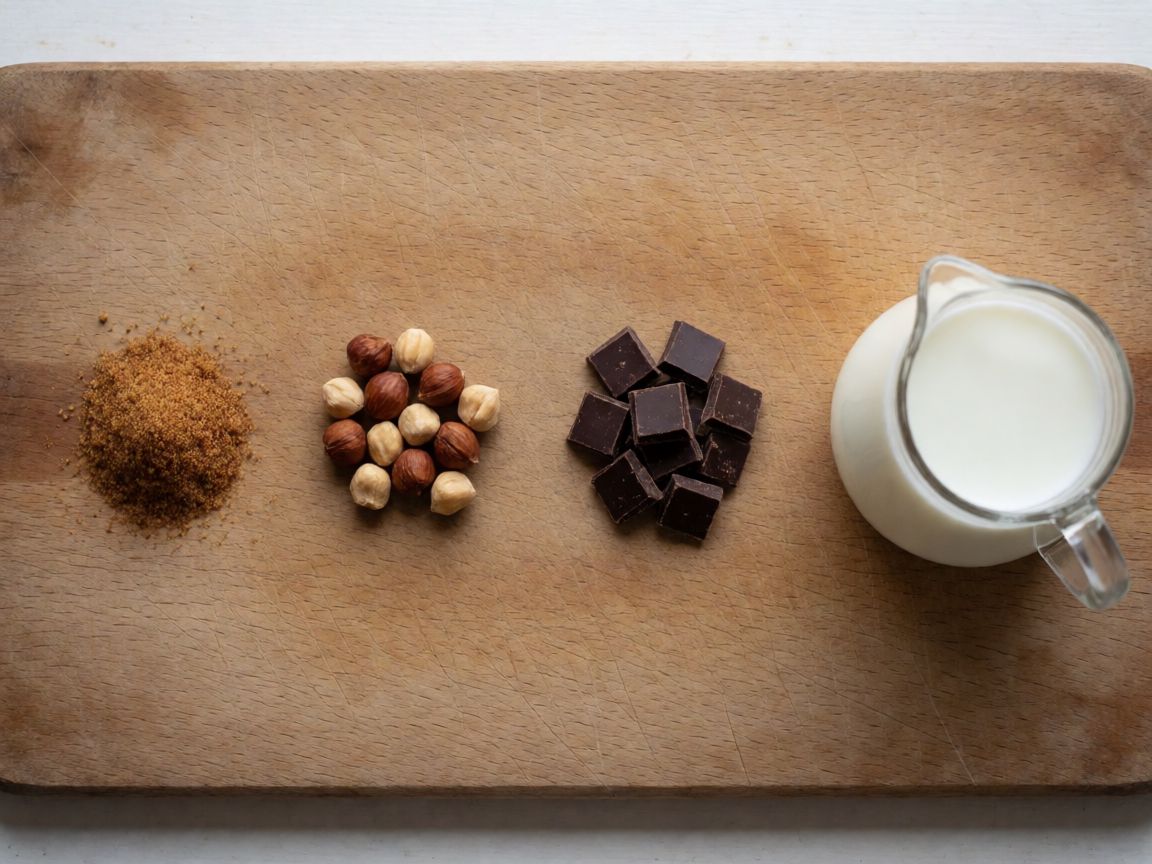
- 130 g Brown sugar
- 100 g Hazelnuts
- 300 g Dark chocolate
- 200 ml Skimmed milk




Steps
Blend the brown sugar in a blender until it has the texture of fine icing sugar.
Add the hazelnuts and blend until you get a smooth, creamy paste.
Break the dark chocolate into pieces and add it to the creamy mixture.
Turn the blender back on and gradually pour in the skimmed milk.
Pour the mixture into a glass bowl and cook over a double boiler for 20 minutes.
20 minLet the spread cool, or serve it warm spread on a slice of bread.
What you're making here isn't really a chocolate recipe with nuts thrown in — it's hazelnut butter, stretched and darkened with chocolate. The whole thing hinges on one quiet fact: hazelnuts are roughly sixty percent fat. Grind them long enough and they give that fat up on their own, no spoon of oil needed. That's the mechanism, and it's why the blender runs longer than you'd think reasonable for "just nuts."
Three things decide whether it comes out silky or sad. First, patience with the hazelnuts — rush the blend and you get a dry, gritty meal, because the oil hasn't had time to sweat out of the cell walls under the friction. Second, gentle heat for the chocolate — a double boiler, water simmering underneath, never the pan floor touching flame directly, because direct heat scorches cocoa solids and splits them from the fat, leaving a grainy, slightly bitter paste instead of a glossy one. Third, pouring the milk in slowly while the blender's still going — milk is water, the rest is fat, and fat meeting water too fast seizes rather than blends. Slow pouring is how you force an emulsion instead of a curdle.
Forget the clock on the double-boil stage. Twenty minutes is a floor, not a verdict — what you're actually watching for is the mixture thickening enough to coat the back of a spoon and hold a ribbon when it drips off. It will firm up more once it's cold, so stop a shade runnier than you think you want.
Take the sugar first, on its own, and grind it to a fine powder before the nuts go in. That order isn't fussy ritual — fine sugar acts almost like an abrasive, breaking up the first resistance in the blender so the hazelnuts don't just clump stubbornly round the blades before their oil starts to show. Brown sugar over white gives you a faint molasses note underneath the chocolate, which white sugar can't. If you only have white, use it — the mechanism of grinding doesn't care, you just lose a little depth.
The hazelnuts are the engine of the whole spread. Any nut with a high enough fat content will behave the same way under enough blending — almonds will do it, though with less fat they give a drier result and you may need to run the blender longer to get the same creaminess. What you're choosing them for is that fat, not just flavour, so don't swap in a lean nut expecting the same slip.
Dark chocolate is chosen for its cocoa butter, which sets the final texture as it cools, and for having less sugar than milk chocolate, which would make the spread both too sweet and too soft to hold shape on a knife. The criterion for substitution is simple: the higher the cocoa solids, the firmer and less sweet your result. Go below roughly 50% cocoa and you're really making a different, softer spread — still edible, just don't expect it to behave the same.
Skimmed milk is there purely for water and a touch of protein to help the emulsion along — it is not there for fat, because the nuts and chocolate have already brought plenty. Whole milk works too; it'll just make the final spread richer and a touch looser. This is also where a domestic kitchen shows its limits honestly: a proper double boiler needs a bowl that sits in the rim of a pan without touching the water underneath, and on most British hobs you don't get fine control over a gentle simmer — so watch the water, not the dial, and keep it at a lazy bubble, not a boil.
The nut-and-chocolate economics here aren't new. Nutella itself exists because post-war Piedmont had cocoa rationed and expensive, and hazelnuts growing thick in the Langhe hills for almost nothing — so Ferrero stretched a little chocolate a long way with a lot of ground hazelnut. Making it at home follows the identical logic: nuts are cheaper than chocolate, and they do double duty as both bulk and fat.
Served on toast it fits straight into a British breakfast table the same way jam does, and it keeps a few days in the fridge in a jar with a lid, softened a minute at room temperature before spreading. There's no shortcut round the blending time for the nuts or the gentle sit over the water — both are where the texture is actually made, and both are exactly where people get impatient and the spread suffers for it.