
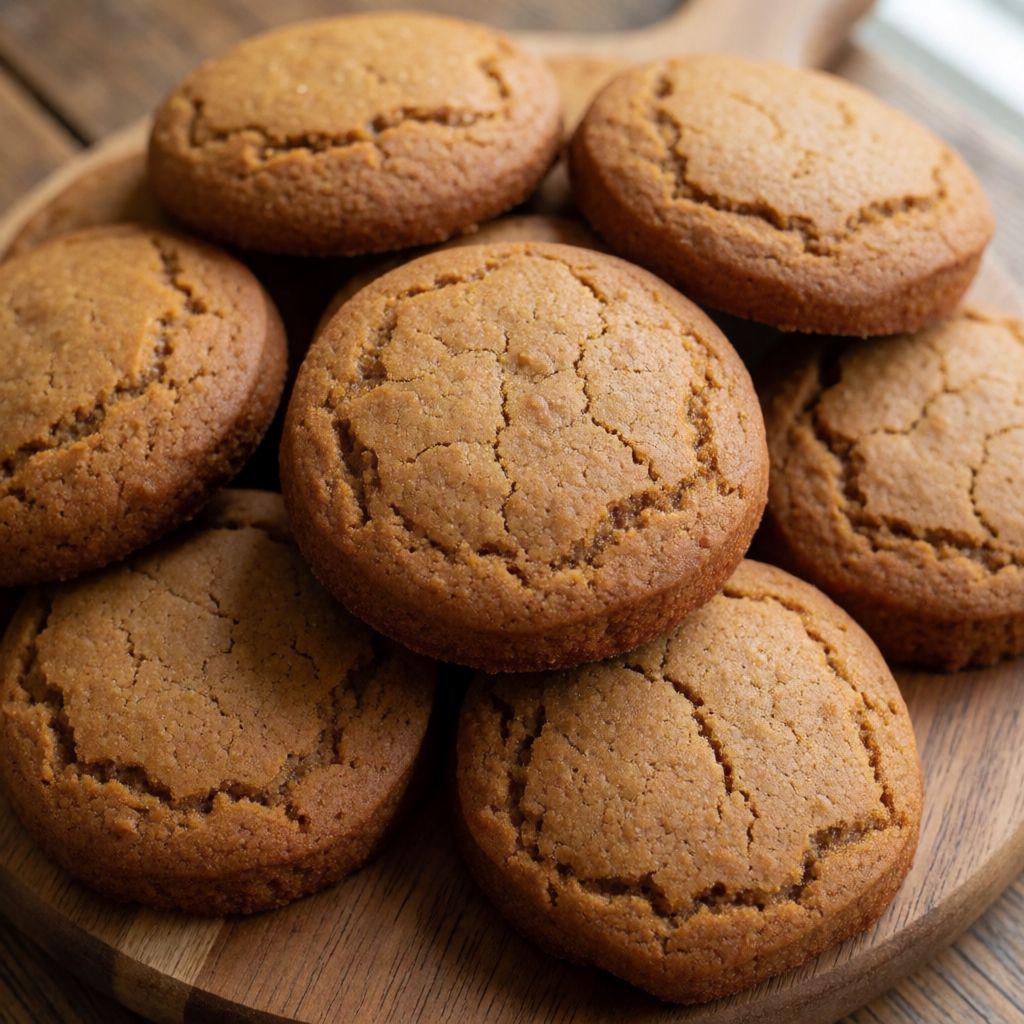
 AI photo
Easter Gingerbread Biscuits
Spiced gingerbread biscuits cut into festive Easter shapes and finished with a sweet icing.
Labels are worked out automatically from the ingredients and can be wrong. Check the packaging if it matters to you.
Ingredients
- 130 g Butter at room temperature
- 125 g Muscovado Sugar
- 1 pcs Egg
- 70 g Golden Syrup
- 1 tsp Baking Powder
- 1 tsp Cocoa Powder
- 1 tsp Vanilla Powder
- 275 g Flour
- 150 g Icing Sugar
- 50 g Egg Whites









Steps
Beat the butter, muscovado sugar and golden syrup together, then mix in the egg.
3 minIn a separate bowl, mix the flour, cocoa powder, baking powder and spices, then fold this into the dough.
2 minShape the dough into a ball and chill in the fridge for 30 minutes.
30 minDivide the dough into two or three portions to make rolling easier. Roll out one portion at a time on a lightly floured surface, or between two sheets of baking paper, and cut out shapes.
5 minPlace the biscuits on a baking tray lined with baking paper and bake in a preheated fan oven at 175°C for 8-9 minutes.
9 minLeave the freshly baked Easter biscuits to cool on a wire rack.
12 minWhisk a thick icing from the icing sugar and egg whites. Add food colouring if you like, then pipe the icing using a piping bag fitted with a nozzle and decorate the biscuits.
3 min
This is a cut-out biscuit built for Easter, not a cake wearing a biscuit's clothes. It has to do two different jobs: stay rigid enough to keep a stamped shape through the oven, then turn soft enough under the tooth that a mouthful of royal icing doesn't feel like gravel on a brick. Both jobs are decided before the oven even comes into it — in how cold the dough is when you roll it.
Some say gingerbread needs ginger — no, because what the word protects in English baking is a colour and a chew, not a root. There's no ginger here at all. The dark tone comes from muscovado's molasses and the cocoa teaspoon, the sticky give comes from golden syrup, and vanilla rounds off the smell so it reads as 'spiced' even with no spice heat in it. Call it gingerbread-shaped rather than gingerbread-flavoured, and you'll stop waiting for a kick that was never coming.
What actually decides whether this works: first, the butter creamed properly pale and loose before the egg goes in — that's where the air gets trapped, and the one teaspoon of baking powder only finishes a job the creaming started, it can't start it from nothing. Second, the chill. Thirty minutes in the fridge isn't a pause for your own tea break, it's the butter in the dough going from soft to firm again, so it rolls out as a sheet instead of smearing under the pin and sticking to everything it touches. Skip that and you get biscuits that spread into puddles the moment they meet 175°C.
Butter has to be at room temperature for a reason that has nothing to do with convenience — cold butter won't trap air when you beat it, it just gets pushed around the bowl in lumps, and a biscuit with no trapped air is dense rather than short. If your kitchen's cold, ten minutes near (not on) a radiator does the same job as 'room temperature' ever promised.
Muscovado sugar isn't just sweetness, it's wet — it still holds the molasses that white sugar had spun out of it. That moisture is what keeps these biscuits from turning into the kind of hard, dry things you need tea with milk just to get down. If you only have light brown sugar, use it, but expect a paler, slightly drier result; dark brown or even a spoon of black treacle stirred into white sugar gets you closer back to muscovado's job.
Golden syrup is doing a specific chemical favour here: it's largely invert sugar, meaning it resists crystallising and stays soft and bendy even once baked and cooled, which is exactly the texture a biscuit that has to survive a piping bag of icing without snapping needs. Honey will substitute — any thick, non-crystallising syrup with no strong smell of its own will — but honey brings its own flavour along, so you'll taste it under the cocoa. Treacle is heavier and more bitter; use less of it than the syrup it replaces.
The egg binds the fat and sugar into something that can actually hold a cutter's shape rather than crumbling at the edges — it's structure, not flavour. Baking powder is there in a small, almost token amount, because the syrup and sugar already weigh the dough down with moisture; too much lift and the shapes puff and lose their crisp edge, which rather defeats the point of cutting them into hearts and chicks in the first place.
Flour here is just scaffolding — 275g against 130g of fat is a low enough ratio that you get a short, tender crumb rather than something bready, but high enough that the dough holds a stamped shape on the tray. Rolling between two sheets of baking paper instead of on a floured surface isn't fussiness, it's protecting that ratio: every spoonful of extra flour you work in while rolling toughens the dough and dries the biscuit out, and paper means you add none.
The icing is its own small recipe — icing sugar beaten with raw egg white into something thick enough to hold a piped line without sagging flat. In the UK, eggs carrying the red lion stamp are treated as safe to eat raw, which is exactly what this icing is, so check for it if that matters to you; if it doesn't, or you'd rather not risk it, pasteurised egg white from a carton does the same job. Thickness is the only test that matters here — pull the whisk out and if the trail sitting on top holds its shape for a few seconds before melting back in, it will pipe; thinner than that and your careful lines just spread into puddles before they've even dried.