
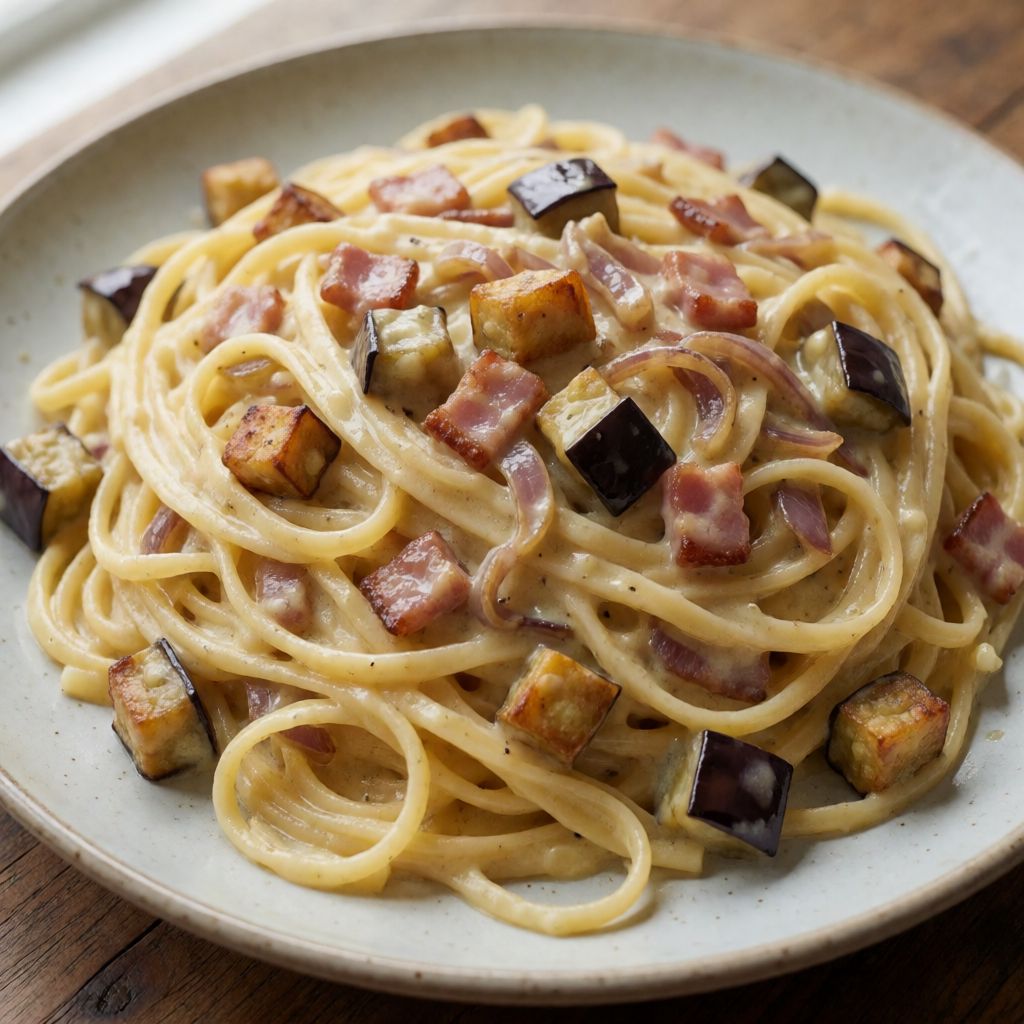
 AI photo
Tagliolini Carbonara with Aubergine
A lighter take on carbonara, using tender aubergine alongside pancetta for a comforting bowl of tagliolini.
Labels are worked out automatically from the ingredients and can be wrong. Check the packaging if it matters to you.
Ingredients
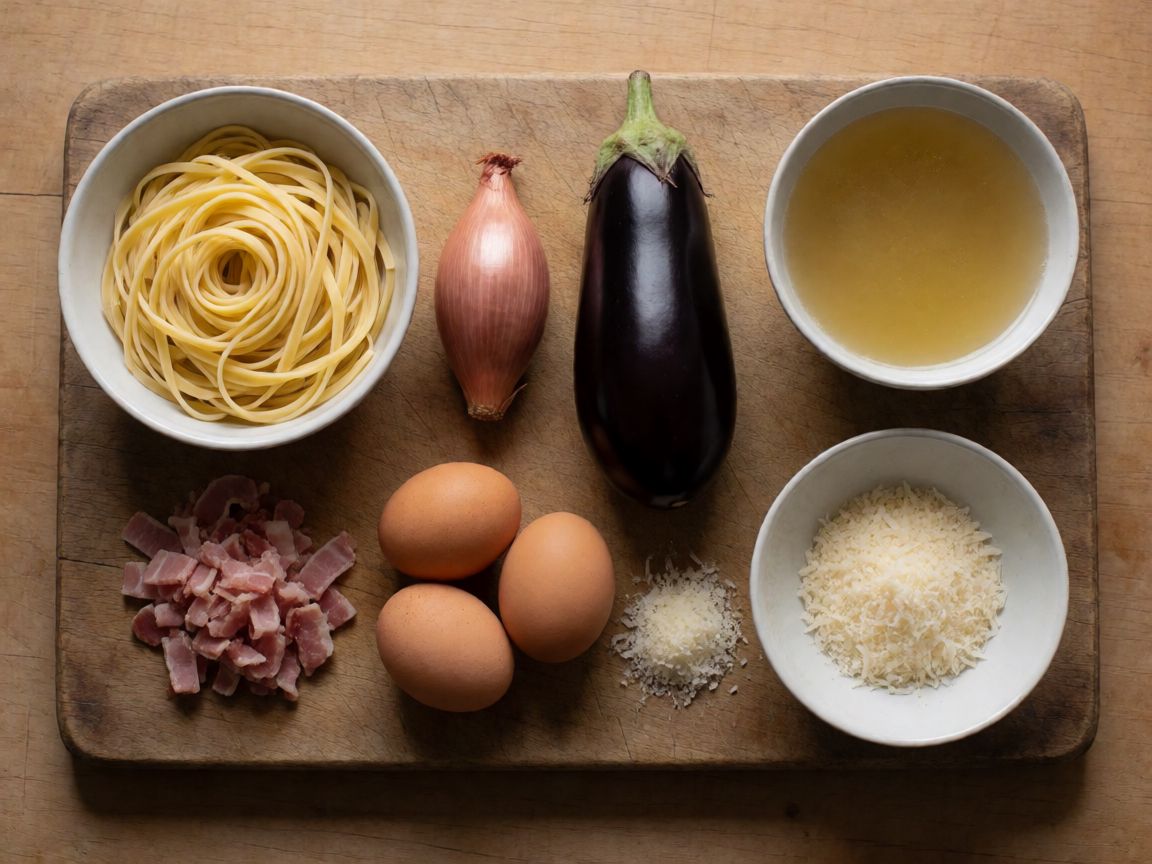
- 400 g Tagliolini (rice and corn, or egg) egg tagliolini also works well
- 1 pcs Shallot
- 1 pcs Aubergine
- 150 g Pancetta
- 3 pcs Eggs
- Olive oil to taste
- Salt to taste
- White pepper ground, to taste
- 250 ml Vegetable stock
- 2 tbsp Parmesan
- 1 tbsp Pecorino Romano
- 1 tbsp Parsley










Steps
In a pan, fry the shallot in 2 tbsp of olive oil, add the pancetta and fry until golden.
Add the aubergine and cook for 10 minutes, gradually adding the vegetable stock.
10 minAdd salt to taste and ground white pepper.
Boil the tagliolini. In a bowl, beat the eggs with Parmesan, Pecorino Romano, parsley and ground white pepper.
Drain the pasta and tip it into the pan with the egg mixture.
Toss, fry briefly and serve.
This is carbonara that has had an argument with ratatouille and both sides won. The bones are Roman — egg, cheese, cured pork, pepper — but the aubergine stretches it into something that reads more like Sicily, where aubergine turns up in pasta the way potatoes turn up in a British Sunday roast: because it was there, it was cheap, and it filled the plate without shame. What decides whether this works is the same thing that decides any carbonara: whether the egg becomes a sauce or becomes scrambled egg with noodles in it. There is no cream in real carbonara, and there shouldn't be one here either — the eggs loosen with starchy pasta water and residual heat, not with dairy. Add cream and you're not making carbonara, you're making an apology for not trusting the egg.
The second decision is the aubergine itself. It has to give up its water before it goes anywhere near the egg, or it will dilute the sauce and turn it grey and thin instead of glossy. That's why it's cooked with stock added gradually rather than dumped in with a lid on — you're braising out the spongy bitterness and the raw vegetal taste, not steaming it. Done right, the aubergine goes soft enough to collapse against the tongue, almost custardy, picking up the fat from the pancetta the way it's built to — aubergine has almost no flavour of its own, it's a flavour-courier, and frying it in rendered pork fat is the whole point of putting it in this dish at all.
Pancetta is the backbone and it is not optional-for-taste the way parsley is. It's cured, unsmoked pork belly — the curing gives you salt and a clean porky depth without the campfire note that bacon brings. If you can't get pancetta, use unsmoked streaky bacon and accept it, don't reach for smoked — smoke in this sauce fights the egg and cheese instead of sitting under them. Guanciale, cured pork jowl, is the "traditional" choice some will insist on — no, because in a flat kitchen with a British supermarket down the road, pancetta is the honest substitute, not a compromise you need to apologise for. The fat it renders is what the aubergine fries in later; this is the whole reason it goes in first.
The shallot is there for sweetness without aggression — it melts rather than crunches, and a small onion does the same job if that's what's in the fridge; just cut it finer, because onion holds its shape longer than shallot and you don't want bite in a sauce this smooth. The aubergine itself: pick one that's firm, glossy, heavy for its size — a soft, dull-skinned aubergine has already started drying out from the inside and will taste bitter and spongy no matter how long you cook it. You don't need to salt it beforehand here, because the stock-braising step is already doing the job of drawing out and cooking off the bitter juices; salting first was a trick for older, more bitter varieties that modern aubergines mostly don't need.
The eggs carry the sauce, and here the usual carbonara argument applies: whole eggs versus yolks only. Three whole eggs for 400g of pasta and four people gives you enough volume to coat without the sauce turning dense and yolky-heavy — go yolks-only and you'll need more eggs or you'll end up short on sauce. Use eggs at room temperature if you remember in time; cold eggs shock the residual heat down and you lose your window before the sauce sets.
Parmesan and Pecorino together are doing two different jobs, not one doubled. Parmesan gives you savoury depth and melts smoothly; Pecorino, made from sheep's milk, brings a sharper, saltier edge that cuts through the pancetta fat and the soft aubergine. If you only have one, use it, but lean the salt down if it's all Pecorino — it's considerably saltier gram for gram. White pepper rather than black is used here for a reason worth keeping: black pepper has a visible speckle and a slightly rougher, more resinous bite; white pepper disappears into a pale sauce and gives heat without the flecks, which matters when the whole point of this sauce is a smooth, uniform coat.
The vegetable stock is a small but telling choice — it's doing the aubergine's braising liquid duty without adding meat flavour on top of the pancetta that's already there, keeping the dish from turning into one-note porkiness. Homemade or a good stock cube both work; what matters is that it's added gradually, a splash at a time, so the aubergine cooks in liquid that keeps renewing rather than sitting and boiling in a puddle — that's what gives you tender flesh instead of either raw centres or waterlogged mush.
Tagliolini itself — long, thin, egg or gluten-free rice-and-corn — is chosen for surface area. Thin strands pick up a loose egg sauce far better than anything thick and starchy, which is why spaghetti became carbonara's standard shape in the first place: it's cheap, it's thin, and it was what Roman workers and later Allied soldiers with their tinned bacon and egg powder had lying around after the war — carbonara's popular origin is far closer to postwar improvisation than to any ancient shepherd's fire, whatever the romantic version tells you. Don't rinse the pasta after draining — you need that cloudy starch water clinging to the strands to help the egg bind into sauce rather than curdle into scramble. And have your serving bowls or plates ready before you toss: this dish does not wait patiently once the egg goes in, and patience in carbonara means timing your audience, not timing the pan.