
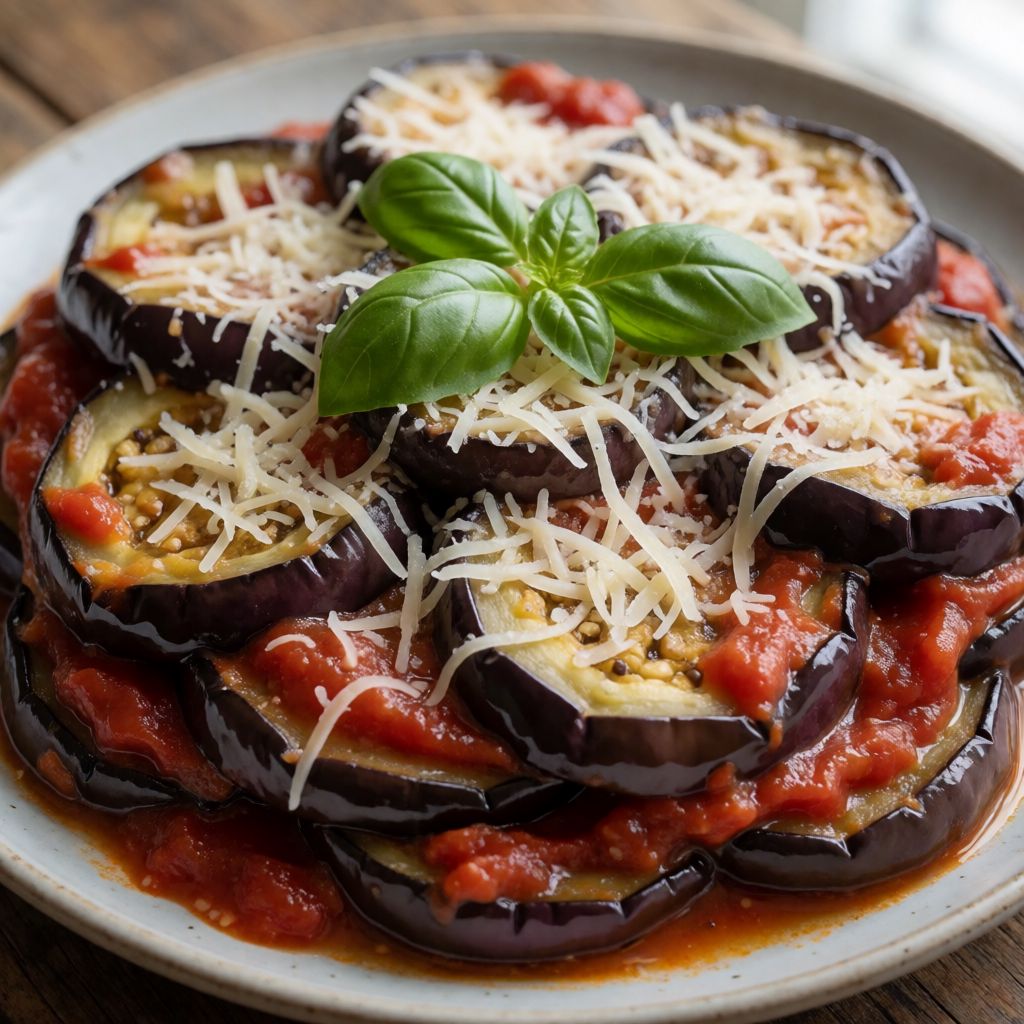
 AI photo
Cold Aubergine Parmigiana
A chilled Italian-style aubergine parmigiana, layered with tomato sauce, basil and parmesan.
Labels are worked out automatically from the ingredients and can be wrong. Check the packaging if it matters to you.
Ingredients
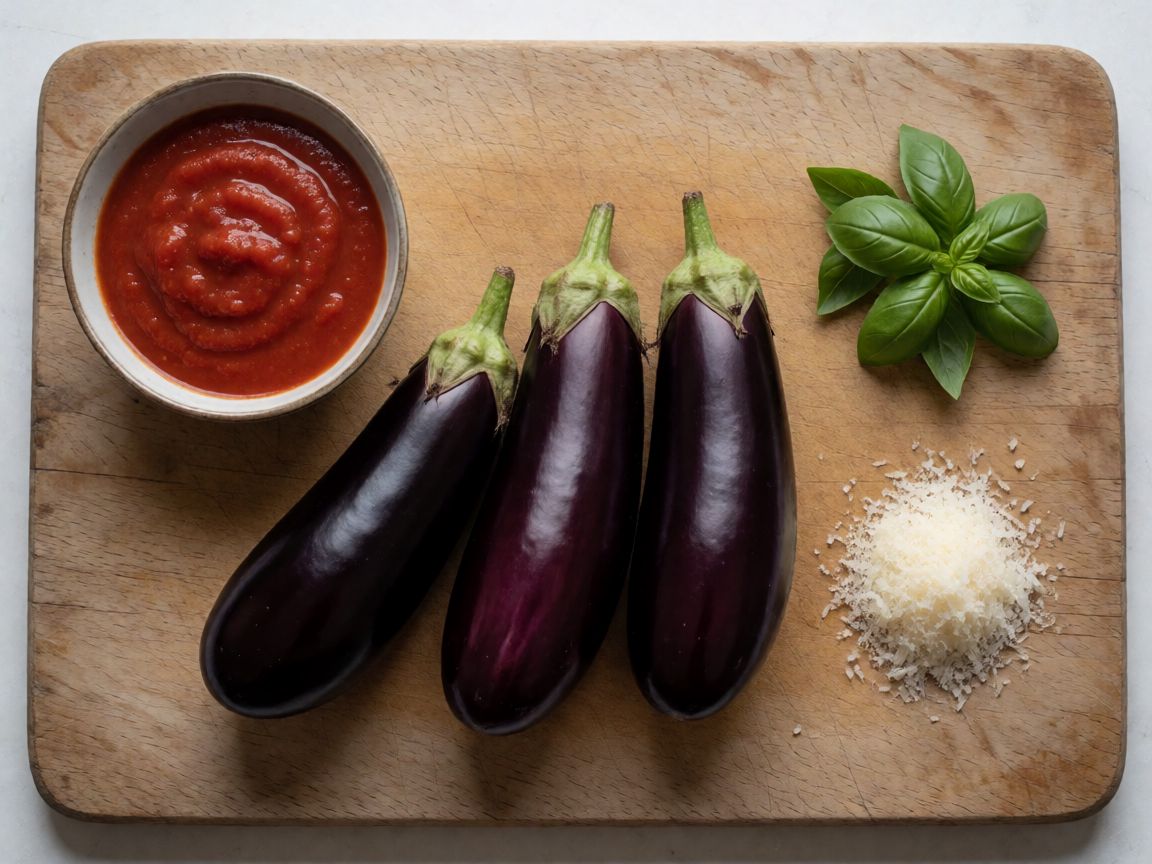
- 2-3 pcs Aubergine
- Tomato sauce to taste
- Salt to taste
- Vegetable oil to taste
- Basil to taste
- Parmesan to taste





Steps
Slice the aubergines and fry them in plenty of oil until cooked through.
On a flat plate, arrange a layer of aubergines, then add tomato sauce, parmesan and basil (torn into leaves).
Repeat the layers until all the ingredients are used.
Finish with parmesan and basil.
This is not a baked parmigiana — nothing goes near an oven. It is slices of fried aubergine, stacked cold with sauce and cheese, more like a savoury trifle than a casserone. The Sicilian habit of eating it chilled isn't a quirk, it's practical: in the south, in summer, you don't want to switch the oven on and you don't want the dish warm on the table either. Cold food travels, waits, and tastes of itself rather than of heat.
What decides whether it works is entirely at the frying stage, before any stacking happens. An aubergine is mostly water held in a spongy structure. Fry it properly — enough oil, hot enough — and that water cooks off while the flesh turns from chalky white to a soft, almost translucent amber. Fry it in too little oil, or oil that isn't hot enough, and the slice steams instead of frying: it goes limp, grey, and tastes of nothing but the oil it never managed to crisp against. That greyness is the real fault line in this dish, not "not enough garlic" or "too little basil".
Some say you must salt aubergine slices first and leave them to weep, to "draw out the bitterness". No — modern aubergines, the ones sold in any UK greengrocer, were bred decades ago to lose that bitterness almost entirely. What salting still does, usefully, is pull out some of the water before frying, so the slice fries rather than stews in its own moisture and takes on less oil. Worth doing if you have twenty spare minutes. Not a ritual, not mandatory.
On the aubergines themselves: buy ones that feel heavy for their size and have skin that's taut, with no give when you press it — give means air pockets inside, which means the flesh has started turning spongy and bitter with age, and no amount of frying fixes that. Two to three medium aubergines, something near 600–700g, make three generous antipasto portions — this is a starter stack, not a main course, so don't aim for a slab the size of a lasagne.
Oil for frying needs no flavour of its own, because its job here is heat, not taste — the aubergine supplies the flavour. Sunflower or groundnut oil both do the job cleanly; keep the good extra virgin olive oil for drizzling at the end if you want it, because at frying temperature its flavour just burns off and its price buys you nothing. In a UK kitchen there's rarely a proper fryer, so use your widest frying pan and pour in enough oil to come a few millimetres up the side of the slices — not a deep-fry, a shallow bath, hot enough that a dropped crumb of bread fizzes and rises straight back up rather than sinking and sulking.
Tomato sauce here is structural, not just flavour: it needs to be thick, reduced, spoon-coating. A thin, watery passata will slide off the aubergine and pool at the bottom of the stack, turning the lower layers soggy — the same fault as under-fried aubergine, arrived at from the other direction. If your own sauce is thin, simmer it down uncovered until a spoon dragged through it leaves a trail that doesn't fill back in immediately.
Parmesan gives the salt and the savoury backbone, and because this dish is eaten cold, it never properly melts — it just softens at the edges and binds to the sauce. Real aged Parmesan is worth buying for this reason; a pre-grated bag of "Italian hard cheese" from the supermarket is drier and saltier in the wrong way and won't soften the same. If you're stuck, Grana Padano does the same mechanical job — younger, milder, still hard enough to grate and melt-soften correctly.
Basil wants tearing by hand, not slicing with a knife — metal reacts with the cut edge and the leaf blackens and turns slightly metallic within minutes, which is why restaurants that pre-cut basil for garnish have leaves gone dark by the time the plate arrives. Tearing bruises the leaf just enough to release its oil without that oxidation. If basil's out of season or you've only got the sad supermarket pot, a few leaves go further than you think — it's there for aroma, not bulk.
As for the stacking itself — there's no trick to it beyond building it the way you'd build a sandwich you actually want to eat: don't overload any one layer with sauce, keep the cheese distributed through the stack rather than saved for the top, and remember that whatever goes on last is what you taste first. Three or four thin layers behave better than two thick ones — more surface for sauce and cheese to touch, less chance of a dry aubergine layer sitting unseasoned in the middle.