
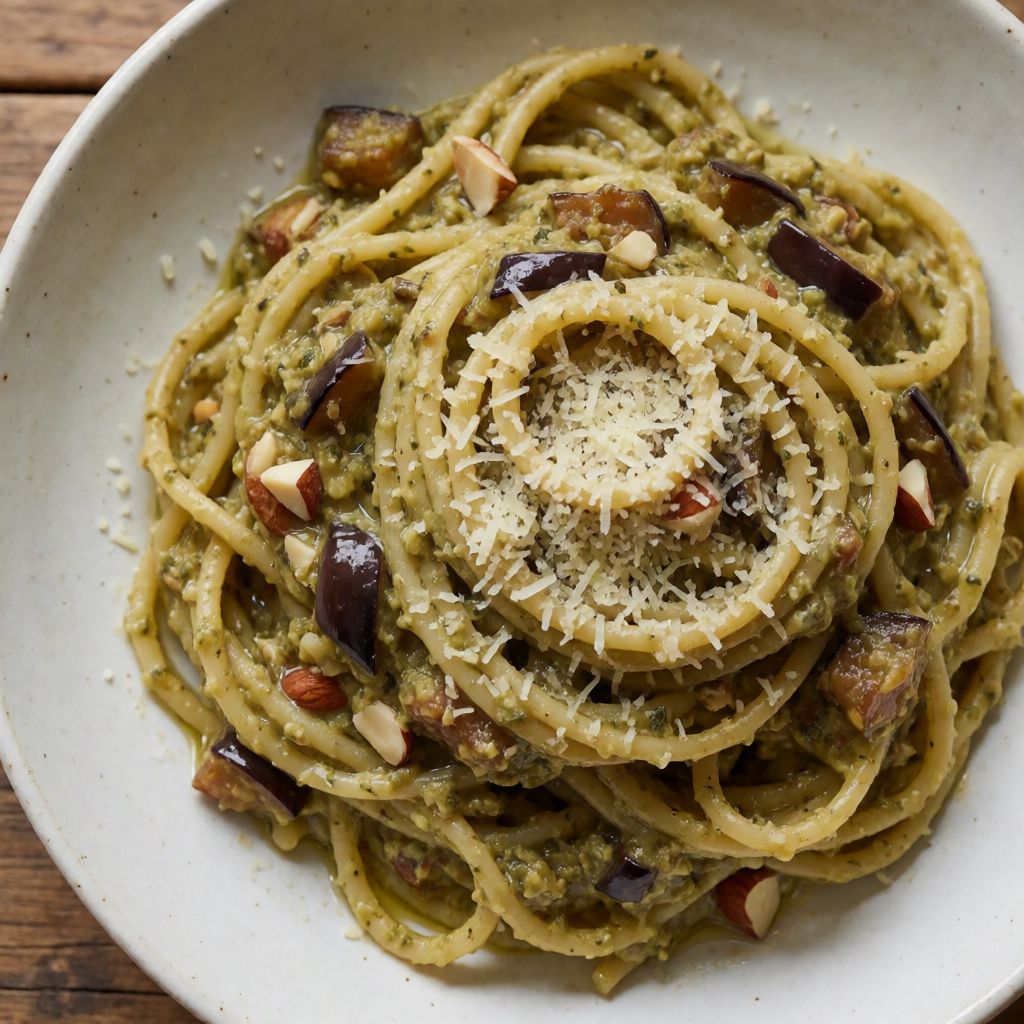
 AI photo
Pasta with Aubergine Pesto
Pasta tossed in a smoky roasted aubergine and almond pesto, finished with parmesan and black pepper.
Labels are worked out automatically from the ingredients and can be wrong. Check the packaging if it matters to you.
Ingredients
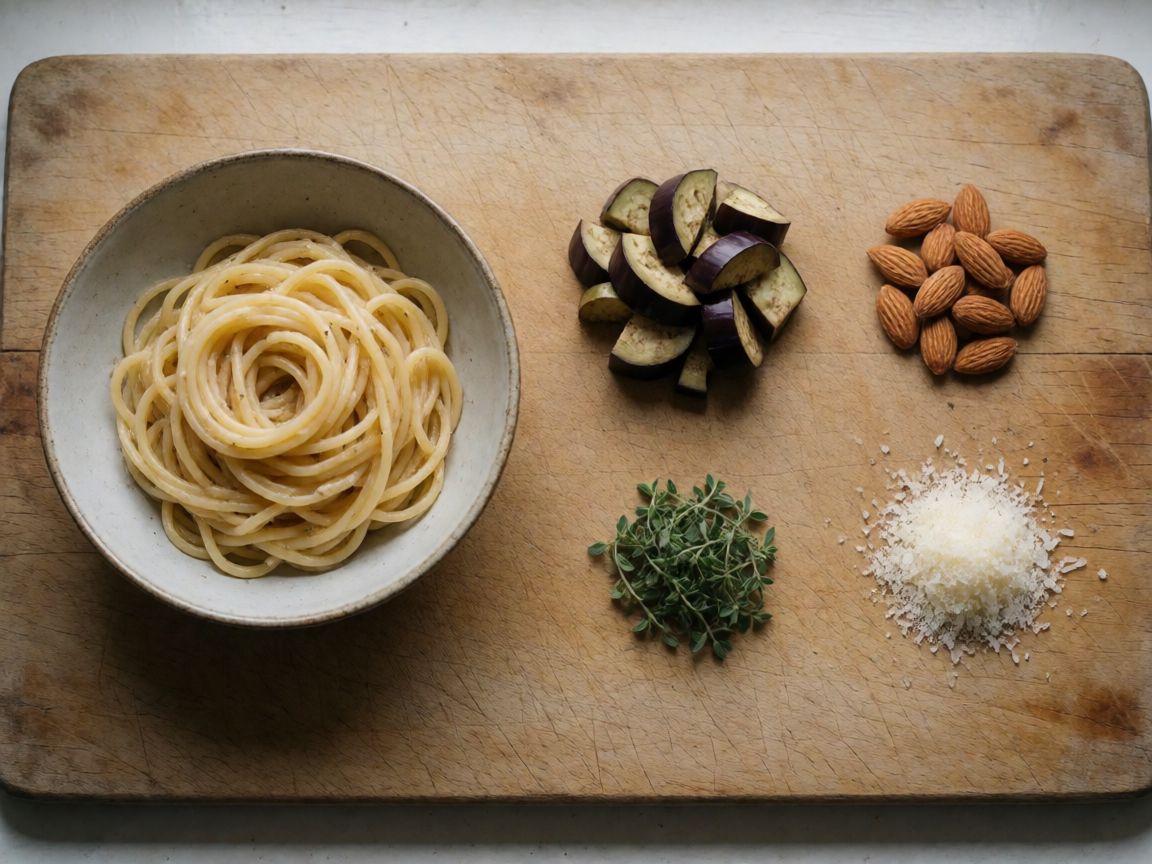








Steps
Wash the aubergines, peel them, and cut into slices about 1 cm thick, then into smaller pieces.
Spread the aubergine pieces on a baking tray lined with baking paper and roast in an oven preheated to 160°C.
35 minPut a pot of water on to boil for the pasta.
In a blender, combine the almonds, marjoram leaves and olive oil a little at a time, blending for a few seconds.
Add the roasted aubergines, parmesan, salt and black pepper to taste, and blend until smooth.
Salt the boiling water, cook the pasta according to the packet instructions until al dente, then drain.
Toss the pasta with the aubergine pesto, mixing thoroughly; add a little water if needed.
Plate the pasta, garnish with marjoram leaves, sprinkle with black pepper and serve.
This is a pesto in the old sense of the word, not the jar sense. Pesto just means crushed — from the Genoese pestare, to pound — and basil only got attached to the name because it was the herb growing on windowsills in Liguria. Swap the base for something else that can be beaten into a creamy, oily paste, and you still have a pesto. Aubergine does the job because, once its water is gone, its flesh turns soft enough to bind with nuts and oil the same way basil leaves do.
The oven decides this dish, not the blender. Notice there's no oil on the aubergine before it goes in — that's deliberate. Fried aubergine drinks oil like a sponge and you end up tasting grease, not vegetable. Roasted dry, it loses water instead, and what's left concentrates: the flesh goes from spongy and pale to soft amber, collapsing under a fork with no resistance, maybe catching a little brown at the edges. That's the cue, not a clock — 35 minutes is where it usually happens, not a guarantee. 160°C is a gentle heat on purpose: hot enough to drive moisture out steadily, not so hot that the outside scorches before the centre has let go of its water. Some say you must salt aubergine first to pull out its bitterness. No — that habit is left over from older, seedier varieties; the ones sold now are bred mild, and here the oven is doing the water-removal job anyway, more thoroughly than salt ever could.
Aubergine: 300g is roughly one large one or two medium ones — buy by feel, not size. You want it heavy for its volume and firm; a light, spongy aubergine has already started drying out and will give you less flesh once peeled. Peeling matters here because the skin stays tough and slightly bitter even after roasting, and tough skin won't blend into a paste, it'll sit in it as unpleasant flecks. If you've no aubergine, courgette roasted the same dry way will give you a similar silky, water-reduced base — the criterion is any vegetable that turns soft and loses most of its water under heat rather than one that stays crisp.
Almonds give the pesto its body and a bit of bite before blending smooths it out. The real criterion for the nut is fat content — you need something that turns creamy under the blade, not powdery. Walnuts or cashews both do this; dry nuts like dried chickpeas or breadcrumbs, which some cheaper pestos lean on for bulk, will not — they thicken without giving richness. Marjoram is a softer, sweeter cousin of oregano; if you can't find it, oregano in a smaller amount or basil leaves (back to the dish's roots) both work, just taste as you add, since oregano is sharper and goes further.
Parmesan goes in at the blending stage, not sprinkled on top afterwards, because you want its salt and savour worked through the whole sauce, not sitting on the surface. Any hard, aged, salty cheese that grates fine and doesn't turn rubbery under a little warmth will stand in — pecorino is the obvious one, and there are good hard vegetarian cheeses now if parmesan's rennet is the issue. The olive oil here isn't a cooking medium, it's flavouring — all of it goes into the blender, none onto the aubergine tray. Because of that, the criterion for substitution flips: you don't want a flavourless oil here, you want one with enough character to carry the paste, so a bland sunflower or vegetable oil will leave the pesto tasting thinner than it should, even if the quantity's identical.
Salt the pasta water properly — it should taste faintly salty on its own, not just damp — because that's the only seasoning the pasta itself ever gets; everything after is surface coating. Hold back a splash of that water when you drain. It isn't there to loosen the sauce for looks, it's doing a real job: the starch in it lets the pesto grip the pasta instead of pooling at the bottom of the bowl in a separate puddle of oil. Black pepper split in two — a pinch in the pesto, more cracked at the table — because ground pepper loses its aroma within minutes of grinding; what goes into the sauce early has already lost its top notes by the time you eat, so the fresh crack at the end is there to put that back.
400g of pasta and 300g of aubergine, scaled against 60g of almonds and 30g of parmesan, is built for four people eating a proper plateful, not a starter portion — if you're feeding fewer, the pesto keeps a day or two in the fridge under a film of oil, which stops it browning and drying at the surface. One domestic note: a single baking tray with the pieces spread in one layer, not stacked, is what lets steam escape instead of collecting under the aubergine and softening it from below before the top's had any heat at all. If your tray's too small for 300g in one layer, use two rather than crowd one — crowding is the usual reason a home-roasted vegetable comes out stewed instead of roasted.