
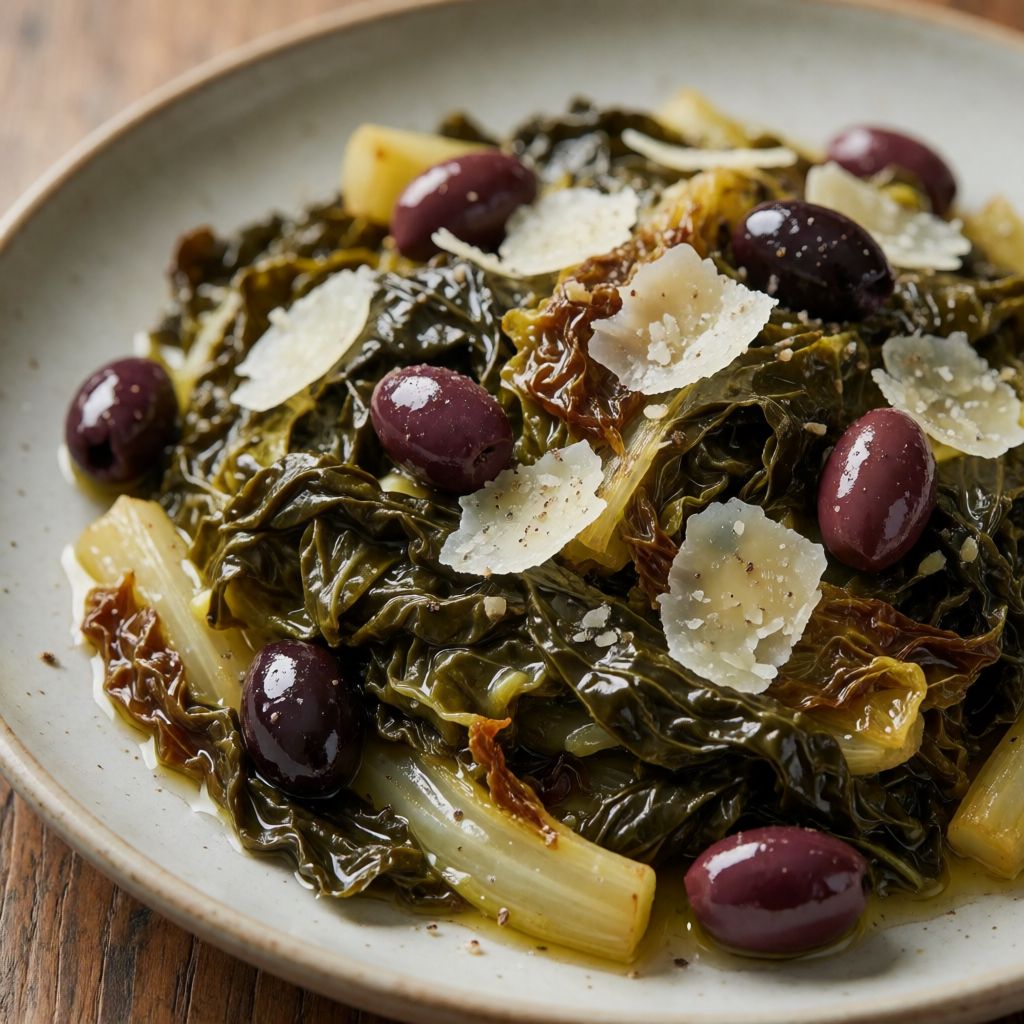
 AI photo
Pan-Fried Escarole
A simple pan-fried escarole with olives, garlic and Parmesan, cooked low and slow until tender.
Labels are worked out automatically from the ingredients and can be wrong. Check the packaging if it matters to you.
Ingredients
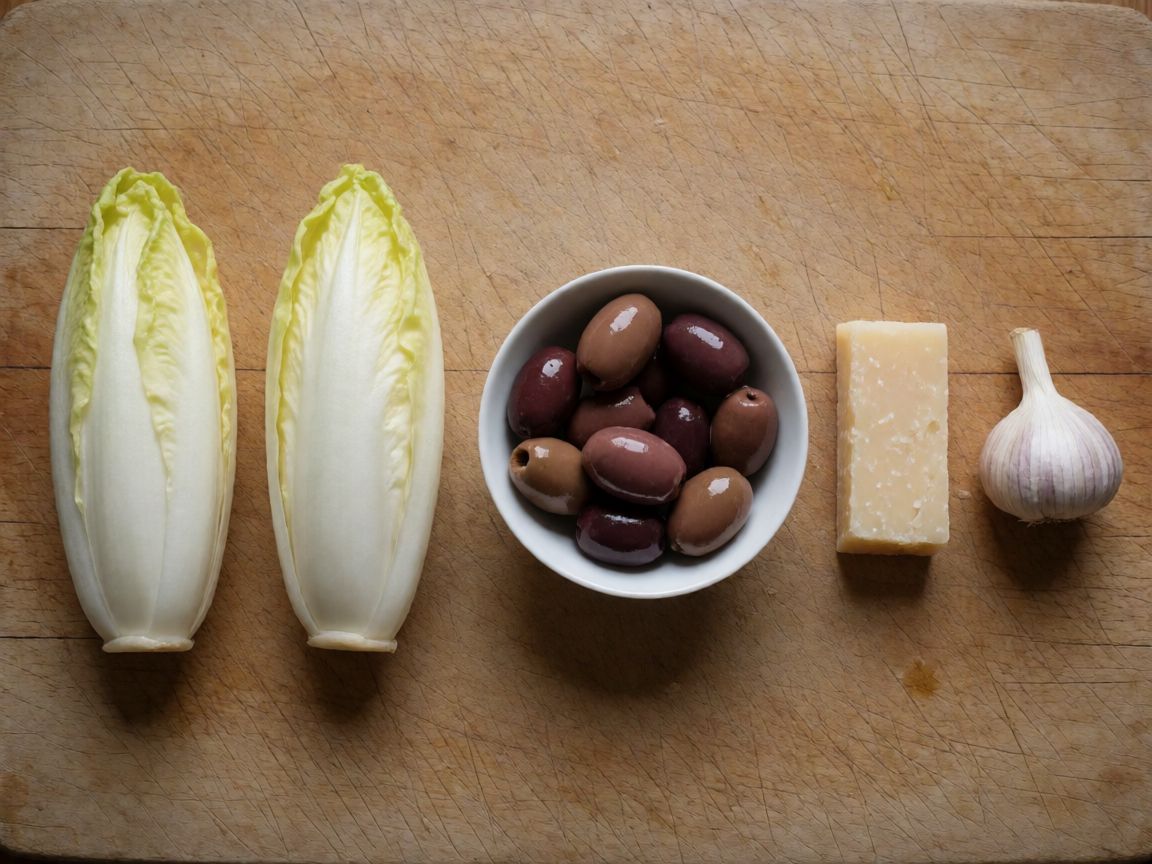
- 2 pcs escarole
- 2 tbsp olive oil
- 200 g taggiasca olives
- Parmesan to taste, for serving
- salt to taste
- black pepper to taste
- garlic to taste







Steps
Thoroughly wash two heads of escarole: remove any damaged leaves, trim the stalk and rinse each leaf well. Cut in half if the head is too large.
In a non-stick pan, heat the olive oil with the garlic so it has time to infuse.
Once the oil is hot, add the escarole and taggiasca olives and stir well to combine.
Lower the heat and cook covered over medium heat.
18 minSeason with salt and black pepper to taste.
If you like, finish with a scattering of grated Parmesan before serving.
Escarole pan-fried with olives is not a salad, even though it starts life as one. Escarole belongs to the chicory family — it's related to Belgian endive and radicchio, which is why it carries a bitterness other leaves don't. Raw, that bitterness is sharp and a bit aggressive. Cooked under a lid with garlic and oil, it turns into something rounder — still bitter, but tamed, the way an onion goes from sharp to sweet. That's the whole point: taking a leaf nobody eats raw in quantity and making it generous.
What decides whether it works is heat, twice. First the garlic in the oil — it needs to warm gently enough to give its smell to the oil without browning, because browned garlic turns bitter and fights the escarole's own bitterness instead of rounding it off. Second, once the leaves go in, the heat drops and the lid goes on, because escarole is mostly water held in a loose head, and that water needs somewhere to go — into steam that wilts the leaf evenly, not into a dry pan that scorches the edges before the middle gives up.
Some say you must blanch bitter leaves like this in salted water first, pour the water away, and only then fry them — supposedly to "take the bitterness out." No — because what goes out with that water is flavour, and the olives and salt in this dish are already built to answer the bitterness, not remove it. Boil it first and you'll end up with a side dish that has nothing much to say.
Escarole itself: look for heads heavy for their size, with leaves that are crisp, not floppy — floppy means it's been sitting too long and has already lost some of the water you need for the steaming later. No escarole? Curly endive (frisée) is the closest relative and behaves the same way, just with thinner leaves that wilt faster, so watch them rather than trust the floor-time. Cavolo nero or chard will give you a green side dish but not this one — they don't carry the same bitterness, so the olives end up sitting next to the leaves rather than answering them.
The garlic going in before the escarole, not with it, isn't fussiness — it stops a real defect. Garlic burns in under a minute once a pan is properly hot, and burnt garlic is bitter in an acrid, unpleasant way, nothing like the clean bitterness of the leaf. Infusing it gently in the oil first — a whole clove or two, lightly crushed rather than chopped fine — lets the oil carry garlic's smell into every leaf without the garlic itself ever getting the chance to scorch. Skip this and add it raw with the leaves at full heat, and you'll taste exactly what went wrong.
Taggiasca olives are small, Ligurian, with very little flesh on a disproportionately large stone — which is exactly why they're sold whole and unpitted: nobody bothers pitting them commercially at that ratio. What they bring is a concentrated, almost fruity salt-sourness a bigger, wetter olive won't give you. Can't get them — look for any small black cured olive with thin flesh; Niçoise is the nearest stand-in. Avoid Kalamata here; they're meaty and wet and will drown the escarole in brine instead of seasoning it.
Use olive oil because its job is to carry the garlic's smell, not disappear — any oil with no smell of its own would waste that whole first step. Parmesan, if you want it, goes on at the very end, off the heat, grated straight onto the hot leaves — not stirred in over the flame, where it just turns greasy and stringy instead of melting in. Salt comes last for the same kind of reason: the olives are already salty, and tasting before adding more saves you from the most common fault here — a plate that's technically seasoned and completely unpleasant to eat.
Wash the escarole properly not out of ceremony but because it grows low, almost sitting on the soil, and grit collects right where each leaf meets the stalk — rinse there specifically, not just a once-over under the tap. And about the lid: most kitchens here don't have one that fits a wide pan properly, let alone seals steam the way a kazan lid would. A plate set over the pan does nearly the same job — it won't seal as well, so give the escarole a few extra minutes rather than trusting eighteen on the nose, and listen for the hiss dying down as your sign the water's gone from liquid to steam to done.
Patience here is short but real: don't rush the garlic, don't crank the heat to hurry the wilting, because both shortcuts trade a few minutes for a dish that tastes faintly of being rushed. Two heads, a couple of tablespoons of oil, and twenty minutes of leaving the pan alone is enough to feed four as a side — it doesn't ask for much, just for you to stay out of its way at the right moments.