
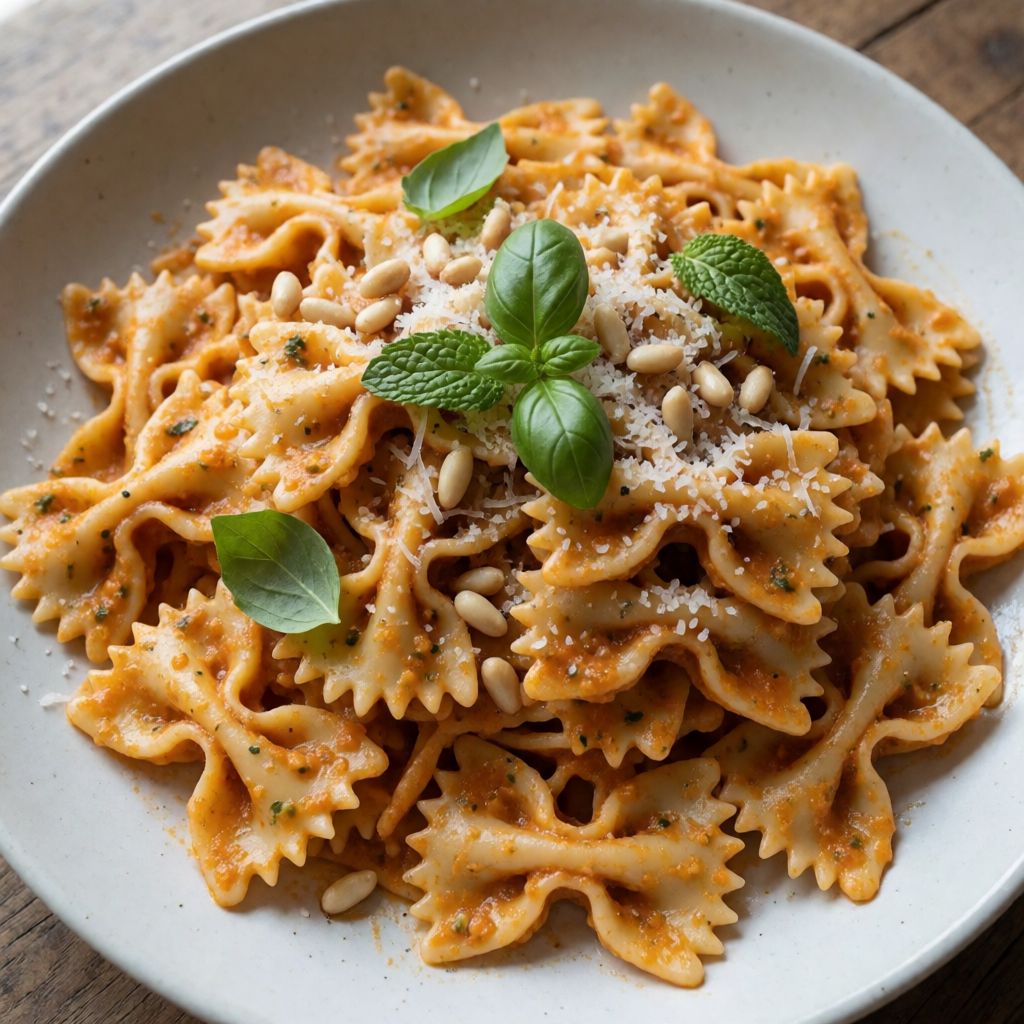
 AI photo
Farfalle with Basil, Mint and Datterino Tomato Pesto
Bow-tie pasta tossed with a fresh basil, mint and datterino tomato pesto, finished with parmesan and pine nuts.
Labels are worked out automatically from the ingredients and can be wrong. Check the packaging if it matters to you.
Ingredients







Steps
Bring a large pot of salted water to the boil and cook the farfalle until al dente.
In a blender, combine the basil, mint and datterino tomatoes.
Add a pinch of salt, the pine nuts, parmesan and olive oil.
Blend until a smooth, slightly runny pesto forms.
Drain the pasta, transfer to a serving bowl and toss with the pesto.
Generously sprinkle with grated parmesan.
Serve immediately.
This isn't Genovese pesto with cheese and pine nuts bound by basil oil — it's a raw crushed sauce (pesto just means pounded, from pestare) of basil, mint and little sweet tomatoes, loosened with oil and married to hot pasta straight out of the pot. The tomatoes go in raw, not cooked down, so their juice and acid stay inside the sauce instead of being reduced away. That's the whole character of this plate: thin, bright, almost translucent green clinging to the farfalle's ridges, not a thick paste sitting on top of it.
What decides whether it works is restraint at the blender, not skill with a knife. Basil bruises the moment you run the blade too long or let the mix sit warm — the cell walls tear, chlorophyll meets air and heat, and the leaf goes from grassy and bright to bitter and almost metallic, the colour dulling toward khaki. A fast spinning blade does exactly what a stone mortar never does: it heats what it crushes. That's the real reason the old pestle-and-mortar method still gets defended — not romance, physics. Pulse the blender in short bursts, don't let it run, and if your kitchen is warm, chill the basil and mint for ten minutes first.
Some say the more you blend, the smoother and better the pesto — no, because smoother here means more torn cell walls and more oxidised chlorophyll, and bitterness climbs with blending time, flavour doesn't. Stop as soon as it holds together loosely; a slightly rough, slightly runny sauce is not underdone, it's correct.
Basil and mint together, not basil alone, is the point, not a variation. Mint cuts the fat of the oil and parmesan the way a squeeze of lemon would, and it stops the dish feeling heavy after a few forkfuls — pure basil pesto, without the acid of tomato or the lift of mint, can sit flat on the tongue. If you've only got basil, add a few drops of lemon juice at the end; it does roughly the same job the mint was doing, cutting through rather than adding more green.
Datterino tomatoes are small, thick-fleshed, sweet, low in water for their size — bred that way, and the reason they end up raw in sauces rather than only in salads. The criterion for a substitute is exactly that: small, firm, sweet, not watery. Any good cherry tomato does the job; a big beefsteak tomato won't, because it carries more water and more acid for its flesh, and it will turn the sauce thin and sour instead of bright.
Pine nuts here aren't toasted in the recipe, and raw they bring a slightly green, slightly resinous note that sits well with the herbs. If you want something rounder and nuttier, toast them in a dry pan until they smell like warm popcorn, not a second longer — past that point they turn bitter the same way the basil does, by the same mechanism: heat pushing oils past the point where they're fragrant into the point where they're scorched. No pine nuts at home is common and not a disaster: walnuts or blanched almonds, pounded a little rougher, carry the same job of giving the sauce body and a faint oiliness.
Parmesan does two jobs at two points: the spoonful in the blender acts as salt and as a binder, giving the oil something to cling to so it doesn't just float on top of the tomato water; the extra grated over the top at the end is seasoning you can see and taste as you eat, not just something buried in the sauce. Any hard, well-aged grating cheese with a similar sharpness stands in for it — pecorino will push the dish saltier and sharper, which isn't wrong, just a different plate.
Olive oil here has no fixed quantity because its job is mechanical, not just flavouring: enough to let the blender blade actually catch the leaves and tomatoes and turn them, and enough afterwards to coat the pasta without pooling in the bottom of the bowl. Use any oil with no smell of its own strong enough to fight the basil — a mild olive oil, or a neutral sunflower oil if that's what's in the cupboard, though you'll lose a little of the fruitiness that a good olive oil adds for free.
Salt the pasta water properly, enough that it tastes faintly of the sea, because that's the only chance the farfalle itself gets to be seasoned from the inside — the sauce coats it afterwards, it doesn't flavour the dough. And keep a cupful of that pasta water before you drain; if the sauce looks too thick or starts to look split once it hits the hot pasta, a splash of starchy water pulls oil and tomato juice back together instead of letting them sit as two separate things in the bowl. That's patience doing its quiet work — thirty seconds of waiting with a ladle in hand, instead of panicking and adding more oil, which only makes the split worse.