
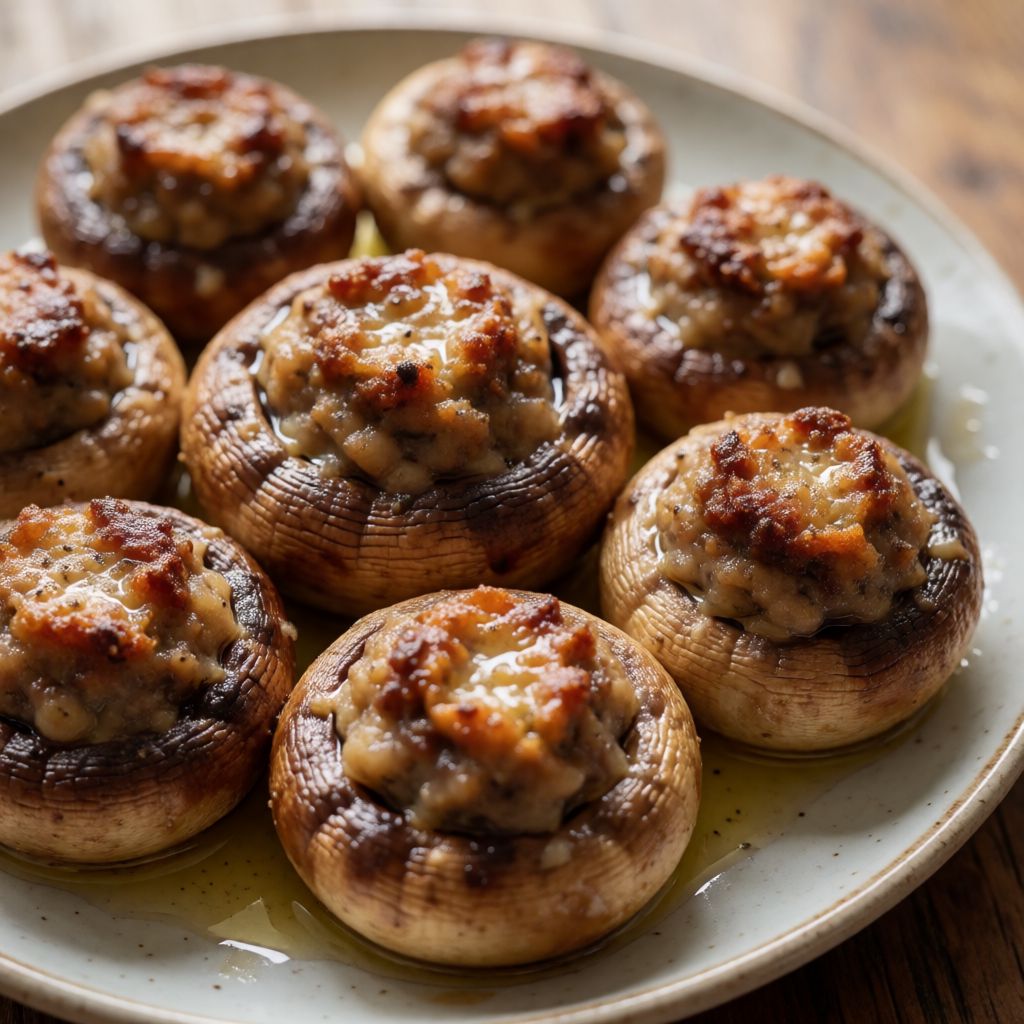
 AI photo
Stuffed Mushrooms
Mushroom caps filled with a savoury beef, breadcrumb and parmesan stuffing, pan-finished until tender.
Labels are worked out automatically from the ingredients and can be wrong. Check the packaging if it matters to you.
Ingredients
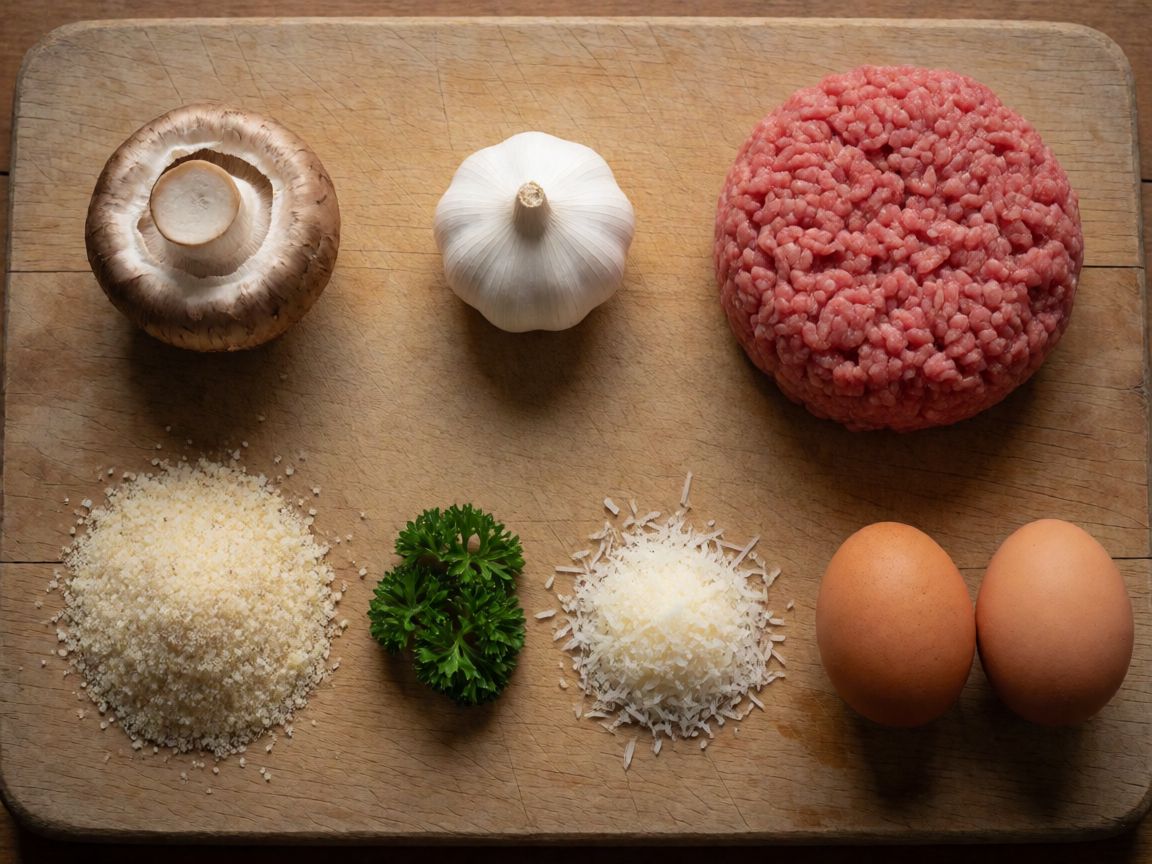
- 500 g Mushrooms
- Olive oil to taste
- Salt to taste
- Black pepper to taste
- Water or vegetable stock as needed
- 1 + 1/2 clove Garlic
- 250 g Minced beef
- 50 g Stale breadcrumbs
- 2-3 pcs Eggs
- 10 g Parmesan
- 1 bunch Parsley










Steps
In a large bowl, combine the minced beef, stale breadcrumbs, eggs and parmesan.
Add salt, black pepper, a little olive oil, half a clove of garlic and chopped parsley. Mix everything until smooth.
Clean the mushrooms thoroughly with a damp cloth or by peeling the outer skin, then separate the stems from the caps.
Chop the stems with a knife and add them to the mince mixture.
Shape small balls of the mixture by hand and place on the mushroom caps, pressing gently so they stick.
Heat a little olive oil in a shallow pan, add the stuffed mushrooms and cook for a few minutes over high heat.
Add a ladleful of hot water or stock.
Turn the mushrooms over and continue cooking covered for another 10 minutes. Done when the centre reaches 71°C.
10 minSeason with salt and pepper to taste and serve immediately.
This isn't a vegetable dish wearing a meat garnish — it's a meatball that happens to be cooked inside a mushroom cup instead of a pan. Think of the mushroom cap as a tiny braising vessel: it holds the juice, it bastes the meat from underneath, and it gives you back its own liquid in exchange. Whether this works depends on one thing people get wrong constantly: you are cooking raw minced beef, not warming through a pre-cooked topping. That changes everything about how you treat the heat and how you decide it's done.
Some say you can tell a stuffed mushroom is ready when the cap has softened. No — the cap softens in minutes, long before the beef ball sitting on top of it has gone from pink to safe. Mushroom and meat have different clocks, and the dish only holds together because the recipe makes the mushroom's liquid do double duty: first it steams the beef through, then it becomes the thin sauce you spoon back over at the table.
The sear at the start, over fierce heat with the lid off, isn't about colour for its own sake — it's about getting rid of surface moisture fast, so what follows is proper cooking and not a slow, flavourless poach. Then the stock goes in, the lid goes on, and the dish switches from frying to steaming. That switch is the whole mechanism: dry heat to set a crust, wet heat to cook the inside without drying the meatball to sawdust.
The mushrooms themselves: field or chestnut mushrooms with a decent dome, big enough to hold a meatball without the filling sliding off the sides. Don't wash them under a running tap — mushrooms are mostly water already, and a wet cap means the sear turns into a steam from the first second, with no crust at all. A damp cloth, wipe and go. That's not fussiness, that's physics: water boils off a hot pan noisily and takes the pan's heat with it, so a wet mushroom delays browning by minutes you don't have.
The stems aren't offcuts — chop them into the mince and they do two jobs: they stretch the filling without diluting its flavour, and they give the meatball a bit of texture against the smoothness of beef and breadcrumb. Throwing them away is just wasting a third of the mushroom for no reason.
Breadcrumbs and egg are the panade — the thing that lets a meatball hold water instead of weeping it out and turning rubbery as it cooks. Stale bread works better than fresh because it drinks up moisture and binds rather than turning to paste; if you've only got fresh bread, dry a slice in a low oven for a few minutes first, or use any plain dried breadcrumb you have in the cupboard — the criterion is "dry and unflavoured," not a specific brand. The eggs do the actual binding; two is usually enough, three is for a looser mix or bigger mushrooms — go by feel, the mixture should hold its shape in your palm without being stiff.
Parmesan isn't there to taste cheesy, it's there for salt and glutamate depth in a small quantity — any hard, aged grating cheese with a similar dry, savoury character will do the same job; a soft mild cheese won't, because it melts and loosens the mix instead of seasoning it.
Garlic is split for a reason: half a clove goes raw-ish into the mixture for sharpness that survives the cook, the rest goes in with the oil at the start of frying so its flavour infuses the fat before the meat ever hits the pan — garlic burnt directly against hot metal turns bitter fast, so it's safer dropped in with the olive oil rather than straight onto bare pan surface.
On your hob: a wide shallow pan is your kazan substitute, and it's actually the right shape for this — you want the mushrooms sitting in a single layer, caps up, not stacked, so the stock underneath can do its steaming job evenly and the tops stay exposed to catch a bit of colour. No lid that fits? A plate set on top traps the steam almost as well, which is the only property that matters here — it doesn't need to seal, it needs to keep heat and moisture from just drifting off into your kitchen.
And give it the ten minutes under cover without lifting the lid every thirty seconds to check — every peek lets the heat out and you're just adding time back on. Patience here isn't virtue for its own sake, it's what lets the centre of the meatball actually reach 71°C while the outside doesn't turn to leather from being re-heated over and over by an impatient cook.