
 AI photo
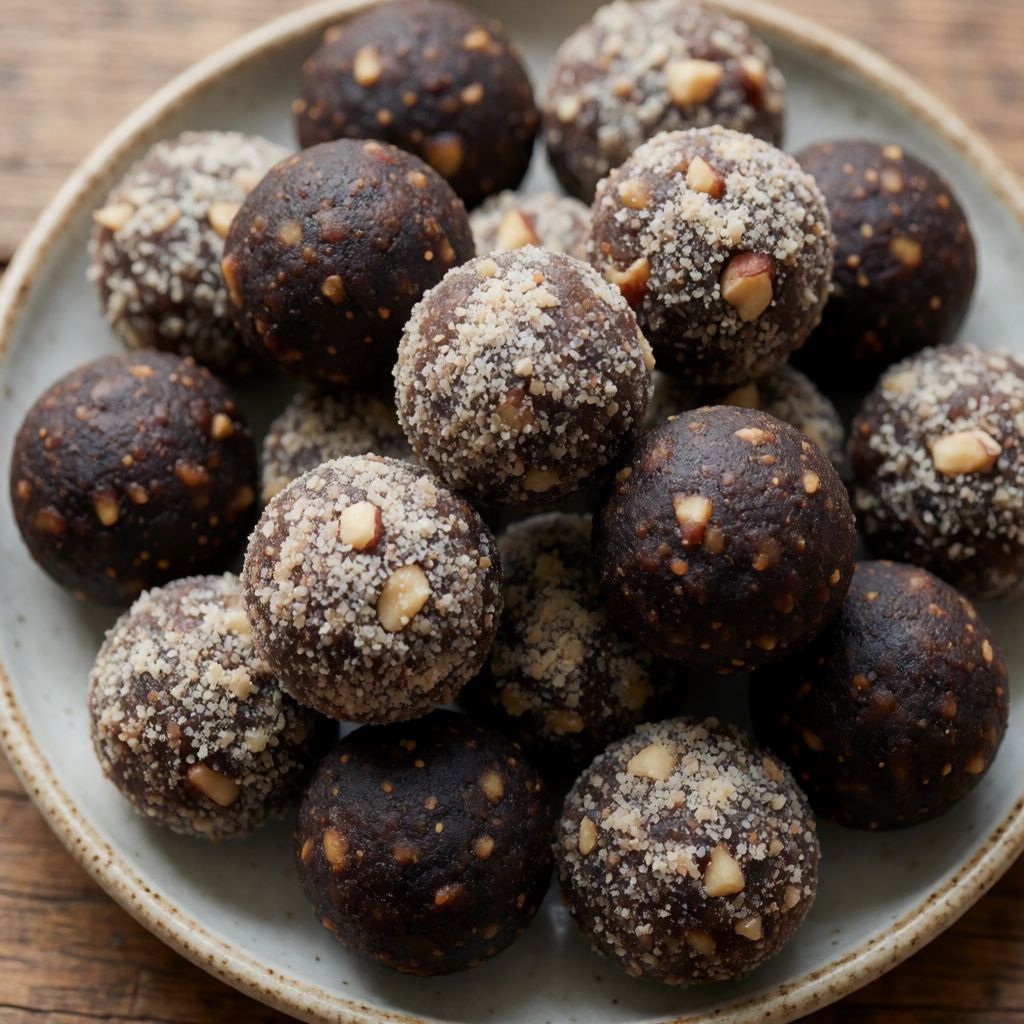
Fig Balls
Bite-sized no-bake sweets made from dried figs, dates and nuts, rolled in a coating of your choice.
Labels are worked out automatically from the ingredients and can be wrong. Check the packaging if it matters to you.
Ingredients
- 6 pcs Dates
- 4 pcs Dried figs
- 1 tbsp Coconut flour
- 5 pcs Hazelnuts
- 1 tsp Liquorice powder
- 1 tsp Honey as a binding ingredient
- 1 tsp Liquorice powder
- 5 pcs Pistachios finely chopped
- 3 pcs Hazelnuts finely chopped



Steps
Blend the nuts and coconut flour in a food processor until they form a fine nut flour.
3 minAdd the remaining ingredients and mix until you get a smooth paste.
2 minRoll into small bite-sized balls and coat in your preferred topping.
5 minRefrigerate for about 1 hour.
60 min
This is not a baked sweet, it is an assembled one — glue and texture, no heat anywhere in it. Twelve bite-sized balls built from stuck-together fruit and crushed nuts, eaten with tea rather than after a roast dinner, because that is the register it belongs to: small, dense, sweet enough that one is the right amount.
What decides whether it works is not flavour, it is stickiness. Dates and dried figs are not "fruit" here, they are the binder — their sugar, concentrated by drying, is what holds the crumb together once you crush it. If the paste in step 2 won't hold its own shape when you pinch it, the problem isn't the recipe, it's the dried fruit: too dry, too old, and it won't release enough sugar-syrup to glue the nut flour. Soften it in a little warm water first rather than fighting it with more honey.
Order in the method matters more than it looks: nuts and flour are ground first, dry, before anything wet goes near the blade. Grind nuts into a paste that already has moisture in it and you get a greasy clump round the blade instead of a fine meal — the machine can't shear what's already wet. Dry first, wet after, every time with this kind of grinding job.
The hour in the fridge is not cooking by another name, and nobody is pretending it is. It is the fat in the nuts stiffening and the sugars settling, so the ball holds its shape between your fingers and your teeth instead of collapsing into paste. Skip it and you'll eat something that tastes the same but behaves like soft putty.
Dates and figs: the actual recipe, everything else is seasoning. Pick ones that are tacky to touch, not sugar-crusted and hard — crusted means the sugar has crystallised out and the fruit has lost the stretch that makes it bind. Medjool-type dates are the most forgiving because they're wetter; if yours are dry, dates or figs, give them five minutes face-down in warm, not hot, water, then pat dry before blending — hot water starts cooking the fruit and changes how it binds. Any sticky, high-sugar dried fruit does the same job if you're out of either — dried apricot or prune, same criterion: pliable, not brittle.
Hazelnuts and pistachios: structure, not the flavour centrepiece. Toast them lightly beforehand if you want more than plain "nutty" — raw nuts bring fat and crunch, toasting adds a browned note on top. The split between hazelnuts ground into the base and hazelnuts and pistachios chopped for the coating is deliberate: fine inside for bind, coarse outside for bite against the teeth. Any nut without a strong resinous smell of its own works as a substitute — almonds, walnuts, cashews — the test is neutrality, not type.
Coconut flour: this is not for taste, it's for moisture control. Dried fruit releases sugar-syrup as it's blended; coconut flour, being nearly fat-free and highly absorbent, soaks that up so the paste firms instead of staying jam-soft. Desiccated coconut does the same job and tastes more of itself, if that's what's in the cupboard. Oat flour or ground almond work too, but almond flour carries its own oil, so cut back slightly wherever else fat appears.
Liquorice powder: an aniseed-bitter note cutting through all that concentrated sugar, which otherwise sits flat and one-note on the tongue. It isn't a strange ingredient so much as an uncommon one in a British cupboard — ground fennel seed or a pinch of ground star anise gives roughly the same bittersweet lift without a special trip to a shop.
Honey: a small top-up of stickiness for insurance, not the main binder — the dates are doing that work. If the paste already holds together at the end of step 2, leave it out. For a vegan version, any thick syrup with no flavour of its own, like agave, does the same mechanical job.
One thing worth saying plainly: some treat the chill as a formality you can skip if you're in a hurry. No — without it the fat hasn't had time to firm, and a ball that looks finished at room temperature will squash flat the moment you pick it up. Patience here isn't tradition for its own sake, it's the only step actually setting the texture. Twelve from this batch suits a tea tray — one each, milk in the tea, nobody reaching for a second because there isn't a spare one going.