
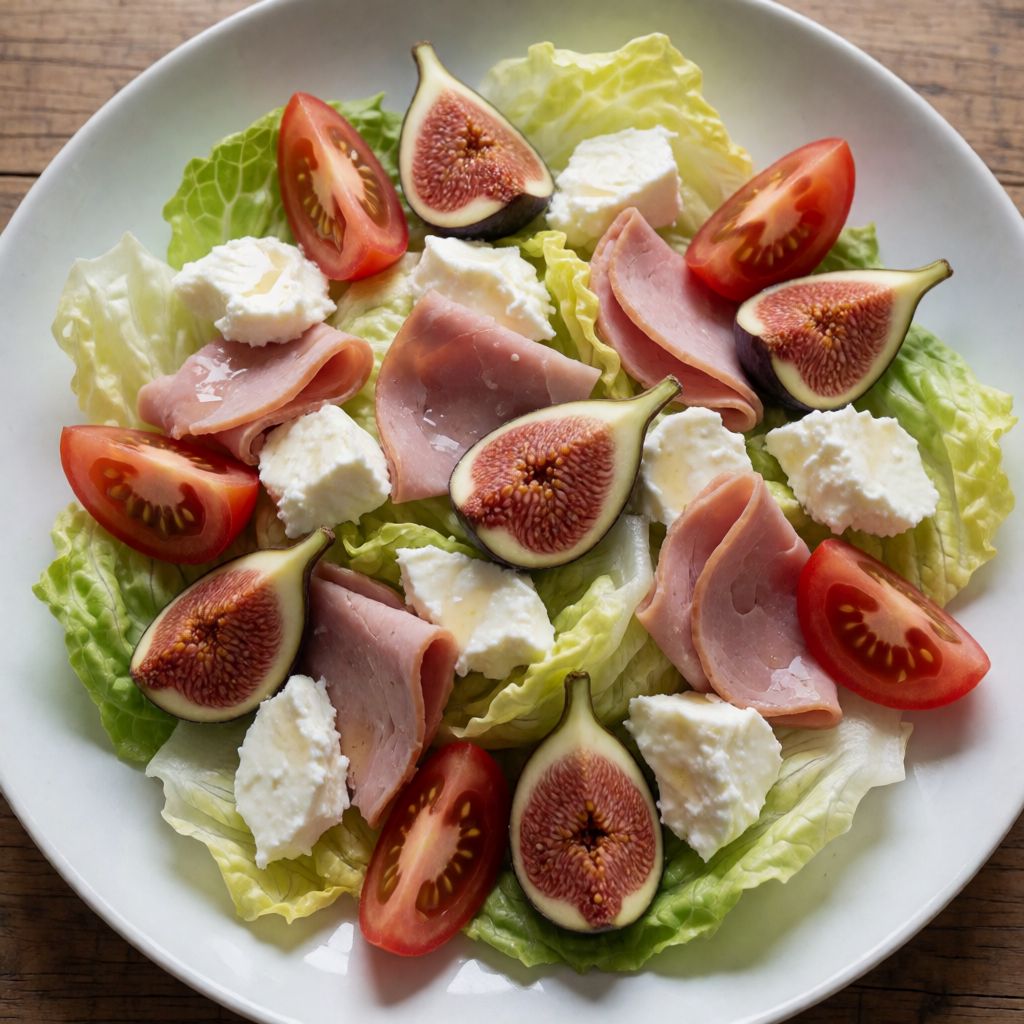
 AI photo
Fig, Mozzarella and Ham Salad
A fresh salad combining ripe figs, creamy mozzarella and delicate ham, finished with a lemon-olive oil dressing.
Labels are worked out automatically from the ingredients and can be wrong. Check the packaging if it matters to you.
Ingredients
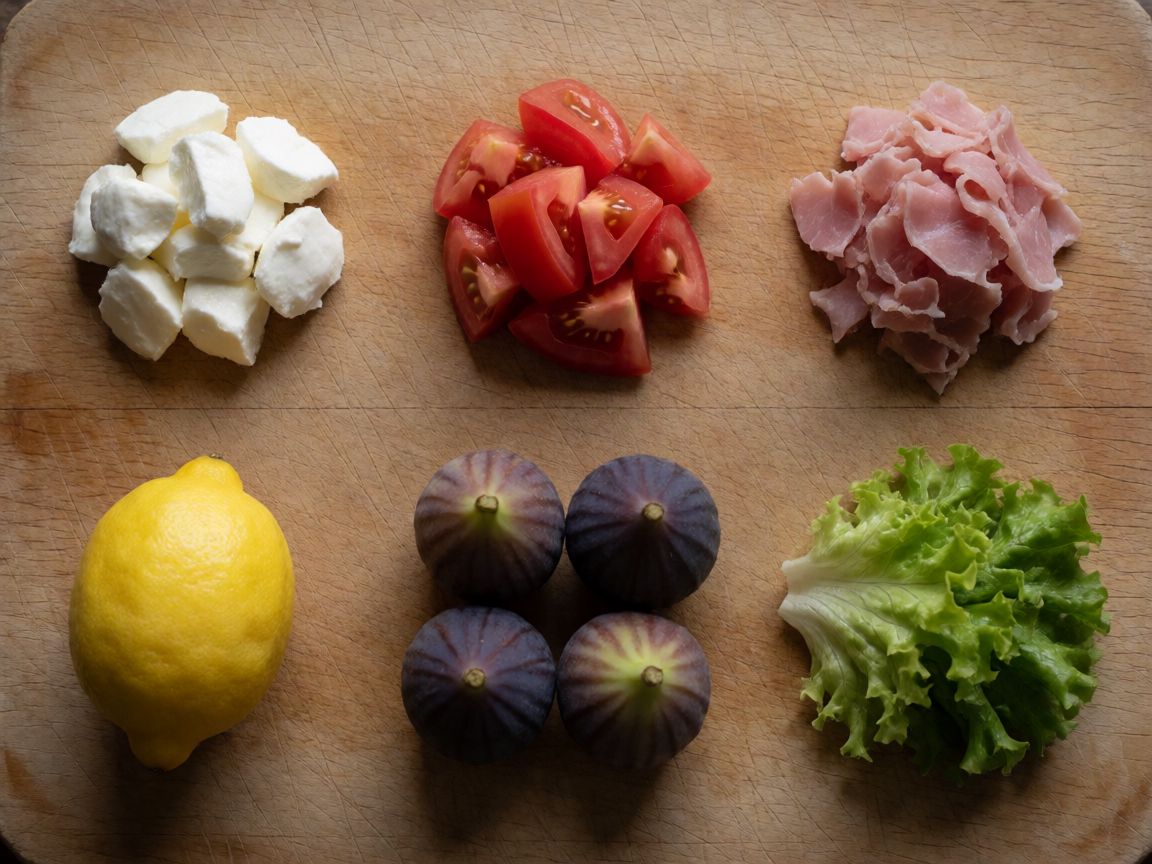
- 300 g Mozzarella
- 100 g Cherry tomatoes
- 150 g Ham
- 1 pcs Lemon
- 4 pcs Figs
- Lettuce leaves to taste
- Olive oil to taste
- Salt to taste
- Black pepper to taste








Steps
Thoroughly wash the lettuce leaves and squeeze out excess water. Shred with a knife and arrange on a large flat platter.
Wash the cherry tomatoes, cut them in half and scatter over the lettuce.
Peel the figs, slice into rounds and arrange over the salad, alternating with slices of mozzarella.
Place the ham, rolled into little rolls, in the centre.
Make a simple dressing: mix a few tablespoons of olive oil with the freshly squeezed juice of one lemon and a pinch of black pepper.
Drizzle the dressing over the salad. Serve immediately, with toasted bread and a light white wine if you like.
This dish has no heat in it at all, which means the usual question — what's cooking and for how long — doesn't apply. What decides whether it works is three things, none of them involving a flame: how ripe the figs are, how warm the mozzarella is, and how late you pour the dressing.
Start with the fig, because it's the one ingredient that's either right or wrong and nothing in between. You want it to give slightly when you press it with a thumb — not mush, just yield. Some say you should wait until a fig is soft as jam before it's ready; no, because by then it's collapsing and won't hold a slice. A fig that's still a little firm cuts into a clean round that sits on the plate instead of sliding off it. If the ones from the shop are hard as a plum, that's not a bad fig, that's an early-picked one — figs don't ripen much once off the tree, but they do soften a day or two on the counter, so buy them ahead and leave them out, not in the fridge.
On the ingredients themselves, start with what mozzarella actually is here, because the name covers a wide range. You want the soft, wet-packed kind sold in its own liquid, not the dense, dry, shreddable block meant for melting on pizza — that one has been drained and aged precisely so it behaves on heat, which is the opposite of what you need on a cold plate. If you can get buffalo mozzarella rather than cow's milk, it's richer and holds its shape a little better when sliced, but the criterion that matters is simple: any soft, mild, moisture-rich cheese that isn't sour. Bocconcini works the same way in miniature. A very fresh, mild burrata works too, though it's messier to slice and more generous with its cream — lovely, but know it's going to run.
The ham is there for salt and fat against the sweetness of the fig, nothing more complicated than that — think of it as the seasoning, not the protein. Any thin-cut ham that rolls without tearing will do: Parma, Serrano, a good Black Forest ham, or — since you're in a country that roasts a joint most Sundays — thin slices of your own leftover cooked ham, if it's sliced fine enough to curl. What it shouldn't be is thick-cut deli ham with a rubbery bite; that fights the texture of everything else on the plate instead of dissolving into it.
Figs are the one ingredient with real economics behind it worth knowing. They're not a British fruit — they don't like the climate, they bruise if you look at them wrong, and almost everything you buy here has travelled from Turkey, Greece or Spain and been picked firm on purpose, because a ripe fig doesn't survive a lorry. That's why they're expensive and why they're sometimes disappointing: you're not buying a bad fig, you're buying one that needs a few more days on your windowsill to finish the journey the grower cut short for shipping reasons. If figs are out of season or the ones available are sad, a ripe pear or nectarine does a similar job — something sweet and soft-watery that plays off the salt of the ham.
Peeling the fig is in the recipe but it's a judgement call, not a rule. Thin-skinned varieties barely need it — the skin is tender enough to eat and adds nothing bad. Thicker-skinned ones can taste faintly bitter and chewy raw, and that's the actual reason to peel: not tradition, just a texture that clashes with the softness of the mozzarella next to it.
For the oil, the only criterion is that it shouldn't compete with the lemon and the fig — so any oil with no smell of its own, a light olive oil rather than a dark, grassy, cold-pressed one that wants to be the main event. The lemon should be squeezed just before mixing, not from a bottle — bottled juice has lost most of its brightness and you'll taste the difference immediately against raw fig and raw tomato, where there's nothing else to hide it.
On quantities: this feeds four as a starter, or two as a light lunch if nobody's cooking anything else that day — which, given it needs no hob and no oven, makes it the obvious thing to put together while the Sunday roast is monopolising both. Squeeze the washed lettuce properly dry before it goes on the platter; that one small bit of patience is what stops the dressing pooling into a puddle under everything instead of coating it. The whole dish asks for very little skill and a fair bit of waiting — for the fig to soften, for the cheese to warm, for the moment just before serving to dress it. Patience is the ingredient doing the actual work here; everything else is just arranging.