
 AI photo
Barbecued Trout
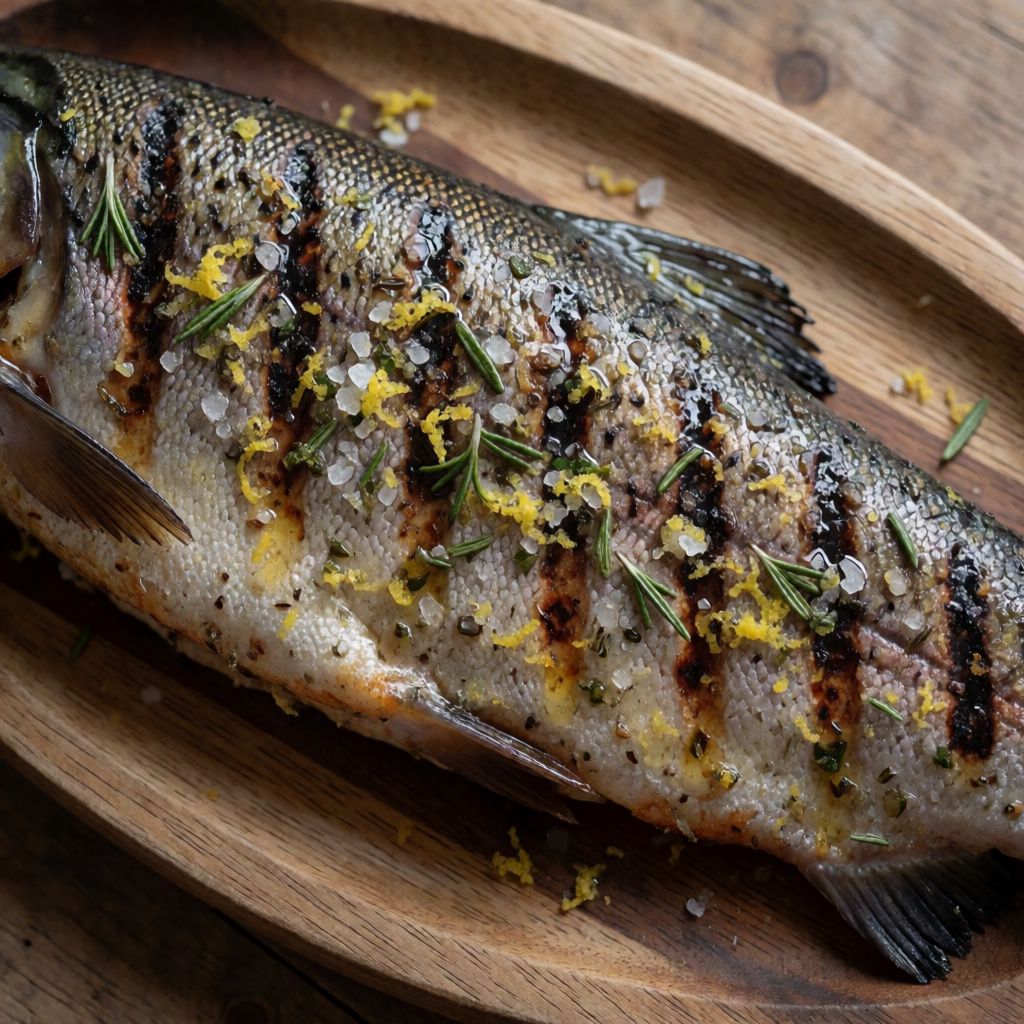
Whole trout barbecued over coals with rosemary, garlic and lemon zest, brushed with olive oil until just cooked through.
Labels are worked out automatically from the ingredients and can be wrong. Check the packaging if it matters to you.
Ingredients
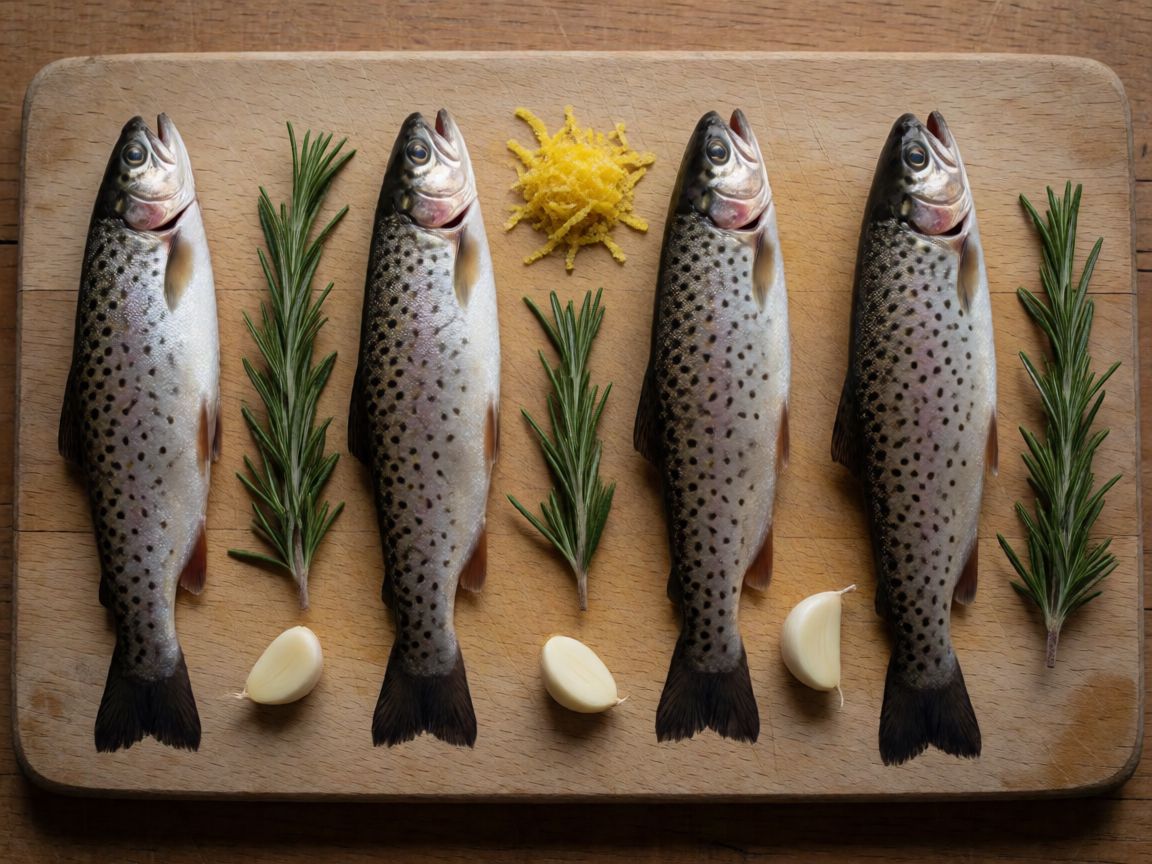
- 4 pcs Trout
- 4 pcs Rosemary sprigs
- 4 clove Garlic
- 1 pcs Lemon zest
- Olive oil to taste
- Salt to taste
- Black pepper to taste







Steps
Light the barbecue coals so the heat is strong enough by the time the trout goes on.
Thoroughly rinse the trout under running water.
Make a deep cut along the belly, remove the innards, and rinse the fish again.
Place a sprig of rosemary, a crushed garlic clove and a little lemon zest into each cut.
Generously brush the fish with olive oil, season with salt and sprinkle with black pepper.
Lay the trout in a hinged fish basket well greased with olive oil.
Barbecue, turning the basket twice for even cooking. It is done when the thickest part reaches 63°C.
20 minTransfer the cooked trout to a nice platter and serve warm.
This is a whole trout, gutted and stuffed, cooked over live coals in a hinged wire basket — not a fillet, not a steak. What decides whether it works isn't the smoke or the herbs, it's whether the fish comes off the grill both whole and moist, because trout flesh carries almost no fat and goes from juicy to cardboard in the time it takes to answer the phone.
The basket is there for a mechanical reason, not a decorative one. Trout skin, once heated, is the only thing holding the fish together — no bone structure does that job, the flesh just sits loosely around the spine. Try to flip it with tongs on an open grate and the skin tears, the fish falls apart, and half of it drops through the bars into the coals. The basket turns the fish without a hand ever touching it, which is why you grease it well: skin sticking to hot wire is the same failure as skin sticking to a dry pan, just with worse consequences, because there's no second chance to rescue it.
Some say fish is done when it flakes apart on the fork. No — by the time it does that on its own, it has already gone past done and dried out while you were deciding. Test it earlier: press into the thickest part near the backbone with a fingertip or the back of a knife, and look for flesh that's turned from translucent grey to an opaque, slightly pink-white, separating cleanly along the bone. 63°C at that point, if you own a probe, is simply naming the moment the proteins have firmed up enough to hold shape but haven't yet pushed all the moisture out ahead of themselves.
Trout itself: buy it whole, gutted if your fishmonger will do it (ask — most will, it saves you the smell), roughly one per person at about the size of a side plate. The cut along the belly does two jobs, not one: it lets you pull out the innards, which turn bitter and muddy-tasting the moment they meet heat, and it opens a channel into the cavity where you're about to put all your flavour. Rinse again after gutting — any blood left along the spine will taste metallic once cooked, and you won't get a second chance to fix that after the fact.
Rosemary goes in whole as a sprig, not chopped, because it's a woody herb — its oils release slowly under heat instead of scorching the way a soft herb like parsley would in the same spot. If you haven't got rosemary, the criterion is: any tough, resinous herb that can sit next to heat without turning bitter — thyme does the same job. Garlic is crushed rather than minced for the same reason you don't want it on the outside skin at all: crushed releases its oils gradually inside a sealed cavity; minced on bare skin just burns black in minutes and tastes of nothing but ash.
Lemon zest, not juice — juice is mostly water, it steams off in seconds and leaves you with damp skin that sticks to the basket. Zest carries the lemon's oil, which survives the heat and perfumes the flesh slowly from inside the fish, which is exactly where you want citrus with an oily fish like trout — cutting through the richness without drowning it.
Olive oil here is doing a job of physics, not flavour: it stops the fish sticking to the metal and helps heat transfer evenly across the skin. For that job, any oil with no strong smell of its own will do — a flavourless sunflower oil for greasing the basket is no loss at all; save good olive oil, if you want to spend it, for brushing the fish itself where you'll actually taste it. Salt and pepper are exactly what they say — salt early draws a little moisture to the surface, which helps the skin along, though don't expect much crackle from trout skin on a barbecue; it's thin, and that's fine.
This whole method — small whole fish, stuffed, cooked fast over open heat — belongs to anywhere people fished and didn't own much kitchen equipment: a riverside fire does the job a kazan or an oven can't, because it needs almost nothing but the fish and the flame. If British weather does what it usually does and the coals don't happen, the honest substitute is a ridged grill pan on the highest the hob gives you, or the oven grill element, turning the fish carefully with two fish slices instead of a basket. You lose the smoke; the gutting, stuffing and high-heat-until-opaque mechanism stays exactly the same.