
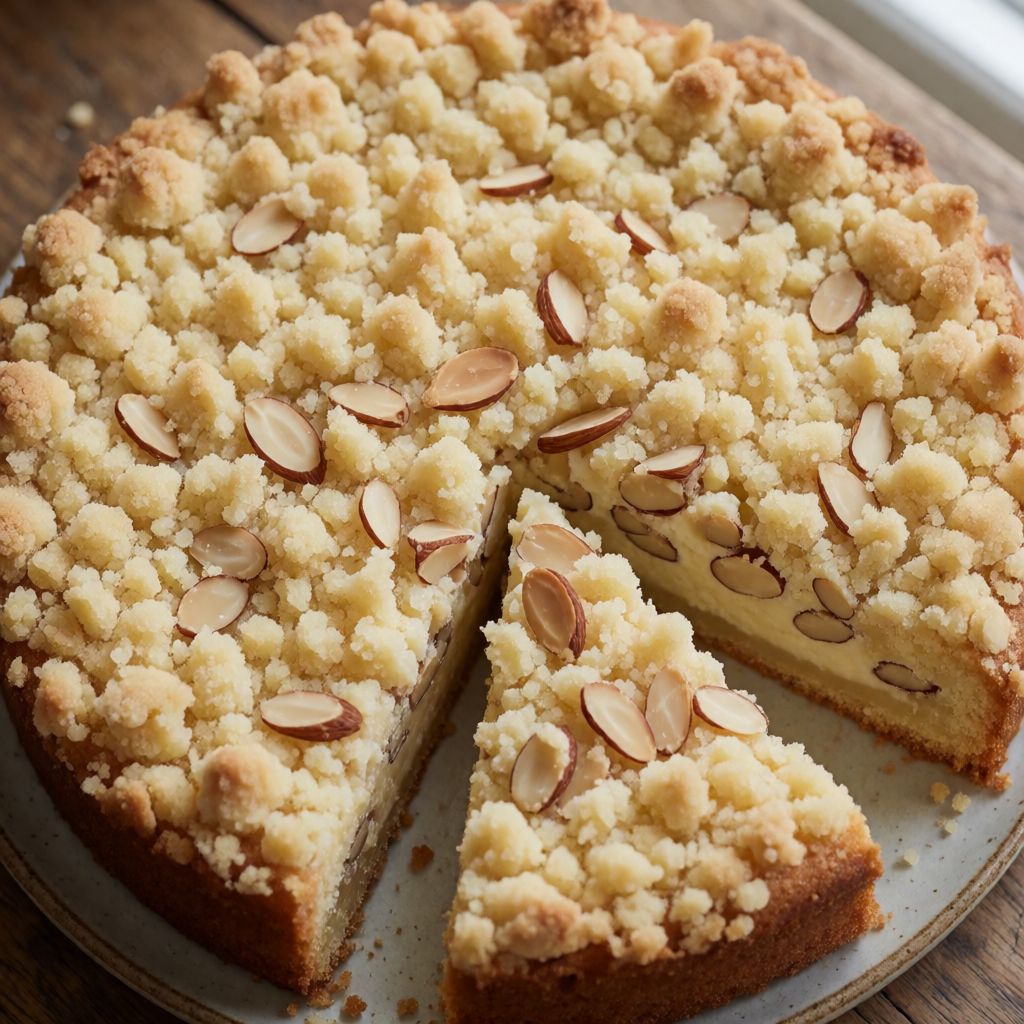
 AI photo
Crumbly Cake with Frangipane Cream and Almonds
A crumbly shortcrust cake filled with a rich almond frangipane cream, finished with icing sugar.
Labels are worked out automatically from the ingredients and can be wrong. Check the packaging if it matters to you.
Ingredients
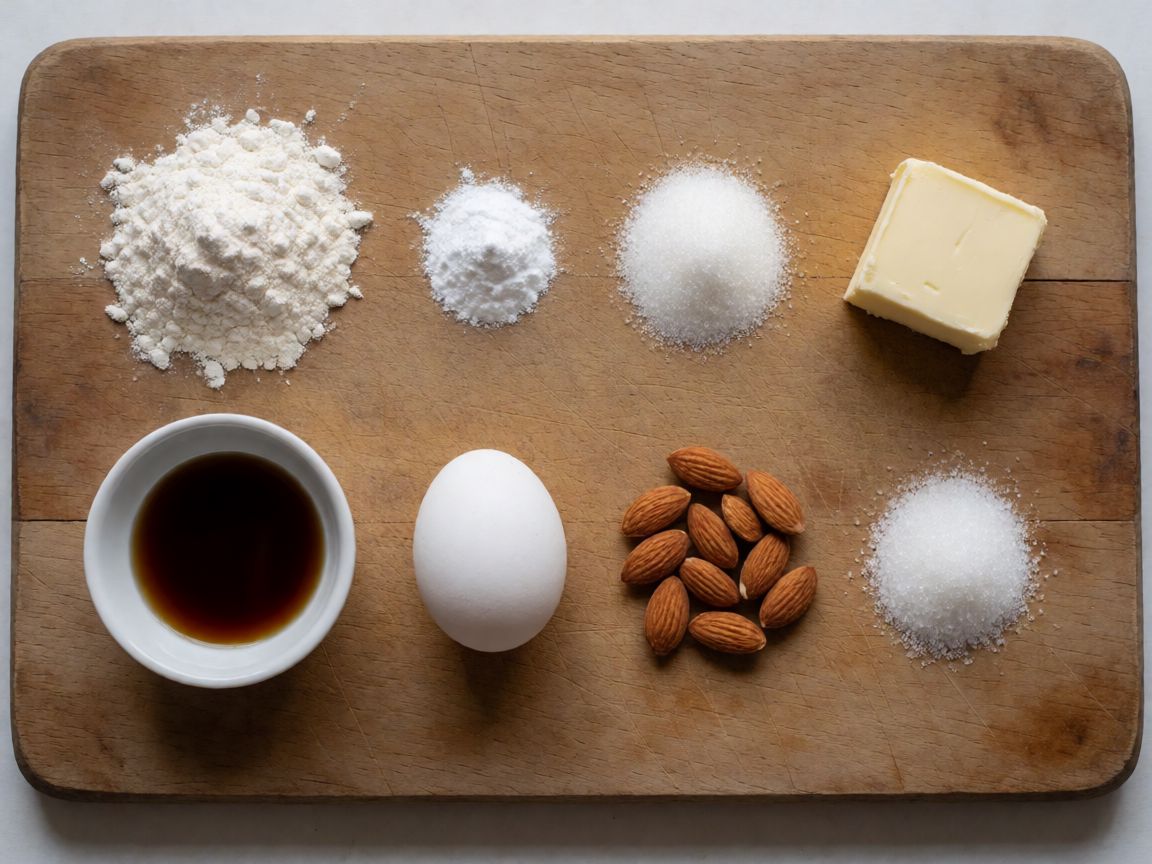
- 300 g Plain flour
- 6 g Baking powder
- 100 g Caster sugar
- 100 g Butter
- 1 pcs Eggs
- 1 tsp Almond extract
- 100 g Almonds
- 100 g Caster sugar
- 100 g Ricotta
- 1 pcs Eggs
- 1 pinch Icing sugar for dusting









Steps
Blend the almonds with the sugar in a food processor to a fine or coarse texture.
In a bowl, whisk the ricotta with a mixer or by hand, add the ground almonds and the egg, mix well and chill in the fridge.
In a large bowl, combine the flour with the baking powder and sugar.
Add the almond extract, the egg and the butter cut into small pieces, and rub the ingredients together with your fingertips.
Transfer about half of the crumb mixture into a 22 cm tin lined with baking paper, and press down firmly with your hands.
Pour the cream into the centre and spread it with a spoon, then cover with the remaining crumb mixture.
Bake in a preheated fan oven at 180°C for about 30 minutes.
30 minLet the cake cool, carefully transfer it to a plate and dust with icing sugar.
This is a sbrisolona-type cake dressed up as something neater — a sandy, crumbled shortcrust shell with a soft almond-ricotta custard hiding inside. What decides whether it works is restraint at two points: how long you rub the butter into the flour, and how wet the frangipane filling is when it goes in the oven.
The crumb is not a dough. You rub butter into flour with your fingertips so the fat coats the flour in uneven lumps rather than binding it into a smooth paste — that's what gives you crumb instead of pastry. Some say you need cold butter and a fridge rest for this, the way you would for proper shortcrust. No — because this isn't shortcrust pretending to hold a shape; it's deliberately left loose, almost like damp sand, so it bakes into something you can break with a spoon rather than slice with a knife. Work it too long, or let your hands warm the butter too much, and you'll get a biscuit base instead of a crumble.
The filling is frangipane's cousin, lightened with ricotta instead of all butter and cream. Ricotta brings moisture without the richness that would make the middle greasy, and it sets softer — more like a baked custard than a cake. Chilling it before it goes between the crumb layers matters for a real reason: a warm, loose filling will slump sideways into the bottom layer and you'll end up with a soggy base and a thin, sad middle. Cold filling holds its position until the oven firms it from the outside in.
180°C fan is hot enough to set the ricotta custard and colour the crumb before the butter has time to melt out and pool — that's the real reason for a hot-ish, no-faffing bake rather than something gentle and slow. You're watching for the top crumb turning from pale sand to light gold, with maybe a little colour creeping at the edges of the tin; thirty minutes is where to start checking, not where to stop the clock blind. An oven that runs hot (most UK fan ovens drift a little warm) will get there sooner — pull it when the colour says so, not the timer.
On flour: plain flour with baking powder added separately gives you more control than reaching for self-raising, because you choose exactly how much lift you want in something that isn't meant to rise much at all — this is a crumble roof, not a sponge. If self-raising is all you have, drop the baking powder and accept the cake will puff a touch more at the edges.
The almonds want to be ground, not flour-fine — a food processor pulsed in short bursts gets you a texture with some bite left, which is what gives the filling body against the smoothness of the ricotta. Ground almonds from a packet work, but they're often finer and drier than fresh-ground, so the filling may need nothing extra — don't add liquid to compensate; it isn't short of moisture, the ricotta sees to that.
Ricotta is doing a specific job here: full-fat, properly drained ricotta, not the watery tub stuff that's mostly whey. If what you've got is wet, tip it into a sieve for ten minutes first — a loose filling is the single biggest cause of a soggy middle layer, more so than oven temperature. Mascarpone is richer and will work as a substitute but changes the character towards something denser and less like a baked custard; cottage cheese, blitzed smooth, is the thriftier stand-in and closer in spirit, since ricotta itself began as a way of using whey nobody wanted to throw away.
Almond extract is concentrated and bitter-sharp compared with almond essence — use it by the drop logic even when the recipe says a teaspoon; too much and it reads as marzipan rather than cake. If you've only got essence, you'll likely want more of it to get the same lift.
Butter: use it cold, straight from the fridge, cut small before it meets the flour — this is the one place where cold really does matter, because it's the uneven melting of small cold lumps during baking that creates the crumb's structure, not just the rubbing-in. Any butter will do; there's no cultured-butter nuance to chase here, the almond and ricotta carry the flavour.
Last thing: patience after the oven, not before it. The cake needs to cool properly before you try to move it — the filling is still soft and setting as it cools, and a cake moved warm will crack straight through the middle where the crumb hasn't yet locked together. Icing sugar goes on last, once it's sitting still on the plate, for the obvious reason that it melts into nothing on anything still giving off heat.