
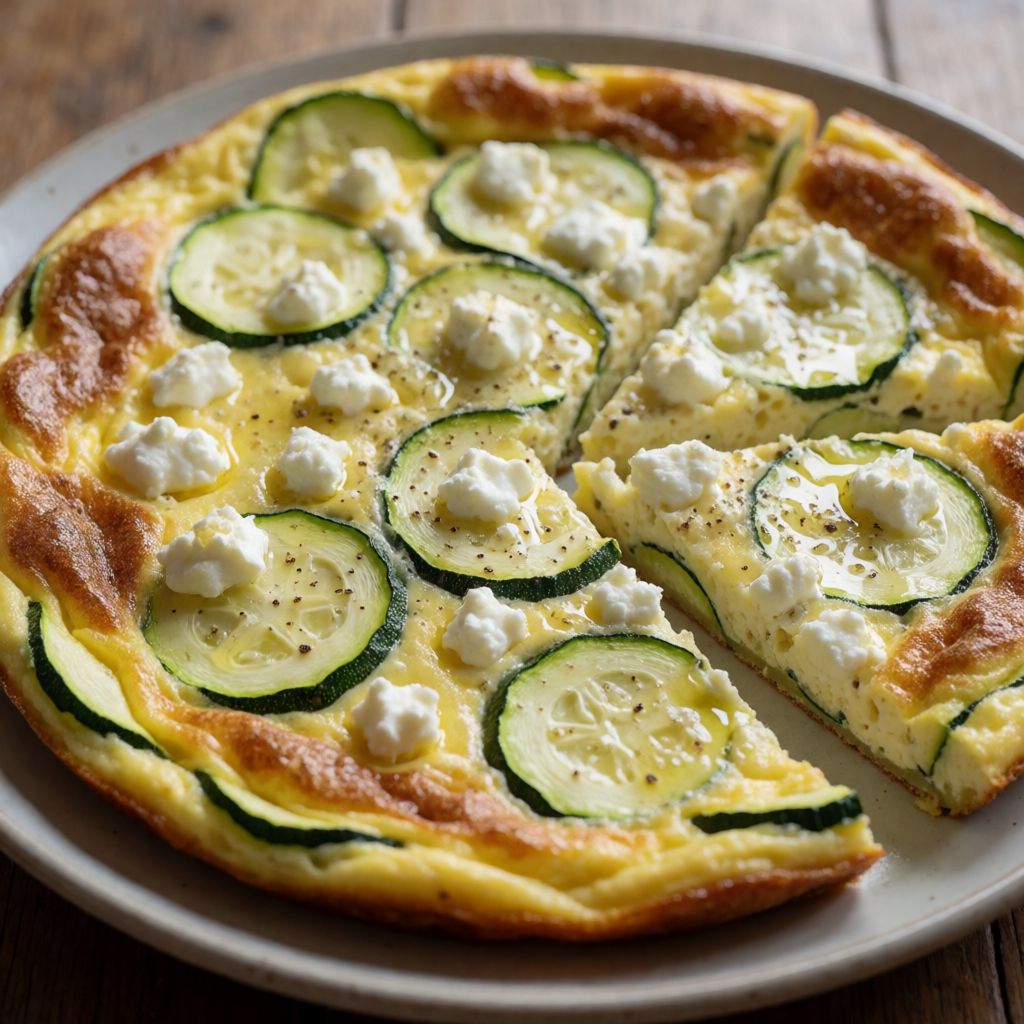
 AI photo
Courgette and Feta Frittata
A simple frittata with courgette and feta, pan-cooked until golden and set.
Labels are worked out automatically from the ingredients and can be wrong. Check the packaging if it matters to you.
Ingredients





Steps
Rinse the courgette under running water, trim the ends, pat dry with a kitchen towel and cut into thin strips.
Pour the olive oil into a non-stick frying pan, add the courgette and fry gently over low heat.
Crack the eggs into a bowl and whisk vigorously. Add black pepper, chives and salt to taste.
Once the courgette turns golden, pour the beaten eggs into the pan.
Cut the feta into small cubes and scatter evenly over the frittata.
Cook the frittata over medium heat.
5 minCarefully flip the frittata and continue cooking.
Cook for a further 3-4 minutes until done.
4 minTransfer to a plate, cut into slices and serve hot.
Forget the French omelette logic here — this isn't egg folded around a filling, it's a flat disc where egg is the glue holding courgette and feta in suspension, set all the way through rather than scrambled. That difference is the whole dish. An omelette you can rush; a frittata you can't, because if the middle is still wet when you plate it, you haven't made a frittata, you've made a failed omelette with extra washing-up.
What decides whether it works is water, not time. Courgette is mostly water wearing a vegetable costume. Tip raw slices straight into beaten egg and you get a pale, weeping disc that never quite sets in the middle, however long you leave it on the heat — the water just keeps diluting the egg protein faster than it can bond. That's why the courgette goes into the pan alone first, on a heat gentle enough that it sweats rather than spits. You're not frying it for colour, you're frying the water out of it. The cue that it's ready has nothing to do with a clock: the slices go from the pale green-white of raw flesh to a soft gold, almost amber at the edges, and they go slightly translucent. That's sugar caramelising on a dry surface — it can only happen once the water's gone. Pour egg in before that point and you've wasted the whole exercise.
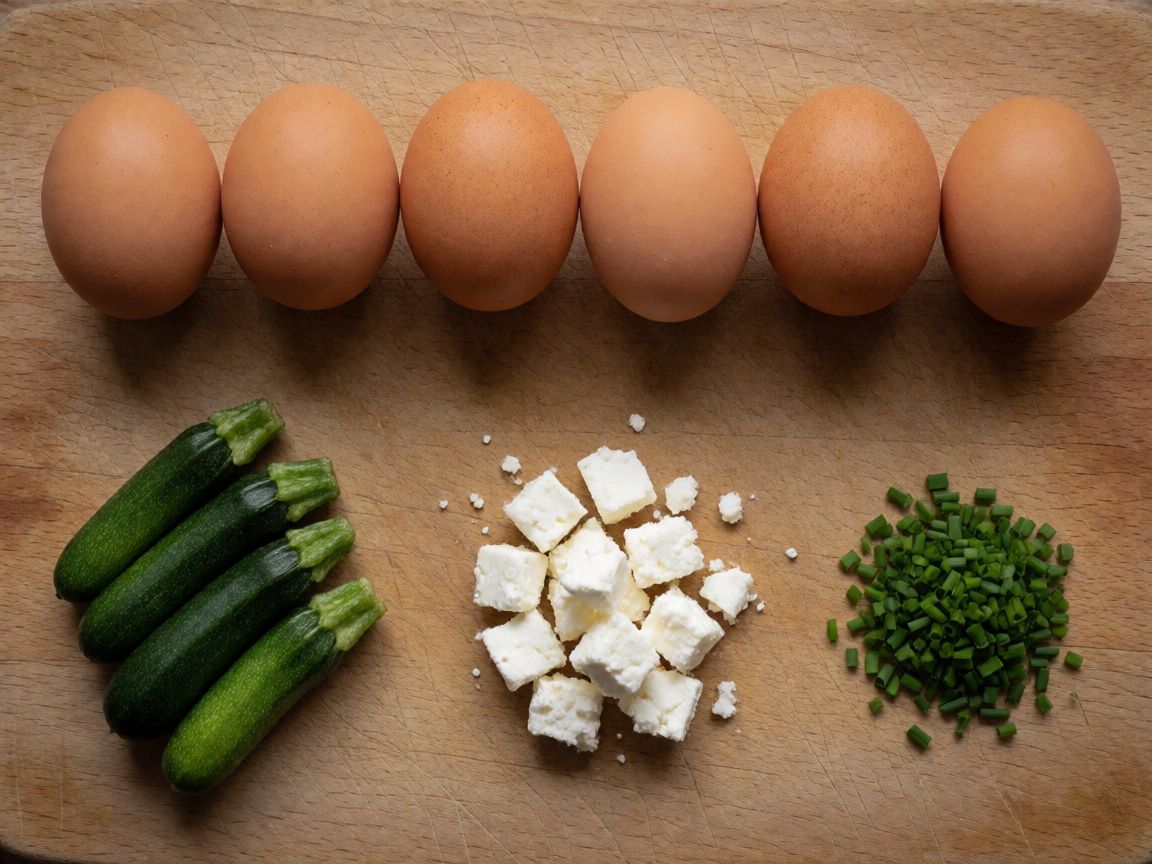
Eggs are the structure, not a flavour. Six for four people gives you roughly one and a half eggs a head, which is enough to set 250g of courgette and 80g of feta into slices you can lift with a fork rather than spoon off a plate. Fewer eggs and the ratio tips toward vegetable soup with egg in it; more and you're back to omelette territory, where the filling is a garnish rather than most of the bite. Whisk them hard before they go anywhere near the pan — you're not trying to add air for fluffiness, you're breaking up the yolk and white into one even liquid so it sets uniformly instead of in streaky patches.
Courgette: buy the smaller, firmer ones if you can choose, because the big ones that have been sitting are mostly seed cavity and water, and you've just read why extra water is the enemy here. Thin strips rather than thick rounds matter for the same reason — thin surfaces lose their water to the pan quickly and evenly; a thick round stays raw in the centre while the outside's already gone to mush. No courgette in the house — any vegetable that's mostly water and softens rather than toughens with gentle heat will do the same job: a grated carrot, sliced mushroom, even peeled and finely sliced marrow, which is what a courgette turns into if you leave it on the plant too long anyway.
Feta: it goes in as cubes, uncooked by the pan, and it should still be cubes when you eat it — a little looser at the edges, not melted into a sauce. That's not a failure of the cheese, it's what feta is: a brine-cured curd whose structure is held by acid rather than the kind of fat-and-moisture balance that lets mozzarella go stringy and gooey under heat. Feta holds its shape under gentle heat and just gets saltier and slightly creamier at the surface. If you've only got a harder, drier cheese — a crumbly Lancashire, a mild goat's cheese log — either will behave the same way: cube it, don't expect it to melt, let it season the egg around it instead.
Olive oil here is doing a frying job, not a dressing job, so don't reach for your best bottle. What you actually need is an oil that can sit at a gentle, water-evaporating heat without smoking or turning bitter — any neutral oil with a reasonably high smoke point does this: sunflower, rapeseed, a basic olive oil rather than a cold-press extra virgin that you'd rather taste raw on bread.
Salt, pepper, chives: season the egg before it meets the pan, not after, because once it's set you're seasoning a surface, not the whole thing. Chives are a mild onion family member doing a quiet job — if you don't have them, the green tops of a spring onion, finely sliced, do the same without shouting over the eggs.
Patience is the ingredient this dish actually tests. The gentle courgette fry and the slow, undisturbed set of the egg both want you to leave them alone and watch rather than poke — poke a setting frittata and you've made scrambled eggs with vegetables in it, which is a different, perfectly fine, but different dish. Served warm with bread and something sharp on the side, it feeds four as a light lunch — the kind of thing you make on a weekday evening precisely because it asks for ten minutes of attention rather than the slow afternoon a Sunday roast demands.