
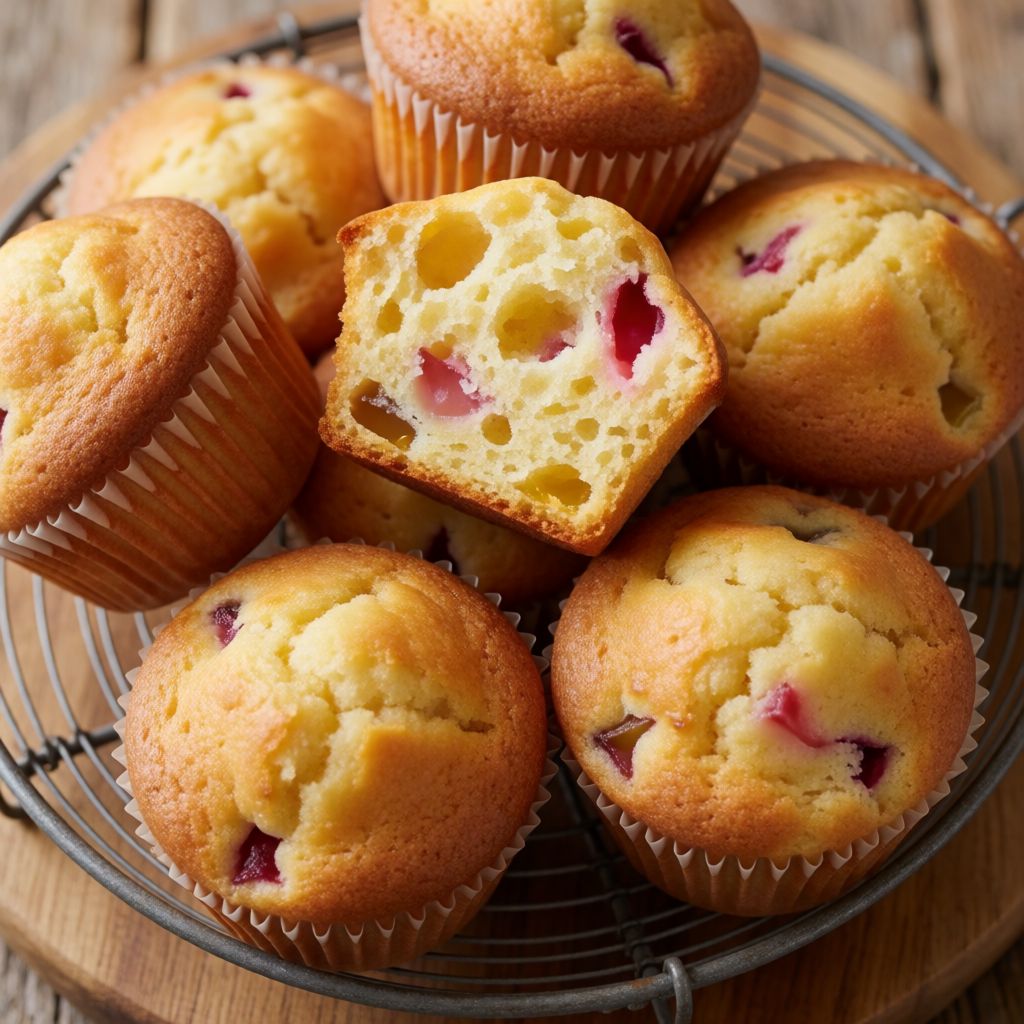
 AI photo
Fruit Muffins
Soft muffins studded with mixed fresh fruit, finished with a hint of lemon zest and vanilla.
Labels are worked out automatically from the ingredients and can be wrong. Check the packaging if it matters to you.
Ingredients
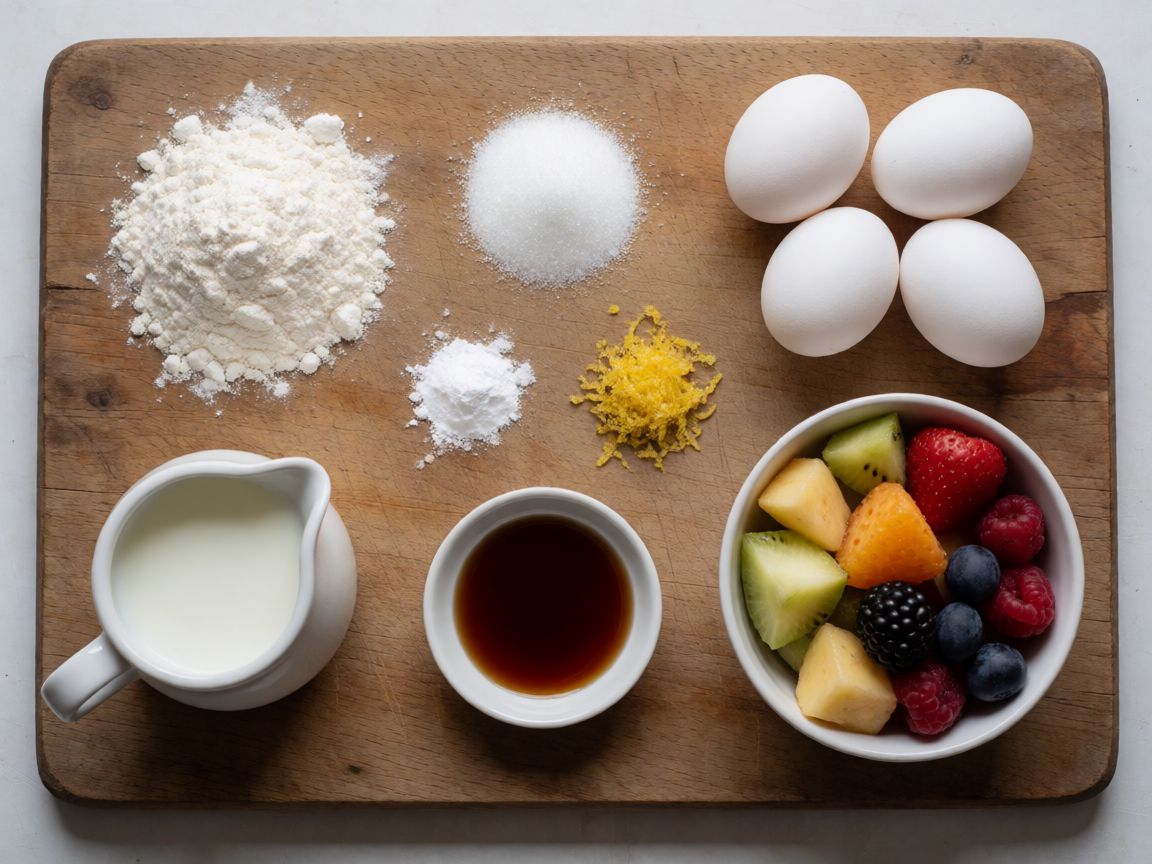
- 500 g Plain flour
- 300 g Caster sugar
- 350 ml Milk
- 4 pcs Eggs
- 130 g Vegetable oil
- 1 pcs Baking powder a sachet
- 1 tbsp Vanilla extract
- 1 pcs Lemon zest from one lemon
- 350 g Mixed fresh fruit









Steps
Wash the chosen fruit and cut it into small cubes. Gently mix in a bowl and set aside.
Sift the flour into a large bowl, add the sugar, lemon zest and baking powder. Mix and set aside.
Beat the eggs, add the milk, oil and vanilla extract, whisking until smooth.
Add about half of the fruit to the dry ingredients and fold in gently.
Pour in the wet ingredients, stirring as little as possible — just until all the flour is moistened.
Divide the batter among paper muffin cases, filling them right to the top.
Decorate the surface with the remaining fruit.
Bake the muffins at 190–200°C in a preheated oven for about 22 minutes.
22 minTake the muffins out of the oven and let them cool on a wire rack.
A muffin is not a small cake, whatever the paper case suggests. A cake batter is beaten to trap air and build structure gradually; a muffin batter is barely stirred, and that difference is the whole mechanism. You want the gluten in the flour left mostly alone — just wetted, not developed — so the crumb stays coarse and open instead of tight and bready. Stir it like a cake and you get a dense, rubbery dome with tunnels running through it, a defect bakers call "muffin tunnelling," caused by nothing more mysterious than overworking the mix.
What decides success here is restraint at step 5. Pour the wet into the dry and fold until the flour is just moistened — streaks of batter, a few lumps, that's fine, that's correct. The moment it looks smooth and glossy like pancake batter, you've gone too far. This is the one place in baking where "a bit messy" is the sign you're doing it right.
Filling the cases to the top matters for the same reason people fuss over oven temperature: a muffin rises fast, on baking powder gas released in heat, not slowly like a yeasted dough. Fill them halfway and you get flat, sad discs with no dome. Fill to the brim and the quick rise gives you that characteristic muffin peak before the structure sets.
On the oven: 190–200°C is a range, not fussiness, because every domestic oven lies to you a little. Fan ovens run hotter than their dial says, and ovens with a thermostat that's ten years old can be out by 15–20°C either way. Twenty-two minutes is where to start checking, not where to stop — look for a muffin that springs back when you press the top gently, or a skewer coming out clean from the centre. If your oven runs hot and the tops are dark before the middle is set, that's not a recipe failure, that's your oven's bias — drop ten degrees next time and give it a minute or two longer.
Plain flour, 500 g, is doing double duty with the baking powder: flour gives structure and absorbs the liquid, and because there's no self-raising flour here, the sachet of baking powder is the only thing making these rise. Don't swap in self-raising and also add the baking powder — you'll get a bitter, soapy aftertaste from too much raising agent, and a crumb that collapses after it over-rises. If you only have self-raising flour to hand, drop the separate baking powder entirely.
The 130 g of vegetable oil instead of butter is why these stay soft a day or two later rather than going stale and crumbly — oil stays liquid at room temperature, butter solidifies and the crumb firms up as it cools. Use any oil with no smell of its own: sunflower, rapeseed, a light vegetable blend. Olive oil will fight the fruit and the vanilla; save it for savoury bakes.
Four eggs and 350 ml milk together give you the loose, pourable batter a muffin needs — thicker and it won't rise properly around the fruit, thinner and it won't hold the fruit suspended at all. If you're short on milk, any dairy or plant milk with similar thinness works; just don't reach for cream, it's too rich and will mute everything else.
The lemon zest isn't there to taste of lemon — in the quantities here it's too little for that. It's there to cut the flatness of 300 g of sugar and lift whatever fruit you've used, the way a pinch of salt does in savoury cooking. Leave it out if you must, but the muffins will taste one note flatter, and you won't quite know why.
On the fruit itself: 350 g of "mixed fresh fruit" is deliberately vague because the recipe doesn't care which fruit, it cares about moisture. Berries, chopped apple, chopped pear, stone fruit with the stones out — all fine, all behave roughly the same, releasing a little juice as they bake and keeping the crumb from drying out. What doesn't work is anything very watery cut too large — big wet melon chunks, for instance — because they'll weep liquid into the batter around them and leave a gluey patch rather than a clean pocket of fruit. Cut small, as the recipe says, and you avoid that entirely.