
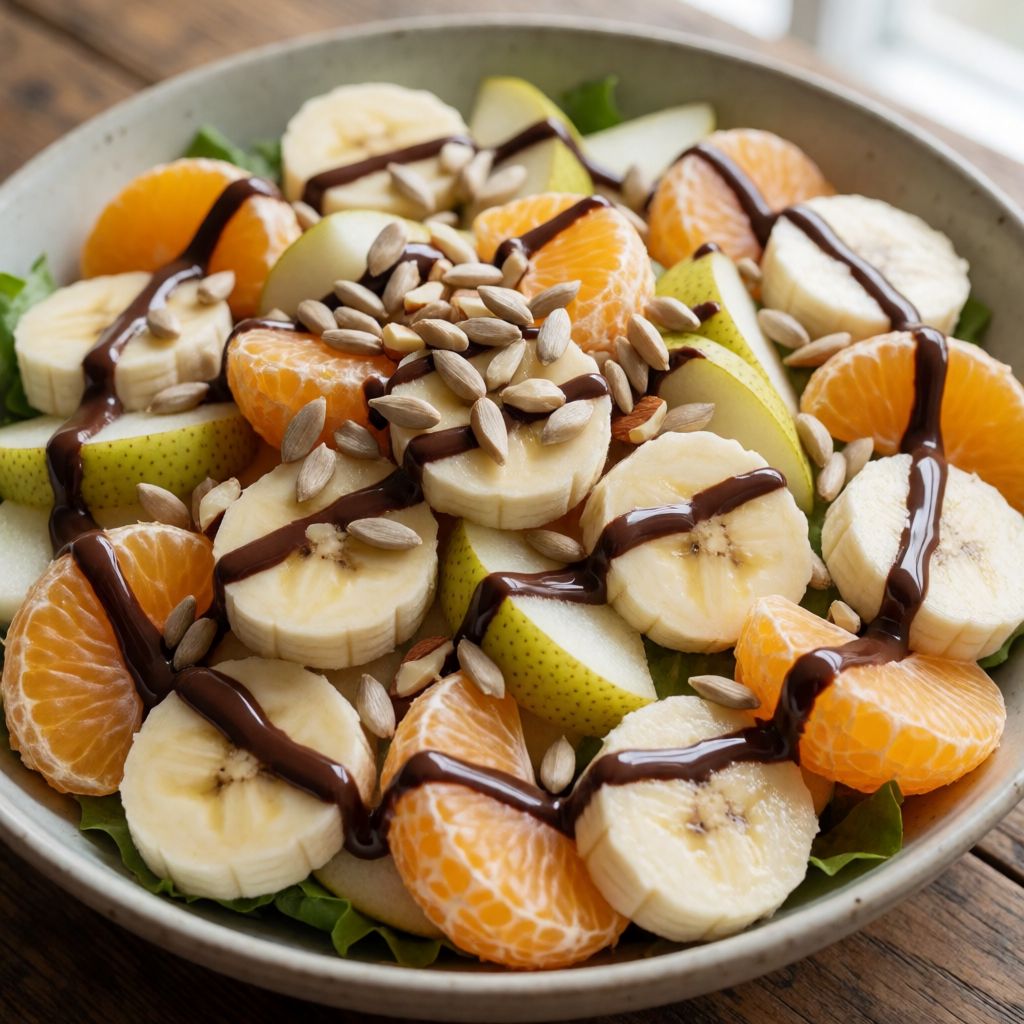
 AI photo
Fruit Salad with Chocolate
A refreshing fruit salad with nuts, seeds and dark chocolate, perfect for breakfast or a light dessert.
Labels are worked out automatically from the ingredients and can be wrong. Check the packaging if it matters to you.
Ingredients
- 1 pcs Banana diced
- 1 pcs Pear diced
- 1 pcs Tangerine segmented
- 1 tbsp Sunflower seeds
- 1 tbsp Almonds
- 20 g Dark chocolate finely chopped
- 1 bunch Mint fresh leaves



Steps
Mix the banana, pear, tangerine, sunflower seeds, almonds, chocolate and mint together in a bowl.
Serve with natural yogurt, Greek yogurt or skyr.
This isn't cooking, it's assembly — the only warmth involved is the one already in your kitchen, maybe your own hand, softening a chip of chocolate against a piece of banana. Nothing here needs a flame, which makes it an odd thing to call a recipe at all, except that getting it right still depends on timing — just not the kind a timer helps with.
The moment your knife goes through banana or pear, an enzyme in the flesh meets the air and starts turning the cut surface dull and grey-brown. Some say rub the pieces with lemon to stop it. You don't need lemon here — you already have a tangerine in the bowl. Toss the diced fruit through its juice as soon as it's cut, and the acid does exactly what lemon would, with no extra trip to the fruit bowl.
The other thing that decides whether this works is how fine you chop the chocolate. Twenty grams sounds like nothing, and left in two or three chunks, it is nothing — you'd get one lucky spoonful and nine disappointing ones. Chopped down to crumbs, it clings to the wet fruit and turns up in almost every bite, bitter against the sweetness instead of hiding at the bottom of the bowl.
And resist the urge to chill it before serving, or to make it ahead. Cold mutes the sugar in ripe fruit and sets the chocolate crumbs hard again, so they stop clinging and start sitting. Mix it, let the fruit sit in its own juice for the time it takes to find spoons, and eat it at room temperature — that's the whole patience required, and it's not much.
Banana: look for a few brown flecks on the skin, not a flawless yellow one. Spots mean starch has already turned to sugar — a spotless banana tastes faintly of potato next to ripe fruit. Dice it last, straight into the tangerine juice already in the bowl, so it doesn't sit exposed to air any longer than it has to.
Pear: press gently near the stem. It should give a little, not crunch like an apple and not collapse under your thumb. Underripe, it's all texture and no sweetness to meet the chocolate's bitterness halfway; overripe, it weeps juice and turns the salad into soup rather than a salad with juice at the bottom. No decent pear in the bowl? A firm apple does the same structural job, though it won't go as soft or as sweet.
Tangerine: pull the segments apart by hand rather than slicing through them. A knife cuts through the membrane and nicks the white pith underneath, which is where the bitterness lives — not the kind that works with chocolate, the kind that just tastes of pith. Segmented by hand, each piece stays sealed and plump, and you get the juice for the bowl, not the plate.
Sunflower seeds and almonds: this pairing is about two different kinds of bite, not two different flavours — the seed gives softly, the almond snaps. Use them raw and unsalted. If the only almonds in the house are the roasted, salted ones left over from the Sunday roast snack bowl, rinse and pat them dry first, because salt next to sweet fruit reads as a mistake, not a contrast. Any other raw nut with enough fat in it to have some bite — hazelnut, cashew, walnut — will stand in without complaint.
Chocolate: dark, and the higher the cocoa percentage the better it argues with the sweetness around it — something around 70% is a good target, though there's no law carved anywhere that says so. Milk chocolate is sweeter and carries more milk fat, so it softens into a gloop faster against warm fruit; if it's all you've got, use less of it and chop it even finer, so it still reads as seasoning and not as pudding.
Mint: tear the leaves just before you mix, don't chop them ahead of time. Bruise mint early and the cut edges blacken and turn bitter within minutes — you've broken open cells that were holding chlorophyll, and there's no putting it back. As for serving: natural yogurt is thin and tangy, Greek yogurt and skyr are strained and thicker. Since the fruit itself is already giving up juice, the strained kinds are the safer choice if you don't want a bowl of liquid by the time you've finished eating. There's no deep history behind this combination — it's a modern pairing, built for a weekday morning when a cooked breakfast takes too long and a roast dinner is a different day's work entirely. Scale it up by the piece of fruit per person rather than doubling the citrus on its own, or you'll end up with more juice than fruit.