
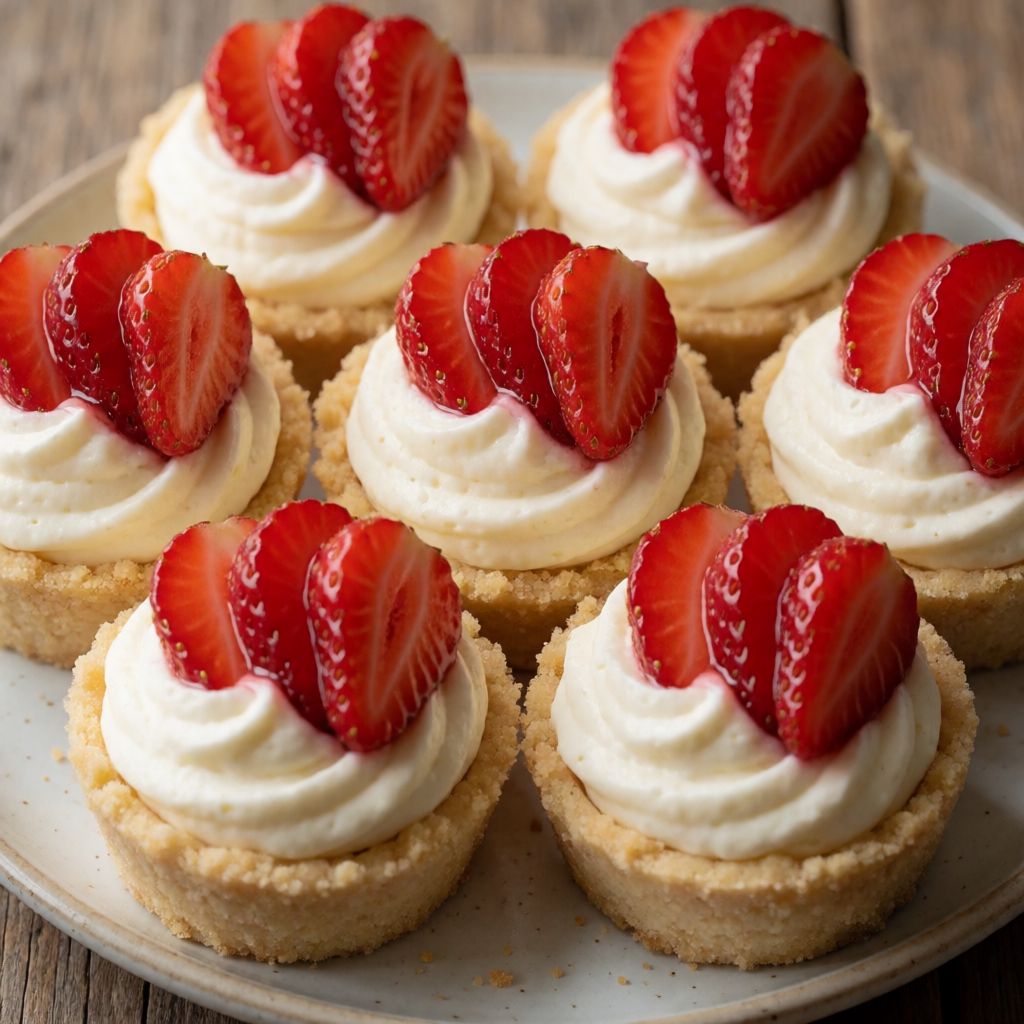
 AI photo
No-Bake Fruit Crumb Tartlets
No-bake crumb tartlets filled with a light mascarpone cream and topped with fresh fruit.
Labels are worked out automatically from the ingredients and can be wrong. Check the packaging if it matters to you.
Ingredients
- 280 g digestive biscuits
- 140 g butter melted
- 125 g mascarpone
- 60 g caster sugar
- 100 ml double cream
- strawberries to taste
- apricot to taste
- cherries to taste
- kiwi to taste







Steps
Crush the biscuits and mix with the melted butter until you have an even crumb.
Press the crumb into loose-bottomed tart tins, pressing firmly with the back of a spoon. Chill in the fridge.
60 minBeat the mascarpone with the caster sugar using a mixer.
Separately whip the double cream to soft, airy peaks.
Fold the whipped cream into the mascarpone mixture and mix gently until smooth and creamy.
Remove the tins from the fridge, carefully release the tartlets, and fill the biscuit base with the cream.
Decorate with sliced fruit to taste — kiwi, apricot, strawberries and cherries.
What was changed
digestive biscuits was swapped in, as this is the usual base for no-bake tartlets in British kitchens.
This is a cheesecake that never sees an oven — just biscuit, butter, cream cheese, and whatever fruit is ripe on the day. The whole construction rests on two things going solid without heat: melted butter cooling back into a crumb that holds its shape, and whipped cream trapping enough air to hold its own weight. Everything after that is just assembly.
What decides whether it works is patience in the fridge, not skill at the stove. The base has to go properly cold before you ask it to stand on its own once you release the tin — melted butter resolidifies slowly, and rush it, and the tartlet collapses the moment the ring comes off. Some say a biscuit base has to be baked to "set properly" — no, because butter doesn't need heat to go hard, it needs heat to go soft, then cold to go hard again. Baking toasts the crumb; it doesn't glue it any better than the fridge does.
The second hinge is the filling, and it fails in one of two quiet ways. Beat the mascarpone too hard on its own and the fat starts to separate out, because mascarpone is almost nothing but fat and water held together loosely by acid, not by any real structure. Whip the cream too far before folding and it turns grainy, stiff in the wrong way. Both end the same — a filling that weeps on the plate instead of holding a slice — but one comes from overworking the cheese, the other from overworking the cream. Keep each soft until the last fold and the whole thing stays light rather than dense.
Start with the biscuits. You want something dry, not too sweet, that crushes to coarse sand rather than fine dust — digestives do this because they're mostly flour, a little sugar, baked hard and flat on purpose. They were originally sold as an aid to digestion, thanks to the bicarbonate in them, and stayed in every British cupboard long after anyone cared about that claim, simply because they're what's on hand next to the tea. Any biscuit with the same dry, crumbly bite will do — ginger nuts if you want a little heat under the fruit, oat biscuits for more bite. Soft, chewy biscuits won't work; they clump instead of crumbling, and the base turns dense instead of short.
The butter is pure glue, and the ratio matters more than taste does here. Melted butter has to coat every crumb without pooling — too much and the base goes greasy and slides when you cut it; too little and nothing holds once you lift the tartlet out of the tin. Roughly half the weight of butter to biscuit, as here, is the balance that works across most dry biscuits, because it's governed by surface area, not flavour.
Mascarpone is set by acid rather than heat or rennet, which is exactly why it behaves so differently from an ordinary cream cheese — it has almost no structure of its own and depends on being handled gently. If you can't find it, full-fat cream cheese loosened with a spoonful of cream gets you close, though sharper and a touch less silky. The sign to stop beating is simple: smooth and glossy, not yet looking wet at the edges of the bowl — that wetness is the fat starting to come apart.
Double cream, whipped on its own, is what lifts the filling — it's the air, not the sugar, that makes it taste light rather than just sweet. You've the fat percentage in your favour here: double cream sits around 48% fat, enough to hold a stable peak without flipping into butter if you watch it. Stop at soft peaks. Folding in cream that's been whipped past that point is how people end up with a filling that sets stiff and heavy once chilled, closer to ice cream than to a cheesecake.
If loose-bottomed tart tins aren't something you own, ramekins lined with a strip of baking paper do the same job — the paper gives you something to pull on where the tin would normally give you a hinge. What you're avoiding either way is the same defect: trying to lift a cold, set base straight off a flat surface with no edge to grip, which is how the crumb cracks apart before it reaches the plate.
The fruit is where this stops being formula and becomes a decision about moisture. Strawberries and kiwi bleed juice the moment they're cut; cherries and apricot hold their shape far longer. Put the wet fruit on close to serving, not an hour ahead, because the one part of this dessert with no insurance against sogginess is the biscuit underneath. And there's a plain reason this whole style of pudding exists in a British kitchen at all: when the oven's already given over to a joint of beef for Sunday lunch, you don't want to be fighting it for space, or heating the kitchen further, for the pudding. That's not tradition for its own sake — that's one oven in the house and more than one thing you want to eat out of it.