
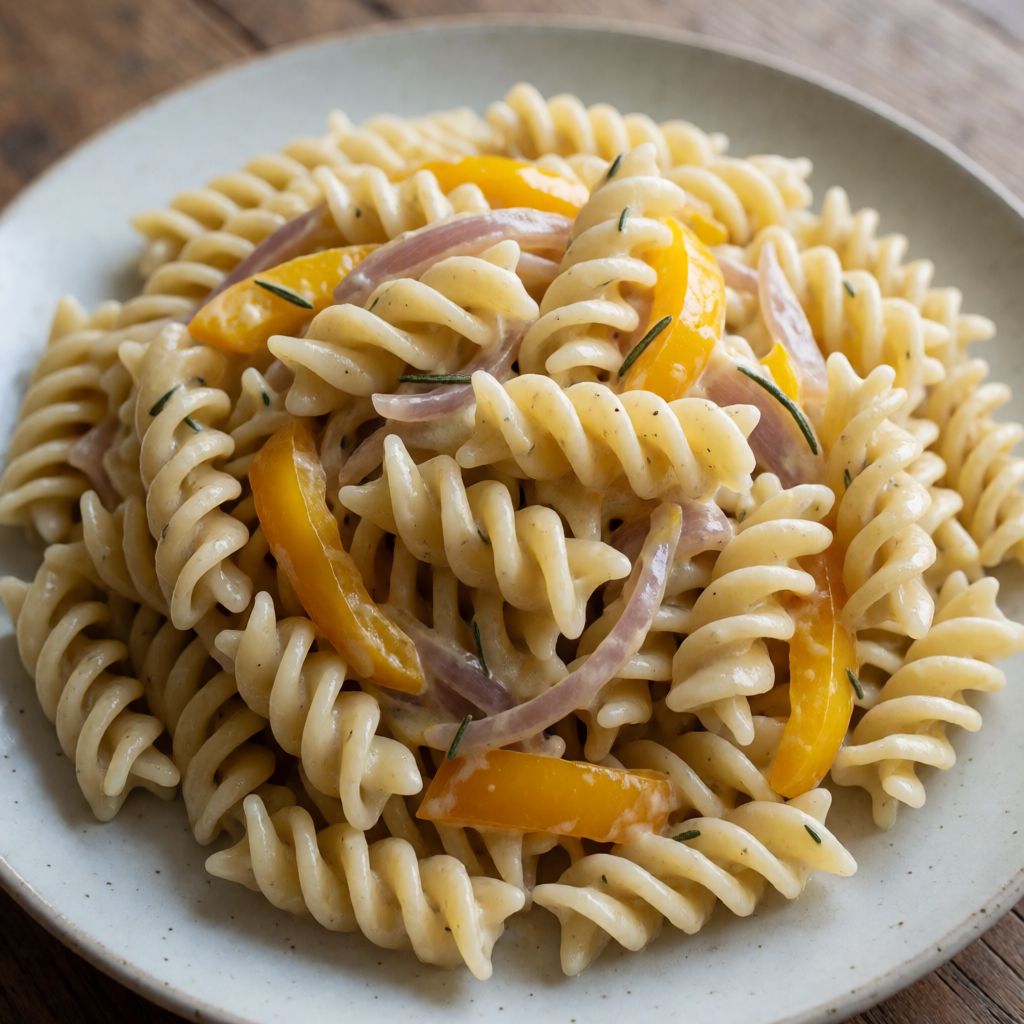
 AI photo
Fusilli with Yellow Peppers
A quick pasta dish with sweet yellow peppers, shallot and cream.
Labels are worked out automatically from the ingredients and can be wrong. Check the packaging if it matters to you.
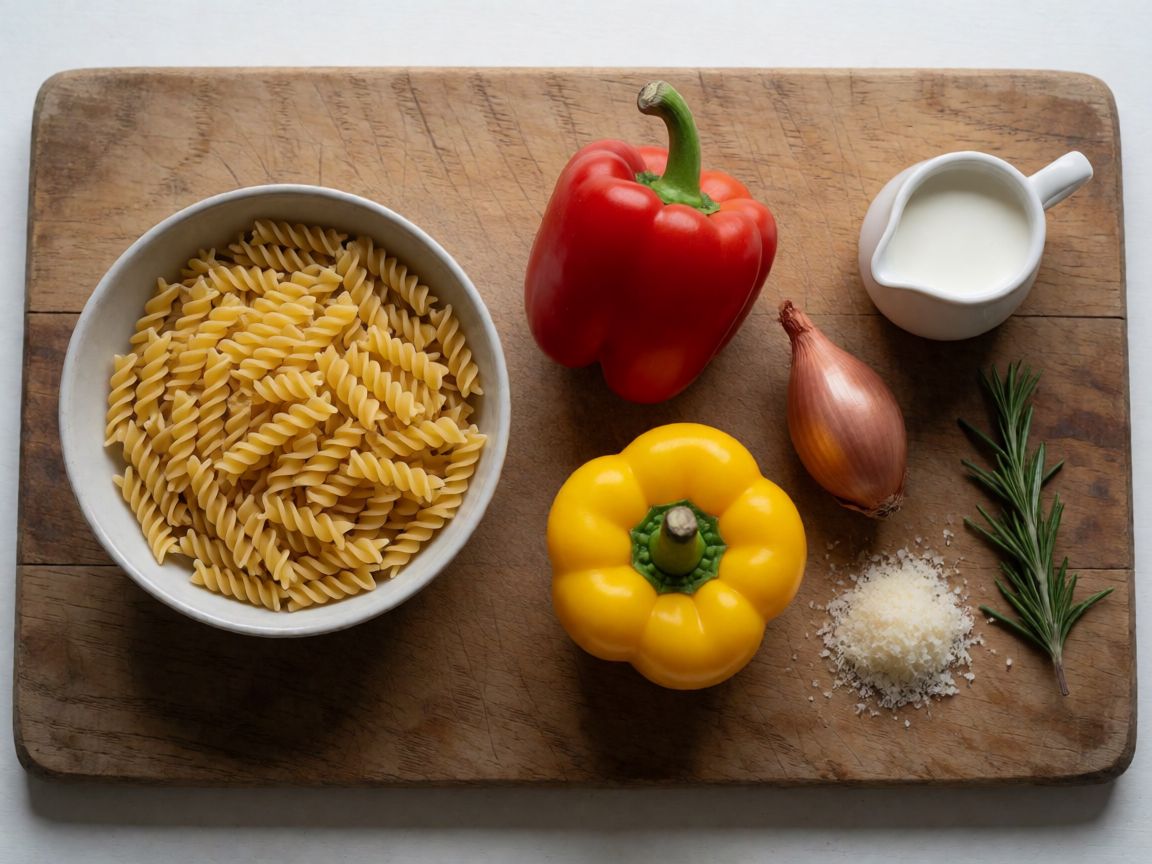
Ingredients







Steps
Fry the shallot in a pan with olive oil while the pasta water comes to the boil.
Add the yellow pepper, cut into strips, and the rosemary sprig; cook briefly to release the aromas.
Pour in the cream and add black pepper.
Cook the pasta until tender, then drain.
Toss the pasta into the pan, mix with the parmesan, and serve.
This is not a sauce built on acidity, the way most pasta sauces are — it's built on sweetness. Shallot softened in oil, then yellow pepper laid over it, is a double dose of sugar released by heat before the cream ever goes in. Everything that can go wrong here goes wrong because someone rushed one of those two steps or boiled the cream like it was stock.
The shallot goes in first and alone for a reason: fat carries flavour, and a few minutes in warm oil lets the shallot's sharpness burn off before the pepper arrives. Throw pepper and shallot in together and you get a dish that tastes faintly of raw onion no matter how long you cook it afterwards, because the two were never given separate time to soften. The pepper itself wants a short, hot turn — enough to go glossy and smell sweet, not enough to go limp. A pepper strip should still bend with a little resistance, not fold like wet paper; cooked past that point it stops tasting like pepper and starts tasting like boiled water with colour in it.
Cream is the part people get nervous about, usually for the wrong reason. It doesn't need babysitting on a UK hob — it needs to never be allowed to boil hard. A gentle shiver on the surface, not big bubbles. Big bubbles are what split cream, not the cream itself being delicate. Once it's in, the parmesan goes on with the heat already off or very low, because cheese protein seizes the second it hits a真 boil — add it to bubbling liquid and you get grit floating in oil instead of a sauce. Off the heat, stirred through warm pasta, it melts into silk.
On quantities: 400 g of dried fusilli is not a portion for one person, whatever the card says. Standard dry pasta measure is around 100 g a head, so this is really a dish for four, maybe three with appetite. Put it in your biggest pot with plenty of water — pasta needs room to move or it clumps, and a crowded pot is the real cause of the gluey mess people blame on the pasta itself.
Fusilli or penne both work because both have a surface the sauce can grip — fusilli's spiral, penne's ridged tube. A smooth pasta like spaghetti would let this loose cream sauce slide straight off onto the plate instead of coating each piece. If you've only got a smooth shape in the cupboard, use it, but expect a wetter-looking plate, not a worse-tasting one.
Yellow pepper isn't an unripe red one, despite what people assume looking at a pepper rack — it's generally its own type, bred for a gentler, almost citrus sweetness with less of red pepper's punch. That's why it suits cream rather than tomato: a red pepper would fight the dairy a little, an orange or red could stand in if that's what's in the fridge, but expect a slightly sharper result. Green pepper is the one to avoid here — it's the unripe stage of the fruit, genuinely more bitter, and it will drag the whole sauce toward raw-vegetable territory instead of sweet.
Shallot earns its place over ordinary onion because it carries more sugar and less water, so it softens and sweetens fast without throwing off liquid that would thin your cream before it's even arrived. Onion will do the job if that's what you have, just give it longer and lower heat so it doesn't stay sharp — you're chasing the same soft, sweet result, onion just takes a slower road there.
Rosemary should be fresh if you can get it — a sprig left whole in the pan releases its oil slowly into the fat and cream, then comes back out before serving. Leave it in too long, or let it sit in a hard boil, and the flavour turns medicinal and bitter instead of resinous. Dried rosemary works at a pinch, but it's more concentrated and woodier, so use less and add it earlier, giving it longer in the fat to soften before the cream goes in.
For the cream itself, go for something with enough fat to hold together over heat — double cream, in UK terms — rather than single, which splits more readily the moment it's pushed past a gentle simmer. Any oil with no flavour of its own will carry the shallot and rosemary fine, but a mild olive oil adds something here rather than just doing a job, so it's worth keeping if you have it. Parmesan wants to be a proper hard, dry cheese that grates fine rather than a soft block that goes stringy — Grana Padano is the honest substitute if Parmigiano Reggiano is pricier than you fancy that week. None of this needs rushing; the whole dish is maybe twenty-five minutes of patience spread across three small waiting points, not one long cook.