
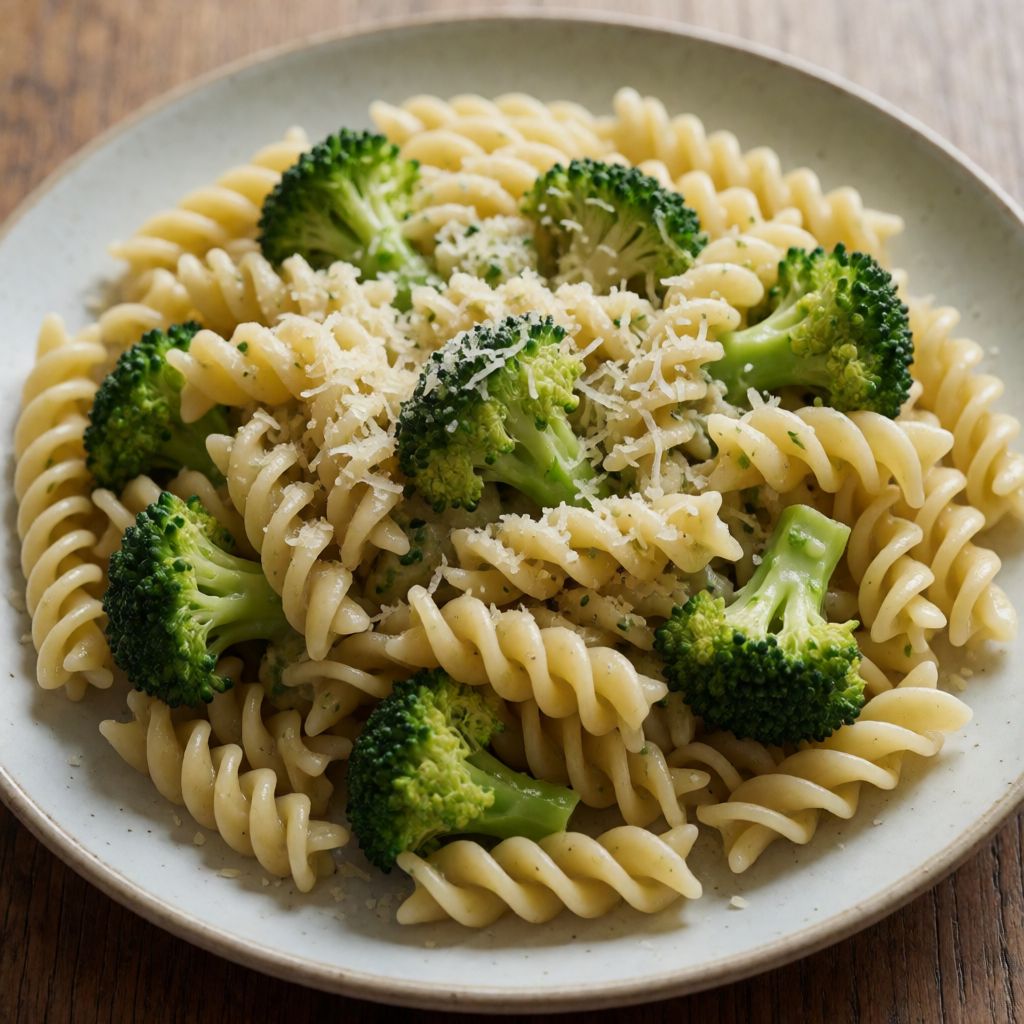
 AI photo
Long Fusilli with Broccoli
A simple pasta dish with broccoli, garlic and anchovies, finished with parmesan.
Labels are worked out automatically from the ingredients and can be wrong. Check the packaging if it matters to you.
Ingredients
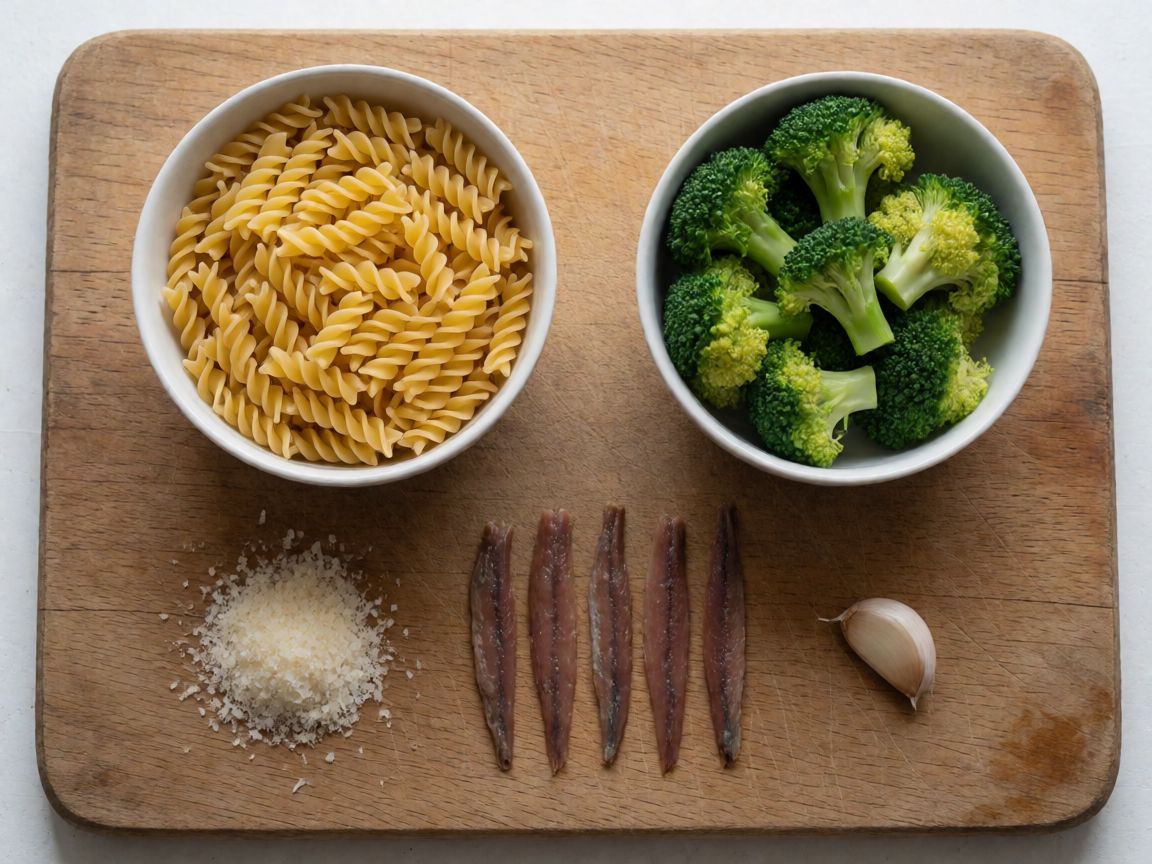
- 350 g Long Fusilli
- 500 g Broccoli florets
- 5 pcs Anchovies
- Parmesan to taste
- Vegetable Oil to taste
- Salt to taste
- Black Pepper to taste
- 1 clove Garlic








Steps
In a large pan, fry the garlic and three chopped anchovies in oil.
Add the broccoli florets, pour in a little water, season with salt and simmer until tender.
Cook the fusilli until al dente, drain and transfer to the broccoli.
Toss together in the pan.
2 minDivide between plates, sprinkle with parmesan, season with black pepper and garnish with anchovies.
This is a pan dish built on an old trick — turn a handful of salted fish into a seasoning so complete you forget fish was ever in it. Anchovies don't survive as themselves here; they melt into the oil, and what's left is a savoury backbone the broccoli and pasta lean on all the way to the plate.
What decides whether it works is heat control at the start and patience in the middle. Garlic in hot oil turns bitter the moment it goes past gold — watch the colour, not a clock you don't have numbers for. The anchovies should soften and vanish into the oil, not fry crisp and announce themselves as fish.
Myth worth naming: some say anchovies will make a vegetable dish taste "fishy." No — because by the time they've broken down in warm oil, what you taste is salt and savour, the same way a good stock works without tasting of bouillon cubes. Keep two or three whole ones back for the top of the plate, though — those are meant to be noticed, and that's a different job from the three that dissolve into the base.
The broccoli stage is where most people lose the dish. Flood the pan with water and you've made broccoli soup with pasta tipped in later; use too little and it scorches before it softens. A splash, something standing in for a lid — a plate turned upside down over the pan does the job in a flat without proper kazan gear — and enough patience that the florets bend under a fork instead of shedding into green dust.
Garlic — one clove is plenty, and it's there to perfume the oil, not dominate the pan. Crush it or slice it thick enough to see and fish out fast if the oil runs hotter than you meant; a burnt clove left bobbing in there is where half the bitterness in this dish comes from, and it's avoidable, not inevitable.
Anchovies — buy the ones sitting in oil in a small tin or jar, not the dry-salted whole fish that need cleaning and boning yourself, unless that's a job you enjoy on a Tuesday. If there are none in the cupboard, a spoon of capers, rinsed and chopped, gets you partway: salt and a briny edge, though not the same round depth anchovies give once they melt. Don't reach for fish sauce as a stand-in — it's sharper and louder, a different instrument playing a similar note.
Broccoli — florets, not stalk hacked into chunks, because florets offer more surface to the oil and soften at a more even rate. Cut them to roughly one size; uneven pieces mean the small ones collapse while the thick ones are still raw in the middle, and no amount of extra time fixes that once it's happened — it only punishes the small pieces further.
Fusilli lunghi, the long spiral kind, grips broccoli and oil in its grooves the way a short tube can't; if your shop only stocks regular fusilli or penne, use it, the dish survives, you just lose some of that cling. Cook it the way the packet and your own tongue agree on for al dente — bite, don't guess — because it finishes its last two minutes in the broccoli pan, picking up moisture and flavour, and pasta that's already soft when it goes in will be mush by the time it's plated.
Parmesan — any hard, aged cheese with a real bite to it will do; grate it at the table over the hot plate, not into the pan, because direct heat turns a seasoning into a rubbery clump instead of a dusting. Pecorino is a fair substitute if that's what's in the fridge, but it salts harder, so go lighter with the salt earlier in the pan if you use it.
This whole dish is peasant arithmetic from southern Italy, not a special-occasion plate: a tin of anchovies keeps for weeks and turns a cheap vegetable into something with backbone, for far less money and far less oven time than a joint of meat. Worth remembering it next to a Sunday roast that claims the whole oven and half the afternoon — this is built for an ordinary Tuesday, in a wide pan on a domestic hob, feeding four without asking much of you except that you don't rush the broccoli.