
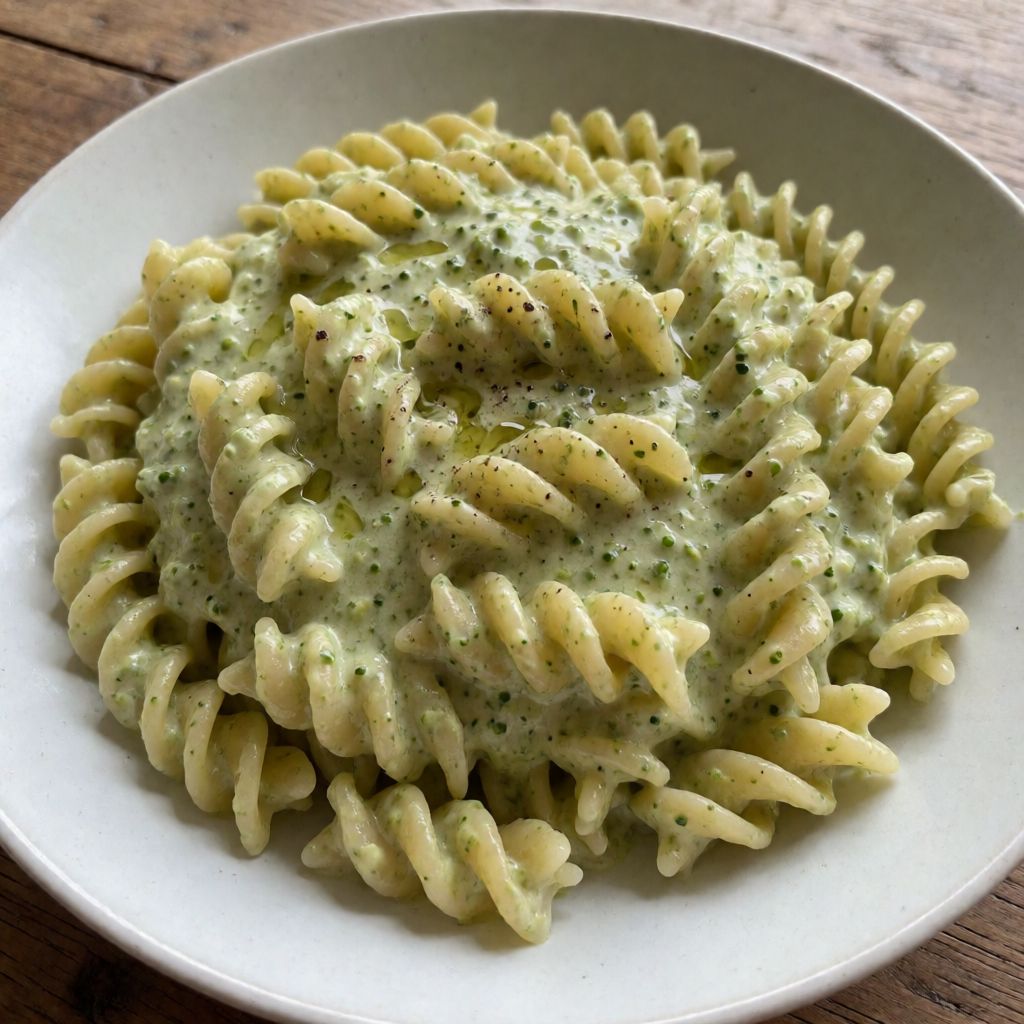
 AI photo
Fusillotti with Creamy Broccoli and Almond Sauce
A pasta dish of fusillotti tossed in a creamy, vibrant sauce of broccoli, almonds and parmesan.
Labels are worked out automatically from the ingredients and can be wrong. Check the packaging if it matters to you.
Ingredients
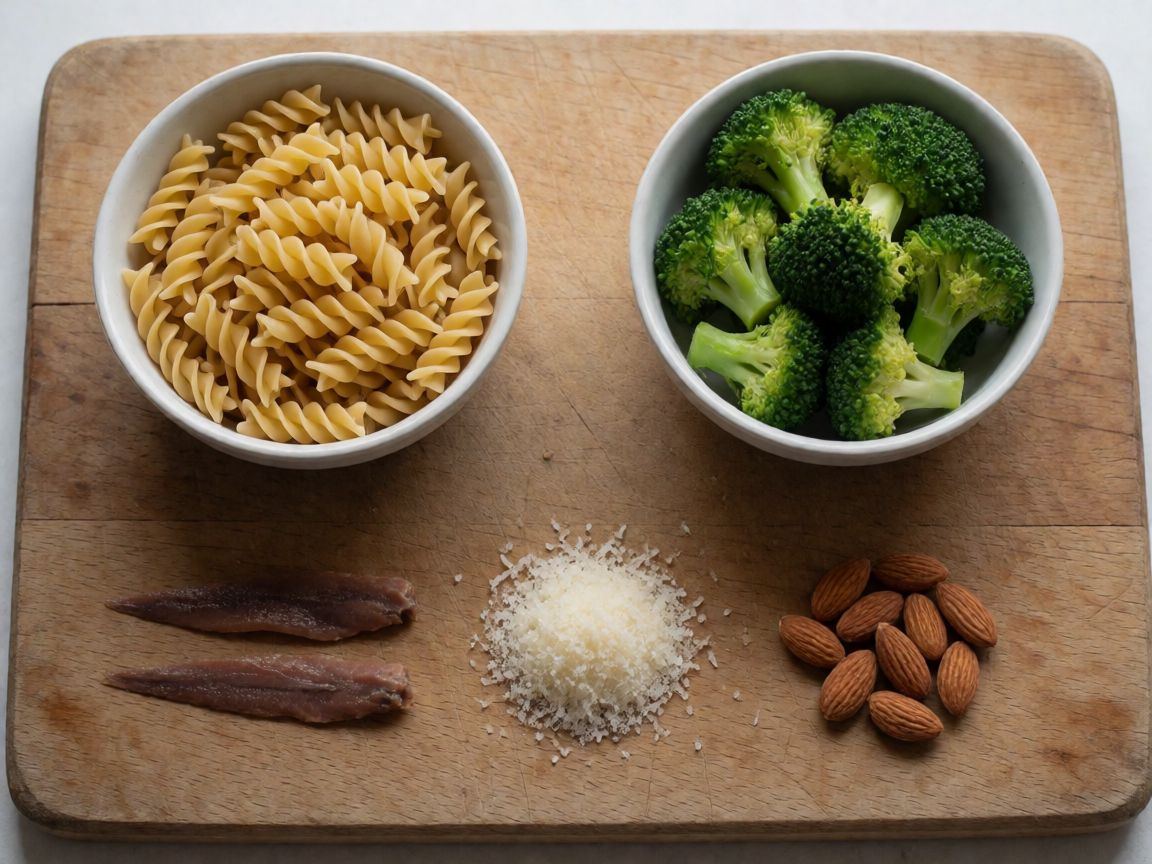
- 400 g Fusillotti
- Olive oil to taste
- Salt to taste
- Black pepper to taste
- 500 g Broccoli
- 2 pcs Anchovies in oil optional
- 3-4 tbsp Parmesan or pecorino, if you want a more pronounced flavour
- 100 g Almonds








Steps
Break the broccoli into florets and cook in salted water.
15 minLift out the cooked broccoli with a slotted spoon, keeping the cooking water; top it up with a little more water, bring back to the boil and cook the fusillotti in it.
Put the cooked broccoli in a blender, add the almonds, parmesan, anchovies in oil, a pinch of salt, slowly pour in the olive oil and 1 tablespoon of the broccoli cooking water, and blend everything until smooth to make the sauce.
Transfer the sauce to a deep bowl and add the drained fusillotti.
Mix well, seasoning generously with freshly ground black pepper.
Serve sprinkled with parmesan.
This is a one-pot Italian habit dressed up as a sauce: broccoli stands in for basil, almonds stand in for pine nuts, and the whole thing behaves like a cold-blended pesto rather than a sauce you cook twice. What decides whether it works is not the pasta — any ridged short shape will carry it — but the broccoli: cooked exactly to the point where a fork goes through without resistance, and not one minute past that.
Push broccoli past that point and it stops tasting of broccoli and starts smelling of broccoli — that sulphur note everyone associates with school dinners and overcooked cabbage. That's not "how broccoli tastes", that's broccoli held too long in hot water, breaking down compounds it would rather have kept to itself. Stop it early and it blends grainy, more chopped than creamy. You're aiming for the narrow window in between, and a fork is a better judge of it than a clock.
The cooking water does double duty here, and that's the clever bit of economy in this recipe, not a flourish. You salt it once, boil the broccoli in it, then boil the pasta in the same water — so the pasta picks up both the salt and a little of the vegetable's sweetness before it ever meets the sauce. Some people top up a fresh pan for pasta out of habit, as if reusing water were somehow lesser. No — it's the same logic as keeping the fat from a Sunday roast for the gravy. Flavour that's already dissolved in water doesn't need paying for twice.
Fusillotti is just fusilli's slightly fatter cousin — the extra ridges and the thicker curl exist to trap sauce in their grooves, which matters enormously here because this sauce has no fat to cling by itself the way a butter sauce would. Any short pasta with ridges, curls or holes does the same job — penne, casarecce, even regular fusilli. A smooth shape like spaghetti will slide the sauce straight off the fork and back into the bowl.
Broccoli should be bought firm, tight-headed, with no yellowing at the florets — yellow means it's already old and will cook soft before it cooks tender, which sounds like the same thing but isn't. You want fibre that gives way cleanly, not fibre that's already collapsing on its own. If you can only get tenderstem, use it — it cooks faster, so watch it closer, not longer.
Almonds carry the body of the sauce — their fat is what makes it feel rich without cream anywhere near the pan. Whole blanched almonds blend smoother than skin-on ones, because the skin stays as tiny flecks no matter how long you run the blender; if that doesn't bother you, skip blanching and save the step. Walnuts or cashews will do a similar job if almonds aren't in the cupboard — different flavour, same mechanism of fat-plus-bulk.
The anchovies are marked optional, and they are, but understand what they're doing before you decide to leave them out: they're not there to taste fishy, they're there to dissolve into the oil and disappear, leaving behind only saltiness and a savoury depth that plain salt can't give you. If you skip them, taste the sauce before you add extra salt — you'll likely need a bit more than you think. A dab of anchovy paste or a few drops of fish sauce does the same work if whole anchovies feel like too much commitment for a weeknight.
Parmesan gives you a rounder, nuttier salt; pecorino, being sheep's milk, gives you a sharper, more aggressive one. Either works — the recipe's suggestion to use pecorino if you want "more pronounced flavour" is really just telling you pecorino is saltier and more assertive, nothing mystical about it. Use what's already grated in your fridge rather than buying a wedge specially; this isn't a dish where the cheese needs to be a performance.
Olive oil here should be the kind with no strong character of its own — you're building a sauce, not finishing a salad, so an oil that shouts over the broccoli is working against you. Save the peppery, bitter extra-virgin for drizzling at the table if you want that top note; for blending into the sauce itself, anything mild and olive-flavoured rather than olive-opinionated will serve you better.