
 AI photo
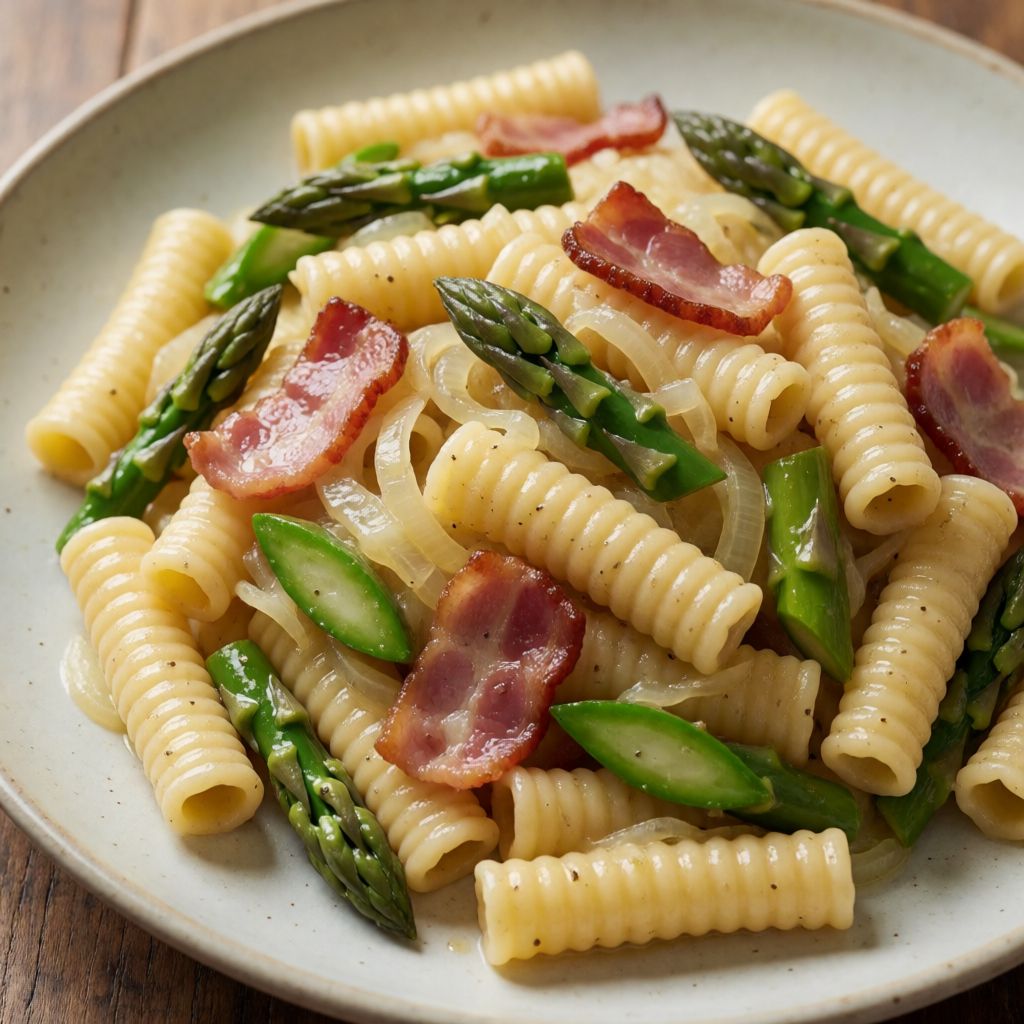
Garganelli with Asparagus and Bacon
Egg garganelli tossed with asparagus, crisp bacon and a drizzle of olive oil.
Labels are worked out automatically from the ingredients and can be wrong. Check the packaging if it matters to you.
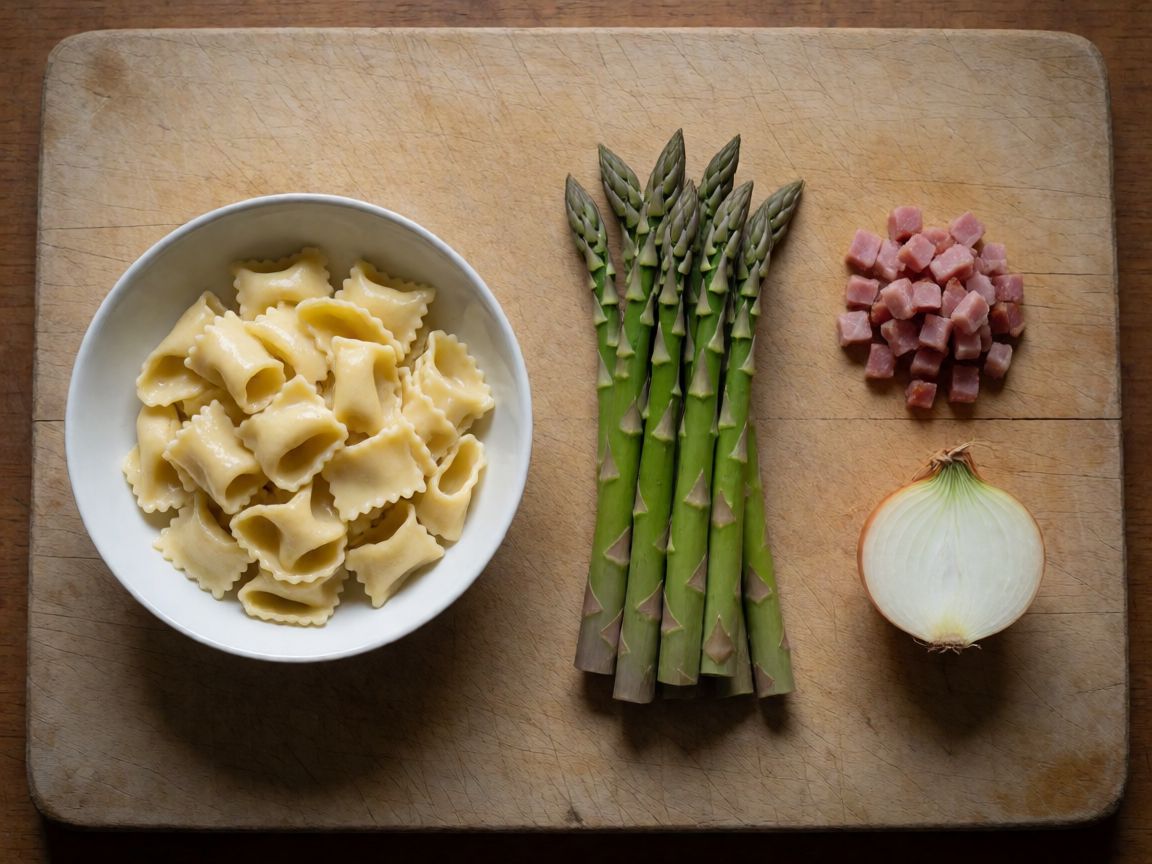
Ingredients







Steps
Trim the asparagus by snapping off the woody ends. Bring a pan of salted water to the boil.
Cut the bacon into thin strips and fry gently with the softened onion and a little olive oil.
Add the sliced asparagus, season with salt to taste and cook gently for 10 minutes, adding a few spoonfuls of the pasta cooking water as needed.
10 minCook the garganelli in the boiling water until al dente, then drain, keeping a cup of the cooking water.
Add the pasta to the asparagus and bacon sauce, tossing for a few minutes so the pasta absorbs the sauce.
Serve immediately, drizzled with fresh olive oil and sprinkled with freshly ground black pepper.
This is a weekday trattoria dish, not a feast — you build the whole sauce in one pan while the pasta water boils next door. What decides whether it works isn't the asparagus or the bacon on their own, it's whether the fat, the starch and the water in the pan become one thing instead of three. Cream never comes near this dish. The gloss you want comes from rendered bacon fat gripped by pasta starch — an emulsion, the same trick every good Italian sauce uses to stop the oil pooling at the bottom of the bowl.
So the bacon goes in dry, no extra oil needed until later, because its own fat is the cooking medium and the flavour base. Render it gently — you're waiting for the fat to run clear and pool, not for the strips to go leathery. High heat here is the enemy: it seizes the bacon before the fat has a chance to leave it, and chars the onion before it's had time to go soft and sweet. Onion softened in bacon fat tastes like something, onion dry-fried on full heat tastes like regret.
The asparagus doesn't get timed, it gets read. Snap a stalk near the base and it breaks cleanly where the fibre turns tough — that's your trim line, not a ruler measurement, because one bunch is never uniform. In the pan it goes from a flat, slightly grey green to something brighter, and a spoon pressed against a spear should make it bend, not crack. Ten minutes is the floor stated in the recipe, not the ceiling — a thin spear gets there sooner, a fat one later.
Garganelli is egg pasta rolled off a square, then pressed and ridged across a wooden comb — a pettine, originally a tool for carding wool or hemp in Emilia-Romagna farmhouses, borrowed into the kitchen because nobody was going to buy a separate gadget just for pasta. The ridges aren't decoration. They're surface area — more grip for a sauce that's mostly fat and not much else, which is exactly the sauce you're making here. If you can't get garganelli, look for any short, ridged, tubular pasta — penne rigate, or even rolled-up fresh egg pasta sheets cut into short lengths — the criterion is ridges plus a hollow or fold, not the specific shape.
Asparagus: thin spears are kinder to a home cook because they cook through evenly with no fuss; thick ones need the base peeled a little, since the skin there toughens faster than the flesh underneath. There's no substitute that behaves quite the same — purple-sprouting broccoli or thin green beans will get you a vegetable with bite in a bacon sauce, but it's a different dish, not a stand-in.
Bacon is doing the job pancetta or guanciale would do in Italy — a fatty, salt-cured pork that renders real fat when heated gently, which then becomes the whole base of the sauce. Streaky bacon, with its visible fat seams, works better here than lean back bacon, because lean meat gives you browned protein and almost nothing to cook the onion in. If bacon is what's in the fridge from the weekend, this is a fair use for the end of the packet — cut it into strips, not tiny cubes, so it has enough surface to crisp at the edges while staying soft in the middle.
Half an onion is deliberate, not laziness — this sauce needs sweetness in the background, not a dish of stewed onion competing with the asparagus. Softened, meaning translucent and limp, smelling sweet rather than sharp; if it catches colour and starts smelling toasted, you've gone past soft into caramelised, and that changes the flavour of the whole pan.
Olive oil appears twice and means two different things. In the pan, early on, any oil that won't fight the bacon fat is fine — a plain, everyday olive oil, nothing you'd notice on its own. At the end, drizzled raw over the finished plate, it needs to taste of something, because this time it isn't cooked away — a fruitier, more peppery oil earns its place there. Don't use the same bottle for both jobs and expect the same result.
Salt goes into the pasta water generously, because that's the only chance the pasta itself has to taste of anything — once it's boiled, it can't absorb seasoning from outside, only sauce clinging to its surface. Pepper, cracked fresh at the very end and not before, releases its aroma through oils that fade fast once ground — pre-ground pepper from a jar has usually lost most of what makes it worth adding. This feeds four, as a proper plate of pasta, not a starter — and the one ingredient not listed anywhere is the five minutes you spend not rushing the bacon fat or the onion. Rush those and no amount of pasta water will save the sauce afterwards.