
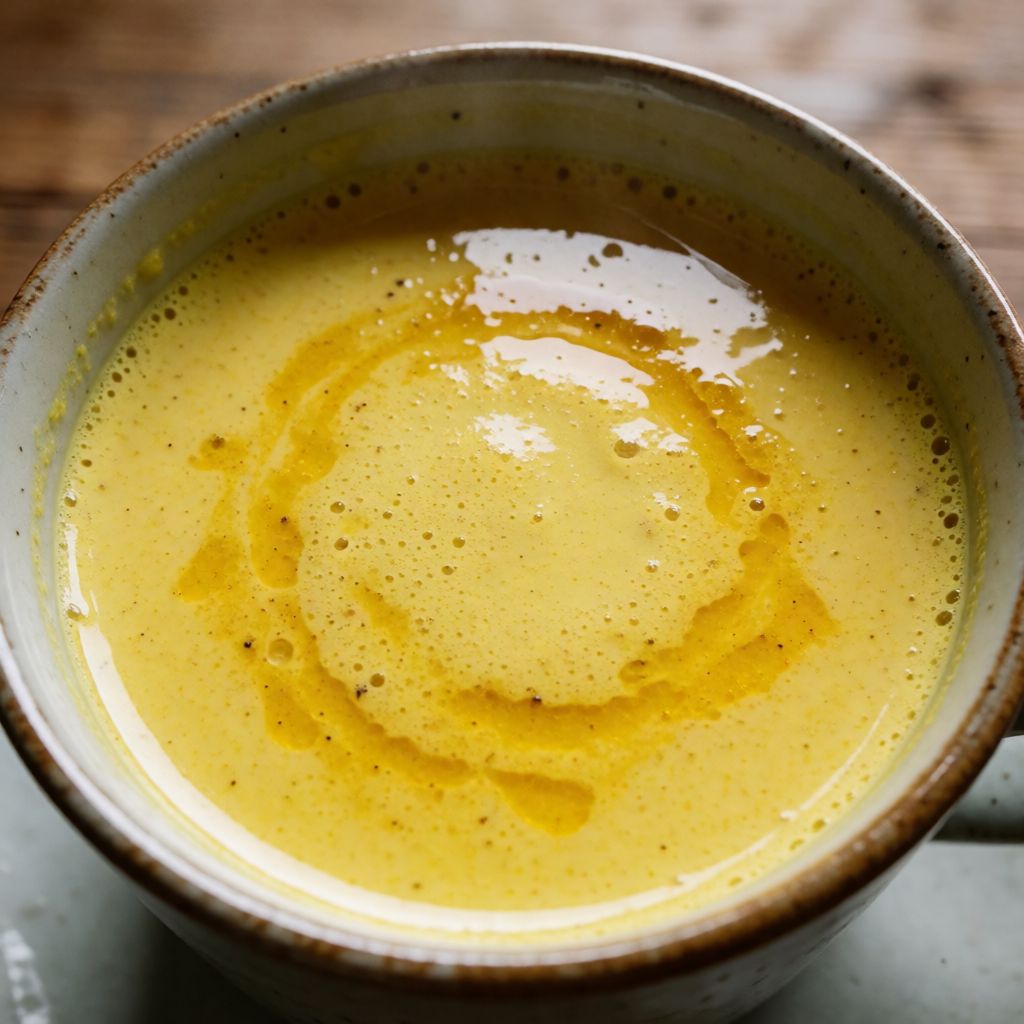
 AI photo
Golden Milk
A soothing turmeric and plant-based milk drink lightly sweetened with honey.
Labels are worked out automatically from the ingredients and can be wrong. Check the packaging if it matters to you.
Ingredients
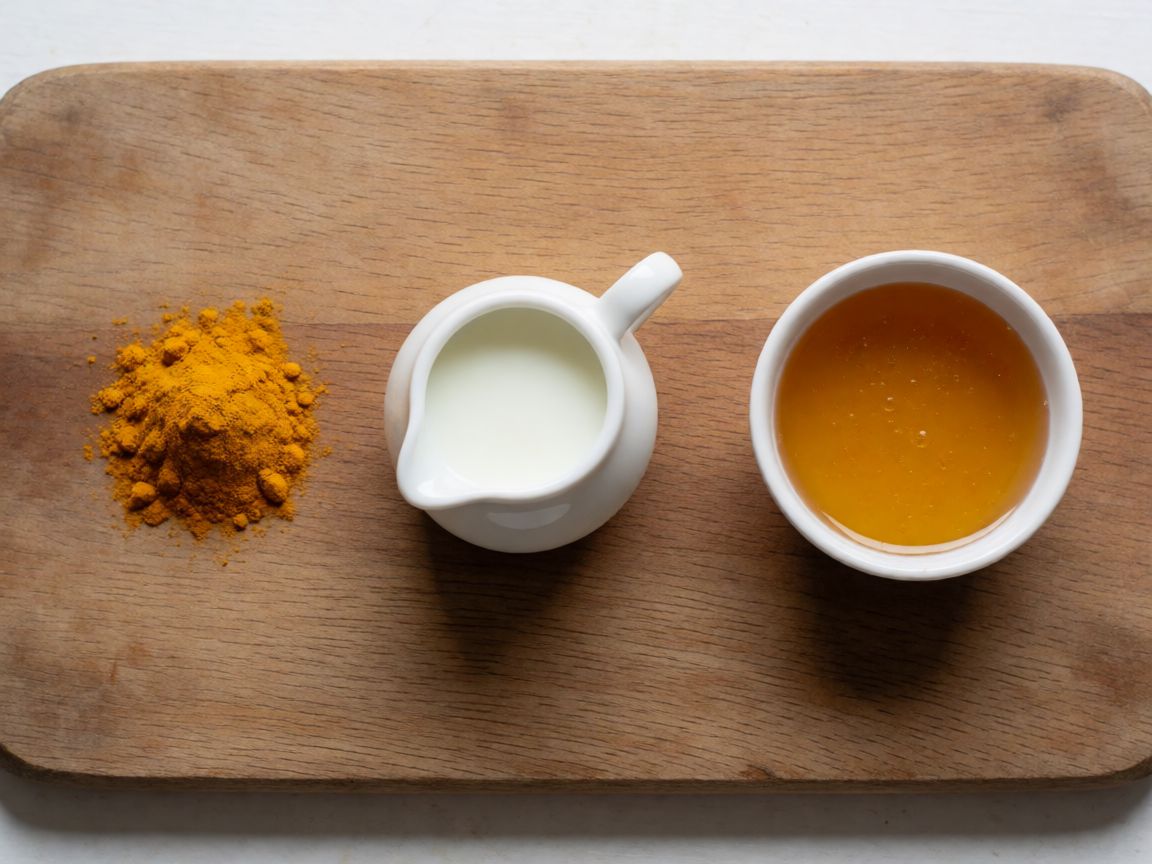
- 250 ml Water
- 85 g Turmeric
- 1 pinch Black pepper
- 170 g Plant-based milk
- 1 tbsp Honey





Steps
Pour the water into a saucepan, place over heat and bring to the boil.
Once the water boils, turn off the heat and add the turmeric and a pinch of black pepper.
Stir frequently until it forms a thick, slightly grainy paste.
Transfer the paste into a storage jar.
Take a small saucepan, pour in the plant-based milk and bring it to the boil.
As soon as the milk boils, pour it into the jar, then add the turmeric paste and the honey.
Seal the lid tightly, wrap the jar in a kitchen towel and shake vigorously.
Golden milk, despite the name, isn't a cup of flavoured milk — it's a jar of turmeric paste that you dilute, a spoonful at a time, into warm milk whenever you fancy it. Ten servings here means ten cups you'll make later, not ten you drink now. That's worth knowing before you start, because if you're expecting a jug of finished drink at the end of this, you'll be puzzled by seventeen millilitres of liquid per portion.
What decides whether this works is the paste, not the milk. Turmeric powder is mostly starch — treat it like flour, not like a spice you just sprinkle in. Bringing the water to the boil and only then taking the pan off the heat before adding the turmeric does two jobs: the residual heat is enough to swell that starch into a paste, and the turmeric never sits directly over a flame, where it would catch on the pan bottom and turn bitter before it turns properly golden. You stir until it looks like wet sand gone smooth — thick, a little grainy, no dry powder floating on top. That's the cue, not a number of minutes. Rush it and you get gritty turmeric water; patience here is the whole trick.
Some say turmeric only "works" — meaning the curcumin in it actually gets absorbed — if you cook it in fat, usually ghee. No: the better-documented route is the pinch of black pepper, whose piperine measurably helps your body take up curcumin, no fat required. That pepper isn't decoration, it's doing the job fat gets credit for elsewhere.
Turmeric is the only ingredient doing real work here, so buy it in small amounts, often. Ground turmeric loses its aroma within months sitting open on a shelf, and what's left after that is colour without character — which is why some shop-bought turmeric drinks taste oddly flat. There's no real substitute: saffron costs ten times as much and tastes nothing like it, and fresh turmeric root, lovely as it is, carries its own moisture and would throw off the ratio this paste depends on. Eighty-five grams of powder to 250 ml of water only turns into paste because the powder starts dry.
Black pepper's job isn't heat, it's chemistry. Piperine — the compound that makes pepper bite — is one of the few things reliably shown to boost how much curcumin the body actually absorbs. A pinch is enough; this isn't meant to taste peppery. Pepper that's sat ground in a tin for years still has some piperine left, but cracking it fresh costs ten seconds and loses nothing.
Plant-based milk needs one quality: enough body to carry a strong spice without tasting like flavoured water. Oat milk, especially the "barista" style with extra oil added for frothing, holds up well against this much turmeric. Almond milk is thinner and can taste washed out by comparison — if that's what's in the fridge, use it, just don't expect the same roundness. Ordinary dairy milk does the same job by the same mechanism, if that's what you reach for; the paste doesn't distinguish.
The milk gets boiled on its own before meeting the paste, and that's not fussiness. Plant milks, oat and soya especially, can carry a raw, slightly beany edge when cold, and a short boil cooks that off and smooths the texture. It also means the milk arrives hot enough to dissolve the honey and bind with the paste on contact, rather than the two sitting as separate layers in the jar waiting for you to stir them properly.
Honey goes in last, off the heat, because its aroma is the first casualty of simmering — you'd keep the sweetness but lose the smell that makes honey honey rather than just sugar water. Any sweetener that dissolves readily in warm liquid does the same structural job — maple syrup, a spoon of sugar — from that point you're choosing flavour, not function.
The jar-and-towel step exists because most kitchens don't keep a stick blender standing by for one jar of paste. A sealed jar shaken hard does the emulsifying work a blender would, cheaply and with what's already in the cupboard — reuse a jam jar, it's the right size and nobody will miss it. Keep the finished jar in the fridge and spoon from it the way you'd spoon jam into your tea with milk, except this spoonful goes into a cup of hot milk instead, whenever you want one of those ten servings.