
 AI photo
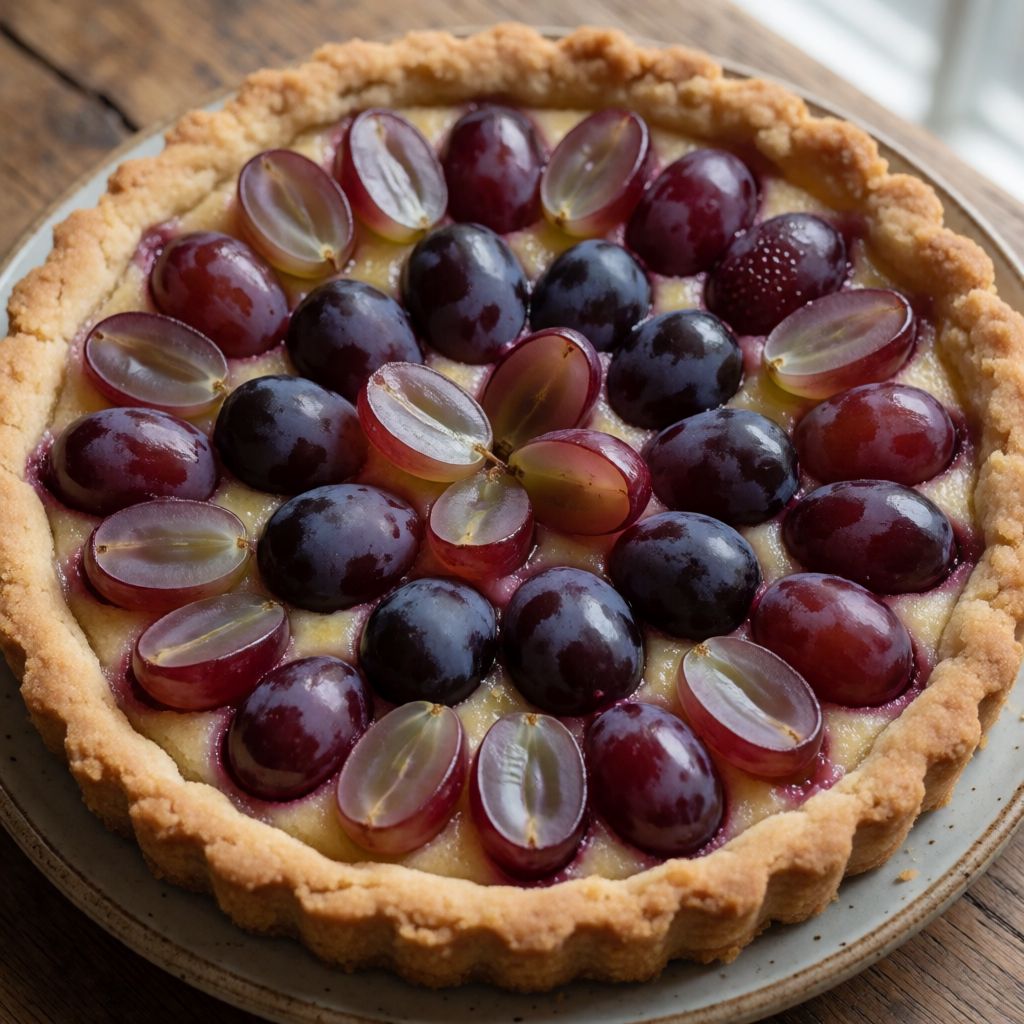
Grape Crostata
A crisp pastry tart filled with smooth vanilla custard and topped with alternating light and dark grape halves.
Labels are worked out automatically from the ingredients and can be wrong. Check the packaging if it matters to you.
Ingredients
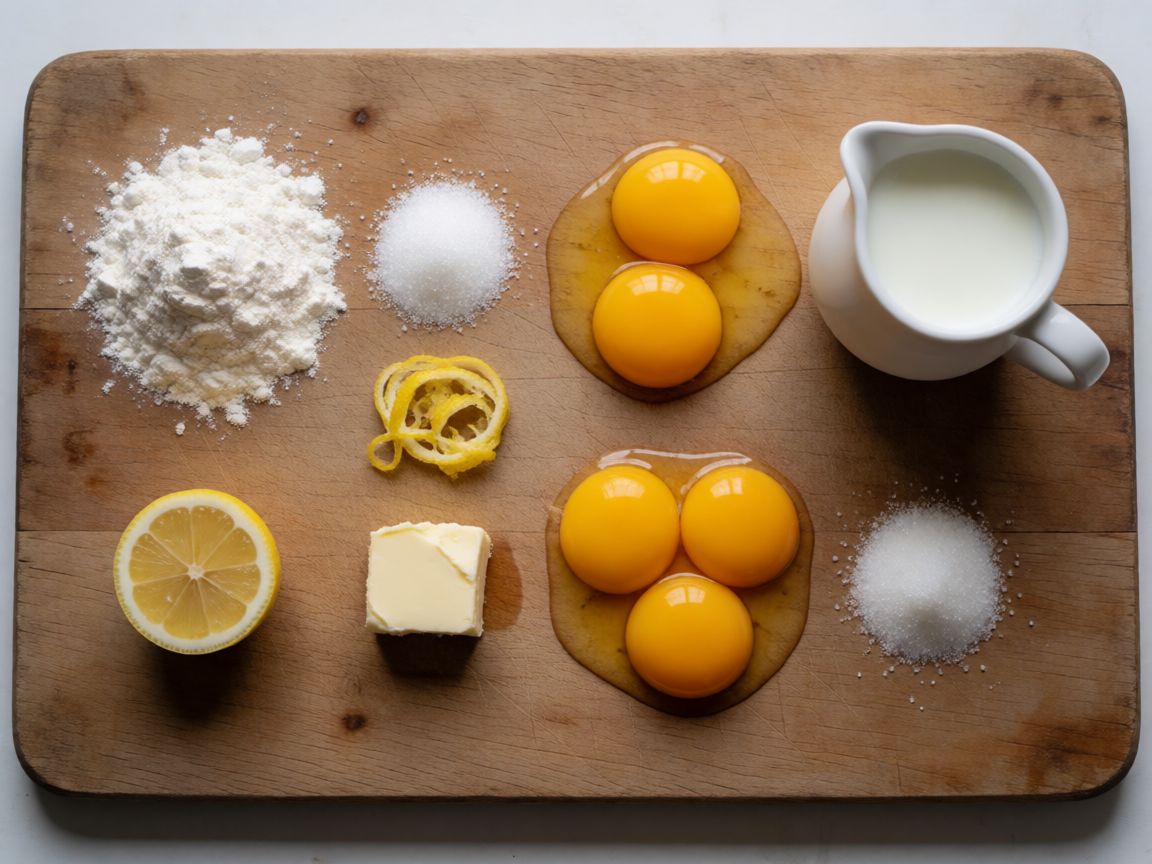
- 150 g Plain flour
- 75 g Caster sugar
- 1 pcs Lemon zest half a lemon's zest
- 1 pinch Salt
- 2 pcs Egg yolk
- 90 g Butter
- 4 pcs Egg yolk
- 150 g Caster sugar
- 400 ml Milk
- 40 g Plain flour
- 1 pcs Vanilla pod half a pod
- 30 g Walnuts chopped
- 1 bunch Grapes green and black, to taste








Steps
Tip the flour onto the worktop in a mound, make a well in the centre and add the sugar, lemon zest, a pinch of salt and two egg yolks. Rub together quickly with your fingers.
Add the butter and knead vigorously until smooth. Shape into a ball, wrap in cling film and leave in the fridge.
40 minRoll out the pastry to about 4-5 millimetres thick. Line a buttered tin, pressing well into the edges and trimming off any excess. Prick the surface with a fork.
Bake in a fan oven preheated to 175°C.
10 minLet the pastry base cool.
In a saucepan, whisk the egg yolks with the sugar and sifted flour until well combined.
Gradually pour in the milk, place over heat and bring to the boil. Add the vanilla.
Cook, stirring, until the custard is thick and smooth.
Remove the custard from the heat. Stir in the chopped walnuts and leave to cool.
Wash the grapes, halve them and remove the seeds.
Spread the custard over the pastry base, smooth with the back of a spoon and decorate with the grape halves, alternating light and dark berries.
A crostata is a tart with a job to do twice over: hold a filling, and get out of the way of it. Here the shell is pasta frolla, the custard is crema pasticcera with walnuts folded in, and the top is grapes — nothing exotic, just the fruit that's sitting in the bowl on a British kitchen counter in September, cut in half so it lies flat and doesn't roll off.
What decides whether this works is almost entirely about water and heat, in that order. Pasta frolla fails for one reason above all: too much handling, which warms the butter and develops the gluten in the flour until the dough turns elastic instead of short. You want a dough that breaks like shortbread, not one that stretches like bread dough — so the rubbing-in is fast, fridge rest is not optional, and "knead vigorously" in step 2 means decisive, not prolonged. Some say pastry must rest for hours to be any good — no, because the resting isn't about flavour developing, it's about the gluten relaxing and the butter firming back up so the case holds its shape in the oven instead of slumping.
Flour: plain, nothing stronger. Bread flour's extra gluten is exactly what you don't want in a tart case — you want short, not chewy. 150 g for the case, 40 g in the custard where its only job is to thicken milk without tasting of flour; sift it there so it doesn't clump into little dumplings when the milk hits it.
Butter: 90 g, cold from the fridge when it meets the flour, because warm butter melts into the flour instead of coating it in separate flakes — and those flakes, as they melt in the oven, are what create the short, crumbly texture instead of a dense biscuit. Any butter works as long as it's proper butter; margarine brings water content that behaves differently and the texture suffers for it.
Egg yolks, six in total split across two jobs: two bind the pastry, four thicken the custard. Yolks only, no white — whites would make the pastry tougher and the custard rubbery rather than silky. If you're worried about raw egg in an unbaked custard, don't be: this one is fully cooked to a boil, which is standard practice and perfectly safe.
Sugar: caster, because it dissolves fast into both the rubbed-in pastry crumb and the whisked yolks, where a coarser sugar would leave grit. 75 g in the case keeps it sweet but not cloying, since the filling carries its own 150 g; this isn't a dish for adding extra sugar on top "to be sure" — the walnuts and the grape skins' tartness are there to cut through it.
Milk: whole milk, 400 ml, for the custard's body — it's what sets the ratio with flour and yolks to give you a custard that holds a shape rather than runs. Semi-skimmed will work in a pinch but gives a thinner result; this is not the place for the milk you keep for tea.
Lemon zest and vanilla: both there to fight sweetness with aroma rather than more sugar. Use a real vanilla pod if you can get one — split it so the seeds go into the milk, not just the skin — but a teaspoon of good vanilla extract covers you if pods aren't to hand, since vanilla extract is simply pod flavour already dissolved into alcohol.
Walnuts: chopped, folded in once the custard's off the heat, so they keep bite rather than going soft and lost in the cream. Hazelnuts or almonds are fair substitutes on the same logic — any nut with enough fat and crunch to stand up against a smooth custard.
Grapes: the only rule that matters is seedless or carefully deseeded, halved so the cut face sits down and the custard grips it rather than letting it slide. Mixing light and dark isn't flavour, it's just a cook using what's already a contrast in the fruit bowl to do the decorating for her. This is a dish built on patience in two separate places — the dough resting cold, and the custard being stirred steadily rather than rushed to a boil — and rushing either is the single most common way to ruin it.