
 AI photo
Greek Salad
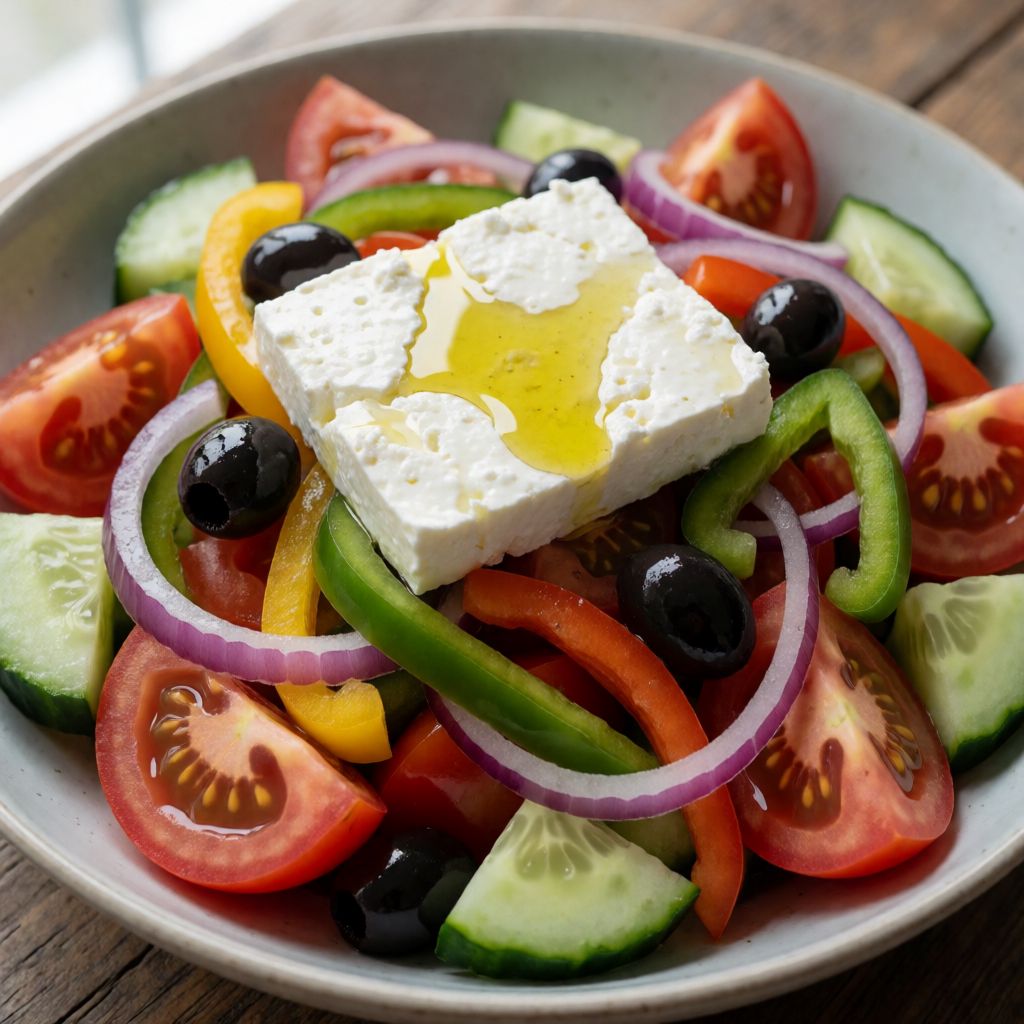
A fresh Greek salad with tomato, cucumber, pepper, feta and olives in a lemon-oregano dressing.
Labels are worked out automatically from the ingredients and can be wrong. Check the packaging if it matters to you.
Ingredients
- 300 g Tomato cut into wedges
- 1 pcs Cucumber diced
- 1 pcs Bell pepper diced
- 1 pcs Red onion sliced into rings
- 100 g Feta crumbled
- 80 g Black olives
- 1 tsp Sugar
- 1 pcs Lemon finely grated zest and a little juice
- 3 tbsp Oregano very finely chopped, fresh
- 2 tbsp Olive oil
- Salt to taste
- Black pepper freshly ground, to taste












Steps
Combine all the vegetables in a large bowl. Crumble the feta over the top and sprinkle with the black olives.
Whisk together the olive oil, sugar, lemon zest and juice, salt, pepper and the finely chopped oregano until the sugar has dissolved.
Toss the Greek salad with the dressing.
Before serving, sprinkle with a little extra fresh oregano.
Forget the lettuce-and-bottled-dressing idea of "salad". This is horiatiki — village plate. There's no lettuce in it because a Greek village garden in July didn't grow much of it worth eating raw. What it grew was tomato, cucumber, pepper and onion. What it kept through the months when nothing grew was feta sitting in brine and olives sitting in salt or oil — the fridge of a house with no fridge. The dish is an inventory of what was on hand, not a composition someone sat down to invent.
What decides whether it works has almost nothing to do with the dressing and everything to do with the tomato. A pale, watery one picked unripe and shipped cold gives you tomato-coloured water sitting under cheese. A tomato that ripened on the vine, that still smells of its own stem, gives you a salad. No amount of oregano fixes that — oregano seasons a good tomato, it can't resurrect a bad one.
Some say leave it to marinate for an hour so the flavours "get to know each other". No — because salt and acid don't introduce flavours to each other, they pull water straight out of the vegetable cells. Leave it an hour and you get a pool at the bottom of the bowl, limp onion, and soggy feta. This is a last-minute dish by its nature: dress it, turn it twice, put it on the table.
Tomato: buy by smell at the stem end and by weight in the hand, not by colour — a tomato can be deep red and still taste of cardboard if it was ripened in a lorry rather than on a plant. In the UK outside of a short summer window this is the hardest ingredient in the bowl to get right; a vine-ripened or "on the vine" pack from a greengrocer, even at a premium, usually beats a loose supermarket one. Don't salt the tomato wedges ahead of everything else — that's the single most common cause of a watery Greek salad, and it has nothing to do with how much dressing you poured.
Cucumber: the long smooth English cucumber carries a lot of water and, near the core, a lot of seed. If yours is one of those, run a spoon down the centre and scoop the seedy core out before dicing — it's the part that weeps. The criterion for substitution is simple: any cucumber that's crisp rather than spongy and doesn't taste bitter at the skin. A ridged Mediterranean-type cucumber, where you can find one, needs none of this fuss.
Feta: proper feta is brined sheep's or goat's milk cheese, firm enough to hold a cube, sharp enough to taste on its own without the rest of the salad. What's often sold simply as "feta" from cow's milk in a UK supermarket is softer, milder, and crumbles into paste rather than cubes when you toss it — not wrong, just a different cheese wearing the name. The test is: does it hold its shape and does it have some real tang? If not, look for a Greek or Bulgarian import, usually sitting in its own brine in a tub rather than shrink-wrapped dry.
Olives: proper kalamata olives are purple-black, wrinkled, with a noticeable bite around the stone, cured in brine or oil. The uniform, smooth, matt-black olives sold tinned are usually green olives that have been darkened by oxidation with iron salts — perfectly edible, much blander. Either works here, but you should know which one you're buying and not expect the tinned kind to carry the same weight in the bowl.
The dressing is three jobs, not one mix. Sugar isn't there to make it sweet — it's there to round off the sharp edge of the lemon against the acid already in the tomato, so the dressing doesn't taste thin or sour on its own. Zest and juice are split for a reason too: the zest carries the lemon's aromatic oil without the sourness, the juice carries the sourness without much aroma, and together they do more than lemon juice alone would. Fresh oregano, finely chopped, releases its oil the moment the knife cuts it — dried oregano is a different, more medicinal flavour at a different strength, so if that's all you have, go lighter and taste as you add rather than following any ratio blind.
Olive oil is the one place in this dish where you cannot reach for "any oil with no smell of its own" — that rule exists for frying, where the oil's job is to carry heat, not flavour. Here nothing is cooked; the oil is eaten raw, essentially drunk off the plate with everything else. Use the best extra virgin olive oil you're willing to buy, because its smell is not a side effect here, it's half the dressing. Patience matters too, in a quieter way than usual: the patience to wait and dress this right before people sit down, not to get ahead of yourself an hour early because it felt efficient.