
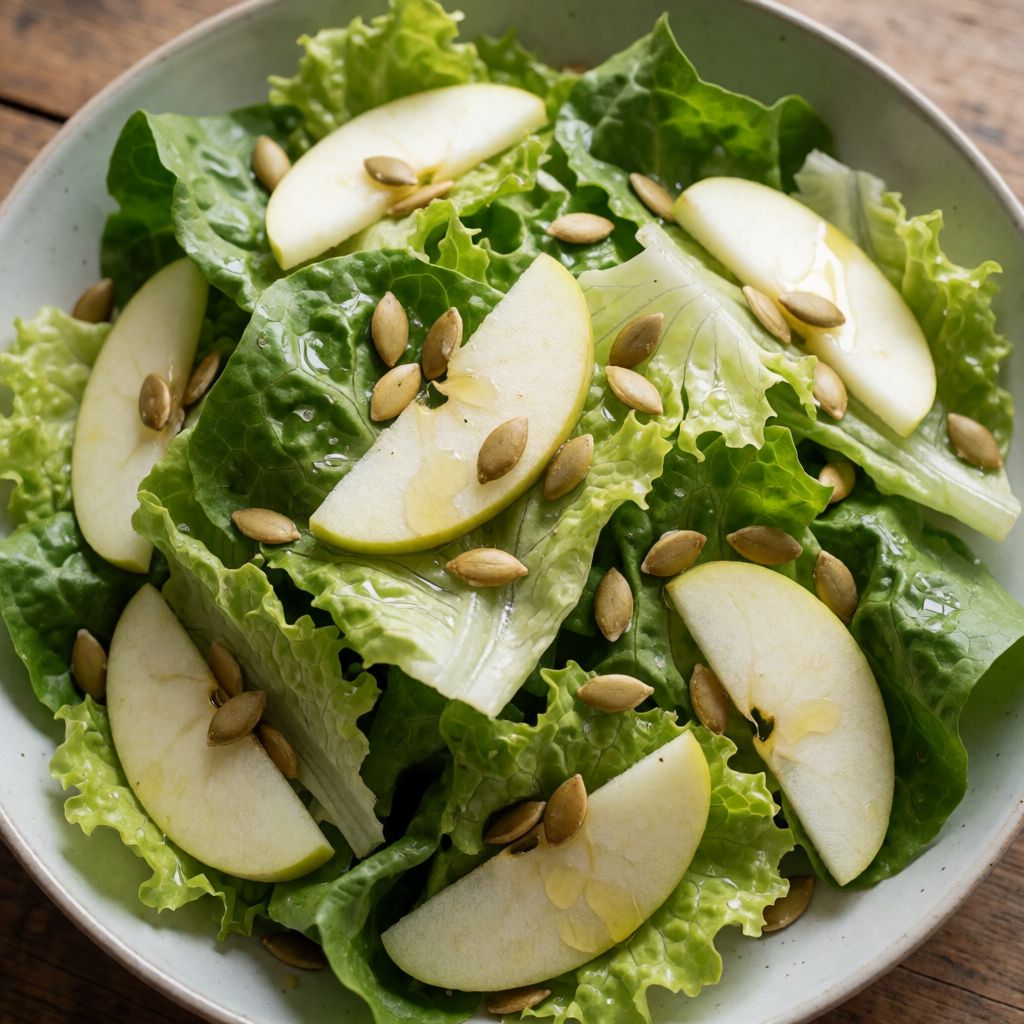
 AI photo
Green Salad with Apple
A fresh green salad with apple, toasted pumpkin seeds and a honey-mustard dressing.
Labels are worked out automatically from the ingredients and can be wrong. Check the packaging if it matters to you.
Ingredients
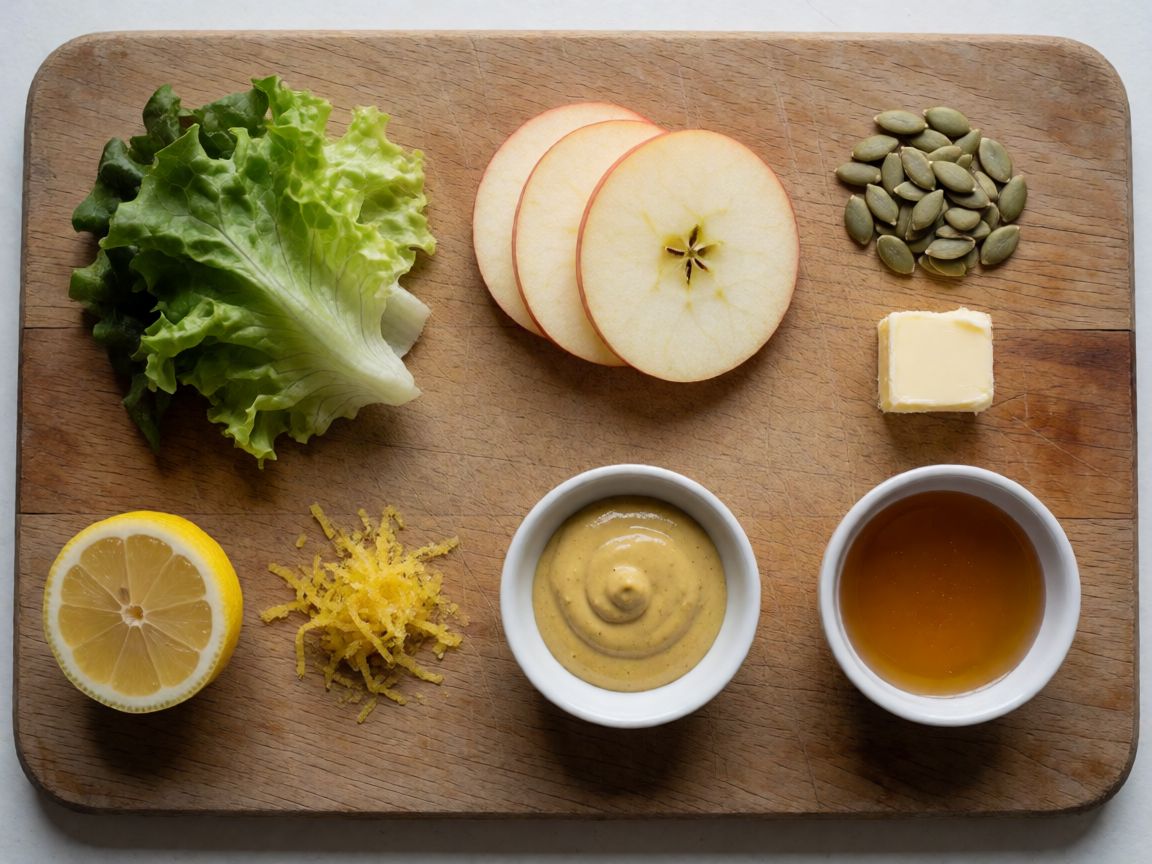
- 200 g Lettuce leaves of your choice
- 2 pcs Apple thinly sliced or cubed
- 50 g Pumpkin seeds
- 1 tsp Butter
- Salt
- 50 ml Olive oil
- 0.5 pcs Lemon finely grated zest and juice
- 1 tbsp Dijon mustard
- 1 tbsp Honey
- Black pepper freshly ground, to taste








Steps
Make the dressing: whisk all the dressing ingredients together and season to taste.
Toast the pumpkin seeds in a frying pan with the butter until they start to pop and turn lightly golden.
5 minSprinkle the pumpkin seeds with salt.
Toss the lettuce with half the dressing and arrange it on a serving plate.
Toss the apple with the remaining dressing and scatter it over the salad along with the toasted pumpkin seeds.
This is a salad built on contrast: cold crisp leaves, sweet-tart apple, and seeds pushed through heat until they smell of toasted flour rather than raw oil. Nothing here needs real cooking except those seeds for a few minutes — the whole dish rests on three small decisions, not on knife skill.
What decides whether it works is timing, not seasoning. The seeds have to stop popping and turn gold before they go brown and bitter — carry them past that point by half a minute and the bowl tastes of scorched butter instead of toasted seed. The dressing has to come together into one pale, slightly thick liquid, not sit as oil floating on juice — that's the job of the mustard and honey, bridging fat and acid that otherwise refuse to mix on their own. And the apple only meets the lettuce at the very end, each dressed separately, because a cut apple weeps sugar and water almost immediately, and that water has nowhere to go but into your leaves, trading crunch for damp.
Some say: one dressing, tossed through everything at once, saves a step. No — because by the time the apple is evenly coated, the lettuce underneath has already gone limp from sitting in oil and acid longer than it needed to. Dressing the two parts separately and marrying them on the plate at the last moment is simpler than it sounds, and it's the only way the leaves still have bite when the fork reaches them.
Patience here is five unglamorous minutes standing over the pan with the seeds, not wandering off. That's the entire patience the dish asks for, and it's non-negotiable.
Lettuce: the brief is crunch, not a particular variety. Cos, little gem, baby spinach, even a sturdy bagged mix all work — the test is whether a leaf still snaps when you bend it. Avoid watery iceberg, which has structure but no flavour to carry dressing, and if you use bagged leaves, shake them properly dry first, or that trapped water does the same damage as apple juice: it thins the dressing and drowns the crunch.
Apple: you want one that holds its shape when sliced and still has some sharpness against the honey. Cox or Braeburn do this well. A Bramley, for all its place in British baking, breaks down to mush within minutes once cut and is too sour here without the sugar a crumble gives it — wrong apple for this job, right apple for a different one.
Pumpkin seeds and the butter they're toasted in: the criterion for the seed is simply something hard enough to take direct heat without collapsing — sunflower seeds, flaked almonds, or rough-chopped walnuts all substitute, just watch them, since nuts colour faster than seeds and need less time, not more. The butter isn't just there to stop sticking — its milk sugars and proteins are what brown onto the seed's surface and give you that nutty smell, which a neutral oil alone won't do. If you need to avoid dairy, ghee gets you closer to the same effect than a flavourless oil will. Salt goes on after toasting, never before: salt before heat pulls moisture to the surface, and wet seeds steam instead of crisping in a shallow domestic frying pan, where there's no kazan's depth of heat to forgive the mistake. Keep them in one layer and keep the pan moving — a home burner heats a wide pan unevenly, and a seed sitting still over the hot spot burns while its neighbour stays pale.
The dressing: olive oil is the base fat, and the criterion is fruity, not bitter or sharply peppery — a strong extra virgin will fight the honey instead of carrying it. Rapeseed oil, which is what most British kitchens have to hand and what actually grows in British fields, is a fair and honestly more local substitute. Lemon zest and juice supply the aromatic oil and the acid; any sharp vinegar does the acid's job if you're out of lemon, and cider vinegar in particular sits naturally with apple — not a stretch of a substitution, closer to a cousin. Dijon mustard and honey aren't seasoning, they're the emulsifier — mustard has compounds that let oil and lemon juice hold together instead of separating, and honey rounds off both the mustard's heat and the lemon's sharpness. English mustard will do if Dijon isn't in the cupboard, but it's hotter gram for gram, so use less.
This kind of leaf-and-fruit side has a plain economic logic behind it: something bright, acidic and barely cooked, sat next to something heavy and long-roasted — which is exactly the role a salad like this plays next to a Sunday roast. It costs five minutes of attention and gives the plate the acid cut that fat always needs, no mystique required.