
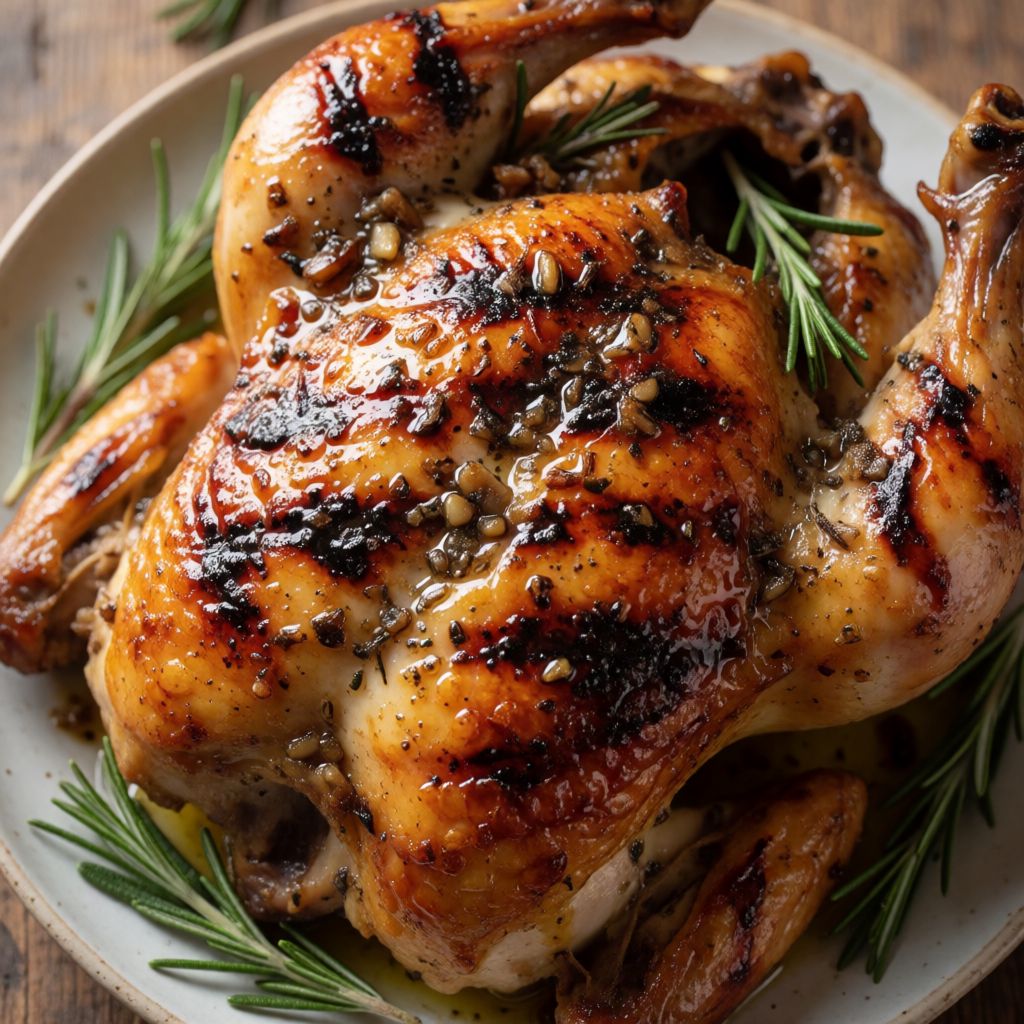
 AI photo
Grilled Chicken
A whole chicken marinated in olive oil, white wine, rosemary and lemon, then grilled until juicy and smoky.
Ingredients
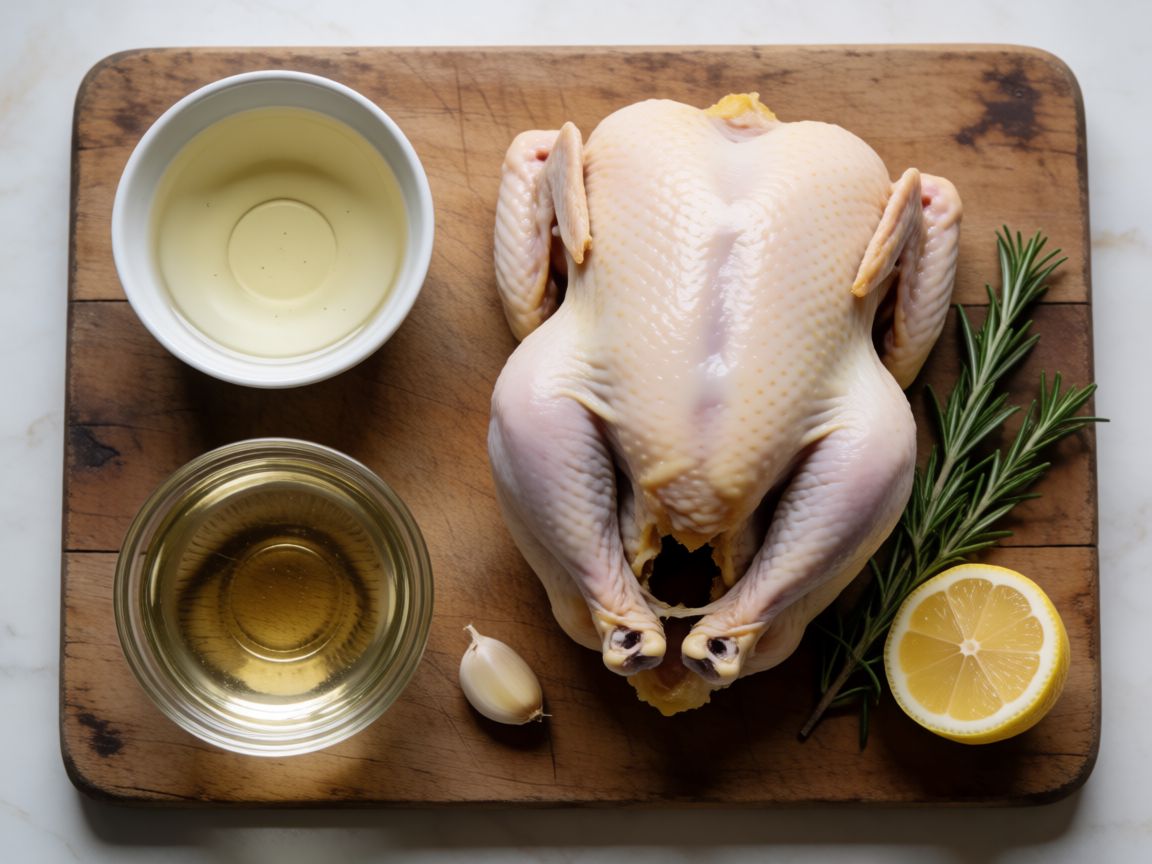
- 1 pcs Whole chicken
- White wine
- Red wine
- Olive oil
- bunch Rosemary sprigs
- 1 clove Garlic
- 1/2 pcs Lemon
- Salt
- Black pepper









Steps
Buy a dressed chicken, trim off any excess fat, feet, head and remaining feathers, then singe the bird over a flame.
Rinse the chicken under running water, let it drain, then cut it into large pieces.
Mix the olive oil, white wine, rosemary, lemon juice, garlic, salt and black pepper.
Submerge the chicken pieces in the marinade and marinate for at least 1 hour, turning often.
60 minPrepare the grill — electric or charcoal.
Place the chicken pieces on a greased, preheated grill grate.
Pour some of the marinade into a bowl, add the red wine, salt and pepper.
Baste the chicken pieces with the marinade using a rosemary sprig.
Grill the chicken, turning often, until fully cooked through (74°C internal temperature).
Take the chicken pieces off the grill and serve.
Grilled chicken, cut into pieces, marinated in wine and oil and rosemary, then cooked over bars instead of in a tray — this is a bird treated like something you'd roast, but pushed through fire instead of an oven. What decides whether it works isn't the marinade's flavour, it's the marinade's job: wine and lemon juice are acidic, oil carries fat-soluble aroma from garlic and rosemary into the meat, and together they buy you time on a hot grate without the surface drying to leather before the inside catches up. Skip the marinade and you get a bird that either scorches outside or stays raw near the bone — there's no shortcut to that hour.
Some say marinating "tenderises" the meat — no, not really, not in an hour. Acid breaks down a little surface protein and that's it; what it actually does well is season deep and keep the surface moist enough to survive direct heat. The tenderness you taste comes from cutting the bird into pieces rather than grilling it whole (thighs and breast get even contact with the heat) and from not overcooking it past 74°C core — that number is doneness, not a style choice, and it's the one hard fact in the whole dish.
A domestic grill — electric griddle pan, a balcony charcoal grill, whatever you've got — won't give you the same heat a restaurant char-grill does, and that's fine. What matters is the grate being hot before the chicken goes on and staying greased, because a cold or dry grate means the skin tears when you try to turn the piece, and torn skin means juices run straight onto the coals instead of staying in the meat.
The chicken itself: buy it whole and dressed rather than pre-cut, because singeing off stray feathers and trimming fat and feet is a five-minute job that tells you something — you're handling the bird as a whole animal, which is also why it's cut into large pieces rather than small ones afterwards. Large pieces (leg, thigh, breast, wing) hold moisture through the grilling better than small chunks would; small pieces dry out before the inside's done, which is the exact failure the whole marinade step is designed to prevent further down the line.
White wine in the marinade does two things: its acid works alongside the lemon juice to season and lightly soften the surface, and its alcohol carries aroma from the garlic and rosemary that oil alone can't lift. Any dry white you'd actually drink will do — don't reach for "cooking wine," which is usually just a bad bottle with salt added, a British supermarket trick that saves nothing and ruins the dish's seasoning balance since you can't then control the salt yourself.
Olive oil is there as the carrier for fat-soluble flavour and as a barrier against drying — it coats the meat and slows moisture loss on the grate. "Olive oil" here means any oil with no smell of its own that can carry other aromas without fighting them; a light, not-too-grassy olive oil is traditional because this is Mediterranean in spirit, but a neutral rapeseed oil (common and cheap in the UK) does the same mechanical job if your olive oil is the strong, bitter kind that would compete with the rosemary.
Rosemary, used both in the marinade and later as a basting brush, is doing double duty — flavour first, then as a genuinely useful kitchen tool: a sprig dipped in marinade and swept over the chicken bastes it without a brush that'll pick up char and taste of smoke. Garlic, one clove, crushed or bruised rather than chopped fine, releases just enough allicin into the oil over the marinating hour; more than one clove and it stops seasoning the chicken and starts being the dish.
The second liquid — marinade mixed fresh with red wine, salt, and pepper, used only for basting during grilling — exists because the first marinade, having sat with raw chicken, is now carrying raw-poultry juices and shouldn't go back on food that's nearly done without more cooking time to kill anything in it. Red wine here isn't about matching colour to colour; it's a fresh dose of acid and aroma for the baste, kept separate for food safety, not tradition for tradition's sake. If you don't want to open a second bottle, a splash of wine vinegar cut with water does the same acidic job in the baste, just leaner on body.
Last point, and it's the one people skip: 74°C internal is where chicken is done, not "juices run clear" and not a guessed number of minutes per side. Any kitchen thermometer, the kind you'd use for a Sunday roast joint, tells you this in five seconds and saves you from the two real failure modes — chicken pulled off too early that's pink at the bone, or chicken left on too long out of fear of that, which is how you end up with grey, dry meat that the marinade worked for nothing.