
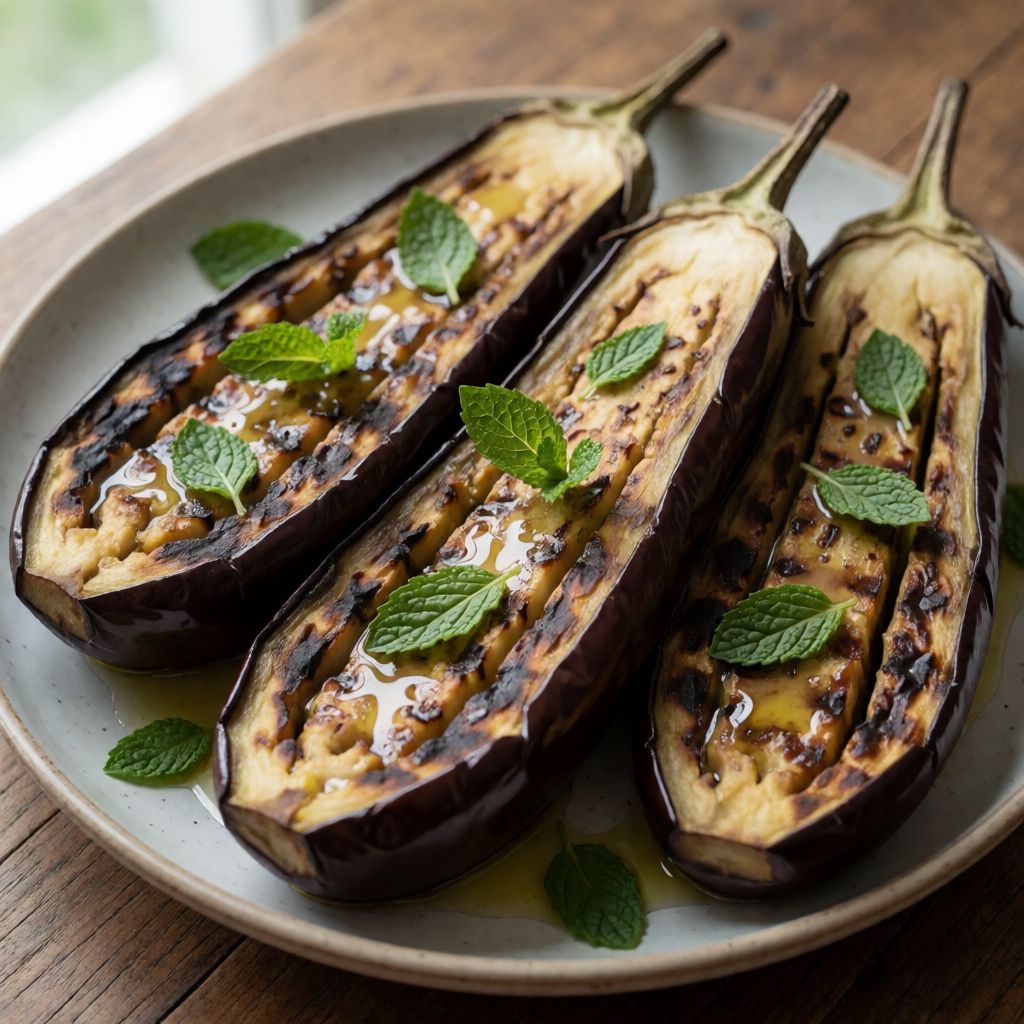
 AI photo
Grilled Aubergine with Tahini Dressing and Mint
A simple side of grilled aubergine with tahini dressing, pomegranate, pistachio and mint.
Labels are worked out automatically from the ingredients and can be wrong. Check the packaging if it matters to you.
Ingredients
- 2 pcs Aubergine
- 50 ml Olive oil
- 50 ml Pomegranate seeds
- 2 tbsp Pistachios
- 1 bunch Mint finely chopped
- 2 tbsp Tahini
- ½ pcs Lemon juiced
- ½ tsp Cumin
- 1 pinch Ground coriander
- 1 tbsp Olive oil
- Salt
- Black pepper
- Water as needed for consistency










Steps
Brush the aubergine pieces with a generous amount of olive oil – they will absorb some of the oil and taste even better for it.
5 minRoast the aubergine on a baking tray lined with parchment at 225°C in a preheated fan oven for 20 minutes, or grill until golden.
20 minMix the tahini, lemon juice, olive oil and cumin in a bowl.
3 minMix well and add water little by little until the dressing has the perfect consistency.
2 minSeason the dressing with salt and freshly ground pepper to taste.
1 minPour the tahini dressing over the warm aubergine and sprinkle with pomegranate seeds, pistachios and fresh herbs (mint).
2 min
Aubergine is a sponge with a grudge. Raw, its flesh is bitter and spongy, full of air pockets and a vegetable called solanine's milder cousins — that's what gives it the astringent edge people associate with "bad" aubergine. Heat and oil are the whole fix: oil fills the air pockets so the flesh doesn't just dry and leather, and real heat collapses the cell walls so the bitterness cooks off and the inside turns custardy. This isn't a dish you build flavour into by seasoning harder — it's a dish you build by getting the aubergine right, then dressing it.
225°C fan is not an arbitrary oven setting — it's hot enough to char and collapse the skin and outer flesh fast, before the inside turns to mush and weeps water everywhere. A domestic oven at a gentler heat will "cook" the aubergine fine, but slowly, and slow here means it steams in its own juice rather than roasting — pale, wet, flabby. If your oven's top whack is lower, push it as high as it goes and watch rather than trust the clock: done is when the skin blisters and splits and a knife goes into the middle with no resistance, not when a timer beeps. Twenty minutes is where to start checking, not where to stop.
Some say aubergine needs salting and draining before cooking to "pull out the bitterness." No — that's a holdover from older, more bitter varieties grown for a tougher market; modern aubergines sold in UK shops are bred milder, and at 225°C any residual bitterness cooks off anyway. Salting now mostly pulls out water you then have to cook back out — one more step solving a problem that barely exists.
Aubergine: buy them firm, with glossy unwrinkled skin and a cap that still looks fresh, not dried to a brown crust — a wrinkled aubergine has already lost water and cooked flesh from it will be stringy rather than creamy. Two medium ones feed four as a side; they shrink a lot in the oven, so don't be alarmed when a tray of two looks modest once blistered down.
Olive oil for brushing: this is a flavour choice as much as a mechanical one, so use something you'd happily eat cold, not your cheapest bottle. If the budget says otherwise, any neutral oil with a high enough smoke point to survive 225°C without burning will do the roasting job — sunflower, rapeseed — you just lose the olive note, and that's a fair trade for cost, not a failure.
Tahini: sesame paste, bitter and loose on its own, and it's the backbone of the dressing, not a flavouring. Good tahini separates in the jar with oil on top — stir it back together before you measure, or you'll get a dollop of paste and a slick of oil in two different spoonfuls. If you genuinely can't get tahini, a smooth peanut butter loosened the same way with lemon and water gets you a parallel dressing, nuttier and sweeter — not the same dish, but not a disaster either.
Lemon and cumin: lemon cuts the fat of the tahini so it doesn't sit heavy; cumin gives it the warm, slightly smoky note that makes people assume there's more going on in the dish than there is. Ground coriander is a pinch, not a measure — it's there to round the cumin off, not to announce itself, so don't double it thinking more is better.
Pomegranate seeds and pistachios are there for two reasons that have nothing to do with decoration for its own sake: the pomegranate gives a cold, sharp burst against the warm soft aubergine and rich dressing, and the pistachio gives you something to actually bite, since everything else on the plate yields instantly. Skip the pomegranate in winter if it's expensive and sad-looking in the shop — a squeeze more lemon in the dressing covers some of what you'd lose. Any unsalted nut with a bit of snap — flaked almonds, walnuts — stands in for the pistachio; just don't use anything roasted in oil and salt already, or you'll overseason the whole plate without meaning to.
Mint, finely chopped and added at the very end, not cooked: heat turns mint grassy and flat, so it only earns its place raw, scattered on last. This is also the point to remember patience as an ingredient here — pour the dressing onto the aubergine while it's still warm, not hot and not cold. Hot, and the tahini turns oily and separates; cold, and the dressing just sits on top in a layer rather than soaking in where it touches the cut flesh. Warm is the short window where it actually gets absorbed, and that's worth waiting the few minutes for.