
 AI photo
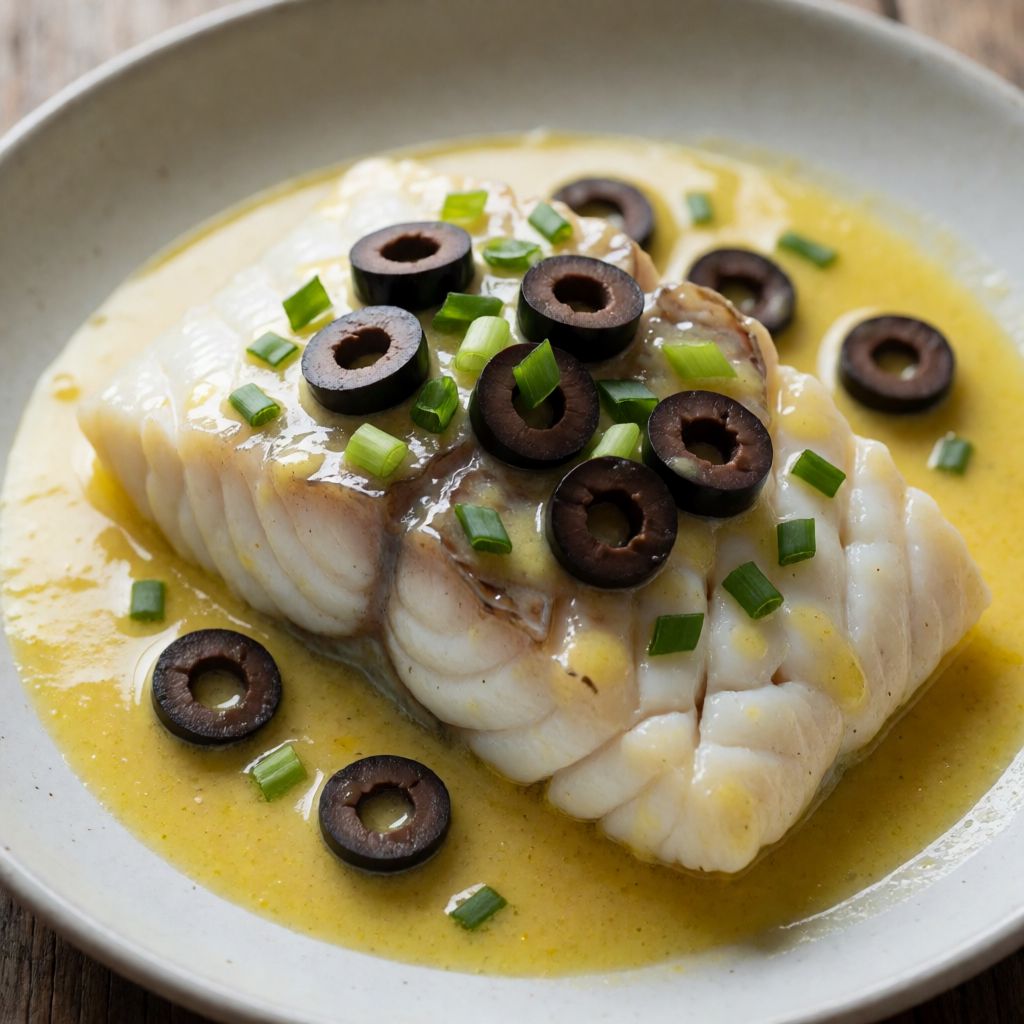
Hake with Saffron Sauce
A simple baked hake fillet with black olives and spring onion, finished with a creamy saffron sauce.
Labels are worked out automatically from the ingredients and can be wrong. Check the packaging if it matters to you.
Ingredients
- 800 g Hake fillet
- 40 g Black olives pitted
- 2 pcs Spring onion
- 2 package Saffron
- 300 ml Stock
- 1 tbsp Plain flour
- 2 tbsp Olive oil
- 20 g Butter
- 2 tbsp Breadcrumbs dried
- Salt to taste
- Black pepper to taste











Steps
Grease a baking dish with olive oil, clean and slice the spring onion into rings, and arrange it in the dish together with the pitted black olives.
Rinse the hake and place it in the dish, then bake in an oven preheated to 180°C.
10 minMelt the butter in a small saucepan over heat.
When the butter has melted, remove from the heat and stir in the flour, salt and saffron with a wooden spoon.
Thin the mixture with the stock and return to the heat, stirring constantly so the sauce does not burn.
Remove from the heat once the saffron sauce reaches a creamy consistency.
Take the fish out of the oven and pour the saffron sauce evenly over the whole surface.
Sprinkle with breadcrumbs and black pepper and bake for a further 10 minutes.
10 minServe the hake in saffron sauce hot.
Hake under a saffron crust is a two-stage bake dressed up as one dish: first the fish sits with onion and olives and firms up in the oven, then you flood it with a roux-based sauce and send it back in to set a golden skin on top. What decides whether it works is the roux — butter and flour cooked together and loosened with hot stock — and whether you stop the sauce before it turns to wallpaper paste.
Hake is a forgiving fish for this because its flakes are soft and come apart in big white sheets rather than tight muscle fibres. That's also its weakness: carry on baking past the point the flesh turns from translucent pearl to opaque white, and it goes from moist to woolly in the time it takes to answer the phone. Ten minutes at 180°C for a fillet is a starting point, not a guarantee — thickness decides the real number, so check by pressing: it should give, then separate into flakes, not resist.
Some say saffron needs steeping in warm water first to "release" its colour — no, because here it's going straight into a hot butter-flour paste, and fat carries saffron's aroma compounds just as well as water does, arguably better, since the oil-soluble ones are what give you the perfume rather than just the colour. What you're actually managing is the roux, not the spice: butter melted, off the heat, flour stirred in so it doesn't catch and turn bitter, then stock added gradually so you get a sauce and not a slurry with lumps sulking at the bottom.
Hake (800 g fillet, feeds four) is your anchor decision. If your fishmonger or supermarket chiller has no hake, look for the same texture rather than the same name: cod, pollock, or coley all flake in big soft sheets and take a sauce the same way. Avoid anything dense and meaty like monkfish here — it won't match the ten-minute timing and the dish will feel unbalanced, fish still raw-firm while the crust is already browning.
Saffron, two small packets, is doing aroma and colour, not bulk — don't be tempted to add more "to be sure", because past a certain point it stops smelling floral and starts tasting medicinal, almost soapy. If you genuinely have none, turmeric with a pinch of paprika gives you the colour but none of the scent — be honest with yourself that it's a stand-in, not a swap. There's a reason saffron recipes default to a pinch: it was, and still is, priced by the gram like something precious, because each thread is hand-picked from a crocus flower — the economics of it, not mystique, is why every recipe treats it like a seasoning rather than an ingredient.
Stock, 300 ml — use fish stock if you have it, because it keeps the sauce in the same flavour family as what it's coating; a light chicken stock works as a neutral substitute, but skip anything dark or heavily reduced, it'll fight the saffron rather than carry it. Homemade is better only if you have it already made; don't build a stock from scratch for this dish, that's effort out of proportion to the result.
Butter and flour, equal-ish by eye (20 g butter to 1 tbsp flour) make your roux — the backbone of the sauce's body. Olive oil, two tablespoons, is just for greasing the dish and has no flavour job here, so any neutral oil with no smell of its own will do the same work; save your good extra virgin for something you're not baking at 180°C, since heat burns off what makes it worth paying for.
Black olives and spring onion are the one place in this dish that isn't about mechanism but about contrast — salt-sharp olives and a mild raw bite of onion sitting under soft fish and rich sauce, so the whole plate isn't just one texture of soft and one note of fat. Pitted olives save you a fiddly job at the stove when your hands are already busy with fish; if yours have stones, pit them before you start, not while the oven's ticking.
Breadcrumbs, dried, two tablespoons, want to be properly dry — fresh breadcrumbs carry moisture that steams under the sauce instead of crisping. If you only have fresh bread, toast and blitz it first; this is a small step but it's the difference between a crust and a soggy top.
Patience here is short but real: don't rush the second bake to save ten minutes, because that's the only thing turning a wet sauce into a crust. A domestic oven at 180°C with a dish on a middle shelf isn't a restaurant salamander — it browns gently, not fast, so judging by colour and smell (that faintly toasted bread smell, not yet burnt) matters more than watching a clock.