
 AI photo
Hake with Rice and Broccoli
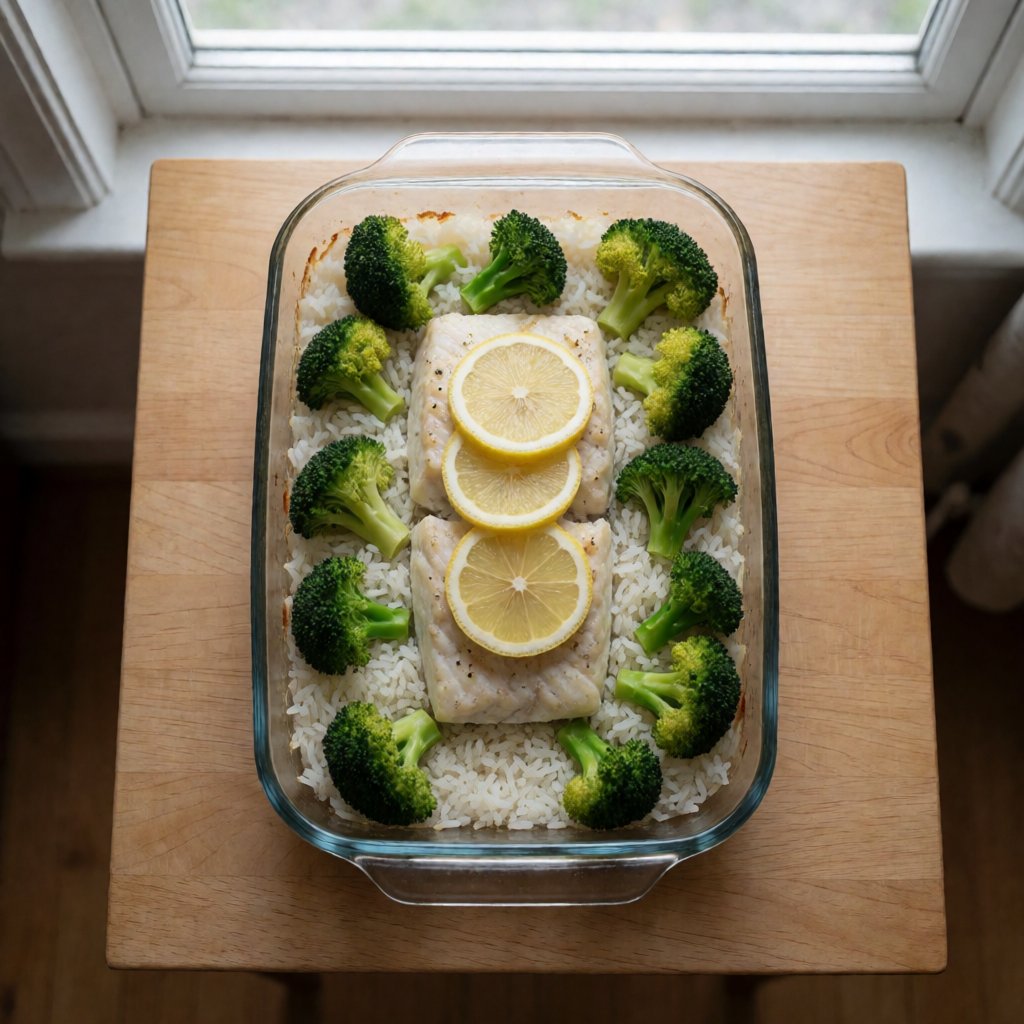
A simple oven-baked dish of hake fillet with rice and broccoli, cooked together in one tray.
Labels are worked out automatically from the ingredients and can be wrong. Check the packaging if it matters to you.
Ingredients
- 120 g rice rinsed
- 200 ml boiling water
- 300 g hake fillet
- 150 g broccoli
- 1 tbsp sunflower oil
- 0.5 pcs lemon
- 1 pinch salt to taste
- 1 pinch black pepper to taste








Steps
Put the rice in a baking dish, pour over the boiling water, season with salt, and cover with foil.
Place the dish in the oven at 200°C for 35 minutes.
35 minRemove the foil.
Place the fish and broccoli on top, season with salt, and drizzle with oil and lemon juice.
Cover with foil again and bake for a further 15 minutes, until the fish reaches 63°C internally.
15 minRemove the dish from the oven.
This is not really baking, it's steaming inside a sealed dish that happens to sit in an oven. Rice goes in first, gets boiling water and a foil lid, and what cooks it isn't the 200°C dial — it's the steam trapped under that foil, climbing to 100°C and holding there, patiently pushing itself into every grain until the water is gone and the rice is swollen and soft. Open the foil early to check, out of curiosity, and you let that steam escape — the edges of the dish will dry out while the middle is still crunching between your teeth.
Then the fish and broccoli go on top, and the foil goes back on for round two — same mechanism, gentler job. Hake is a soft, watery fish with very little fat to protect it, so the foil here isn't decoration, it's what stops the top of the fillet from drying to cardboard while the inside is still raw. The whole dish only works if you trust the thermometer and not the clock: pull hake out at 63°C in the thickest part and it stays silky; wait for it to "flake easily with a fork" — the old test everyone was taught — and you've already overshot, because by the time fish flakes cleanly it has lost its moisture and gone chalky. Flaking isn't the sign of doneness, it's the sign you're a few minutes past it.
Broccoli rides along on the same steam, which is why it goes in with the fish and not with the rice — fifteen minutes of trapped moisture is enough to take it from raw-green to tender without boiling the colour and the bite out of it, which fifty minutes with the rice certainly would.
Rice: any long or medium-grain white rice that stays separate when cooked — basmati is fine, so is standard long-grain. Avoid pudding or risotto rice here; they're bred to release starch and go creamy, which fights the dry, absorbed texture this method is after. Rinse it first — not folklore, just washing off the surface starch dust that would otherwise cloud and gum the water instead of being drunk in by the grain. The ratio given, 120 g rice to 200 ml water, is tighter than the usual 1:2 you'd use on the hob, because this water has nowhere to boil away to — sealed under foil, almost all of it ends up back inside the rice rather than lost as steam into open air.
Hake: a mild white fish, soft-fleshed, with next to no fat, which is exactly why it dries out so fast and why the foil and the thermometer both matter more here than in a recipe for, say, salmon. If hake isn't to hand — and in the UK it often isn't, cod and haddock are the usual counter choice, coley is the cheaper cousin of both and works just as well here — the rule for substitution is simple: any lean white fish fillet thick enough to hold together as one piece, not break into flakes the moment you lift it. Thin, bony, or oily fish won't behave the same way under this cooking time.
Broccoli: pick heads that are tight and deep green, not yellowing at the florets — yellowing means it's already started ageing and will turn grey and bitter under heat rather than staying bright. Cut it small enough that the stalks aren't still woody-raw when the florets are already soft; nobody wants to gnaw through a stem like it's a twig.
Oil: one spoon only, and its whole job is to stop the fish surface from sticking and to carry the lemon juice evenly rather than letting it pool. Use anything with no smell of its own — sunflower, rapeseed, a neutral vegetable oil — strong olive oil will sit on top of a fish this mild and you'll taste the oil before you taste the hake. Lemon: half is plenty — a squeeze, not a bath. Too much juice sitting on raw fish before it goes in the oven starts to firm the surface itself, the same effect as a ceviche, and you'll end up with a slightly rubbery edge on the fillet before the oven's even had a go.
One honest warning about the oven: if yours is fan-assisted, it runs hotter than its dial suggests, and foil traps heat unevenly depending on how tightly it's sealed. Don't fight this with guesswork on temperature — fight it by watching the rice (dry, separate grains, no bite of raw starch left) and by trusting the thermometer on the fish, not the minutes on the page. The minutes are a floor, not a finish line — the dish tells you when it's ready, you just have to be patient enough to ask it properly instead of guessing through a closed lid.
·