
 AI photo
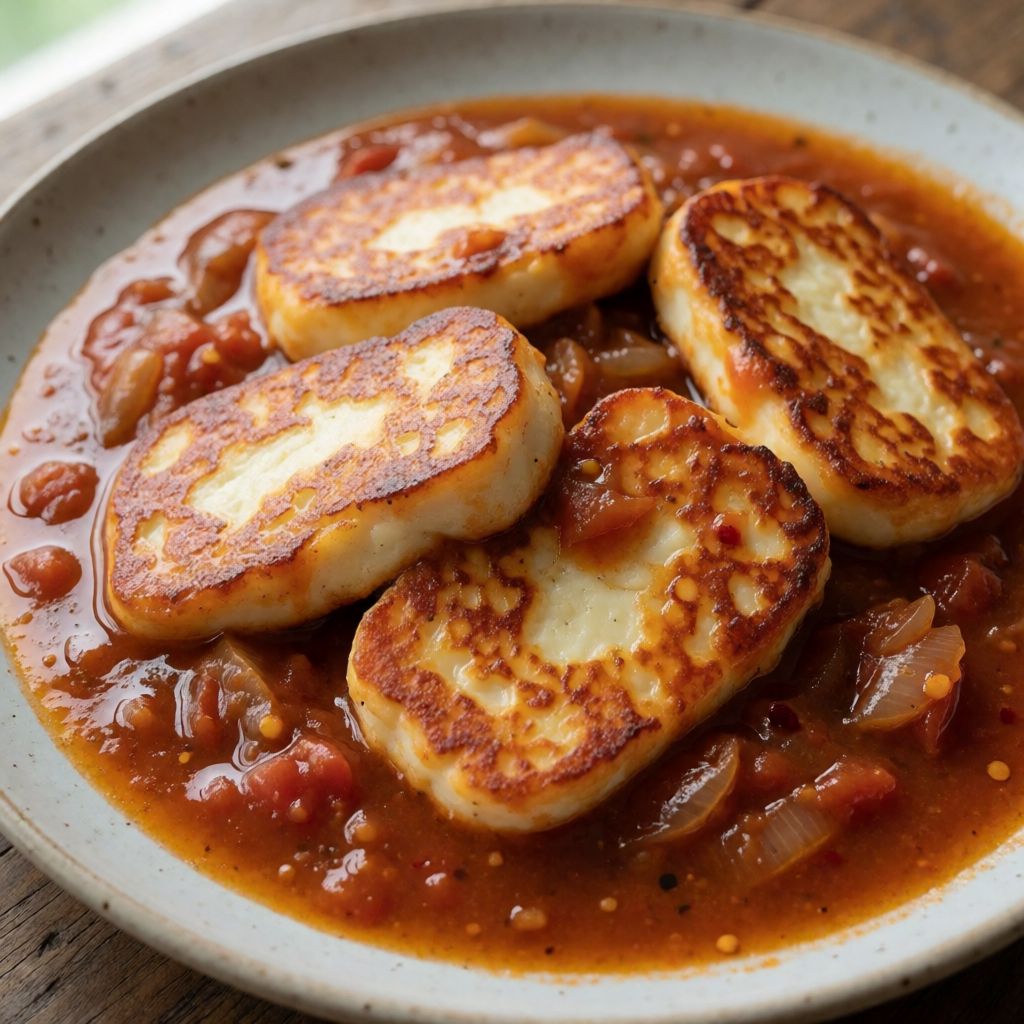
Halloumi in Spiced Tomato Sauce with Butter
Crispy fried halloumi simmered in a spiced tomato, yogurt and cream sauce, served over basmati rice.
Labels are worked out automatically from the ingredients and can be wrong. Check the packaging if it matters to you.
Ingredients
- 50 g Butter
- 450 g Halloumi cut into cubes
- 2 pcs Onion sliced into rings
- ½ tsp Chilli flakes
- 1 pinch Cloves
- 2 tsp Cumin
- 3 tsp Garam masala
- 2 clove Garlic finely chopped
- 1 tbsp Ginger finely grated
- 400 g Canned chopped tomatoes
- 50 g Tomato paste
- 100 g Greek yogurt
- 100 ml Whipping cream
- 1 can Butter beans drained and rinsed
- Salt to taste
- Black pepper freshly ground, to taste
- 300 ml Basmati rice cooked according to packet instructions
- 2 bunch Coriander fresh, chopped
- 25 g Butter

















Steps
Heat a pan over medium heat and melt half of the butter.
Let it melt, then fry the halloumi until crisp and golden brown.
Set the fried halloumi aside.
Put the remaining butter in the pan, add the onion and spices.
Warm the spices through well while the onion fries and becomes fragrant.
Add the garlic, ginger, canned chopped tomatoes, tomato paste, yogurt and whipping cream.
Heat through well and let simmer uncovered for 10 minutes.
Add the butter beans and fried halloumi to the sauce, season well with freshly ground black pepper and, if you like, a little salt.
Let simmer for a further 5 minutes.
Serve in bowls with rice, halloumi, a knob of butter and a scattering of coriander.
This is a butter-chicken sauce that never saw chicken — the same base of tomato, cream, yogurt and warm spice, but the protein is a cheese that doesn't melt, doesn't flake, and fights back when you bite it. Halloumi survives simmering because of how it's made: brined and part-cooked before you ever buy it, its proteins are already set too tightly to collapse the way a soft cheese would. That's the whole trick of the dish — you get the richness of a curry-house classic with a textural joke running through it, squeak and all.
What decides whether this works is almost entirely what happens before the sauce exists: how well you colour the halloumi, and whether you let the spices actually cook rather than just get wet. Skip either and you have a passable tomato-cream stew with some cheese dropped in. Do both properly and you have something that tastes like it's been simmering all afternoon, even though it hasn't.
Some say halloumi can't take heat, that it turns rubbery and sad in a sauce — no, because the problem isn't heat, it's time and company. Left too long in liquid it does go leathery, chewy in the wrong way. But fried hard first, in a dry pan with butter, then only *finished* in the sauce for five minutes at the end, it keeps its structure and picks up flavour on the outside without the inside turning to boot leather. The frying isn't decoration. It's armour.
Start with the halloumi itself. You want it cut into cubes big enough that each one has a middle that stays soft — too small and it turns to crouton. The pan needs to be properly hot before the cheese goes in, hot enough that a cube spits and seals on contact; a timid pan just steams the surface, and steamed halloumi weeps its brine into the fat and never browns, it just sits there pale and sweating. Butter here isn't just flavour — its milk solids catch and brown alongside the cheese, which is where a lot of that savoury, nutty edge comes from. If you're worried about burning, any neutral oil with no smell of its own — sunflower, groundnut — will carry the heat without smoking, but you lose that browned-butter note, so I'd use oil only to extend the butter, not replace it. Halloumi itself: there's no real substitute if you want this dish, but paneer is the honest cousin if you can't find it — softer, so fry it even more confidently, it needs the same armour.
The onion and spice stage is where most people rush and lose the dish. Cumin, garam masala, cloves and chilli flakes are not seasoning you sprinkle in at the end — they're ground resins and seeds that need fat and gentle heat to open up, the way wood needs to actually catch before it gives off any warmth. Fried dry, spices burn in seconds and turn bitter; the onion is there partly for flavour, partly as a buffer, releasing moisture that keeps the pan from scorching the spice while it toasts. You're watching the onion turn from raw white-gold to a soft ginger colour and going translucent at the edges — that colour change is your cue, not a clock. Garlic and ginger go in after, because they burn faster than onion and only need a minute to lose their raw bite.
Tinned tomatoes and tomato paste together do two different jobs: the tinned ones bring acidity and bulk, the paste brings concentrated sweetness and body, the kind you'd otherwise only get from tomatoes reduced for an hour. This is the same economic logic behind most tinned-tomato cooking in Britain and everywhere else — tomatoes in season for six weeks, tinned and useful for the other forty-six. Yogurt and cream go in to round the acidity and carry the spice fat — yogurt alone can split if the pan's too fierce when it goes in, so once it's added, keep it at a gentle simmer, not a rolling boil; cream is partly insurance against that split, since its higher fat content makes the sauce more stable. If you've no cream, a splash more yogurt or even coconut milk does the stabilising job, just changes the character slightly.
Butter beans are an odd one to see in what reads as a curry-adjacent dish, but they're doing honest work: they soak up the sauce, they add a second, mealier texture against the squeak of the halloumi, and they bulk the dish without diluting flavour — a trick worth knowing any time a sauce is rich but short on substance. Rinse them properly; the tin liquid is starchy and a bit metallic, and left in it mutes the sauce.
A note on patience, because this dish will tempt you to shortcut it: the ten minutes the sauce simmers uncovered isn't there to "cook the tomatoes," they're already cooked in the tin. It's there to drive off water and let the fat and spice marry into the liquid instead of floating on top of it. Rush that and you get a thin, separated sauce that tastes like its ingredients rather than a dish. In an ordinary flat kitchen, with a wide pan standing in for a kazan, you don't have the surface area or retained heat of a professional stove to speed that reduction — so give it the time, uncovered, and let it actually shrink a little rather than just get hot. Finish with the coriander and that last knob of butter stirred in off the heat, not cooked — it's there to glaze the sauce glossy at the very end, a trick, not a flavour. This feeds four generously alongside rice, less if anyone at your table treats halloumi as a side dish rather than the point of the meal.