
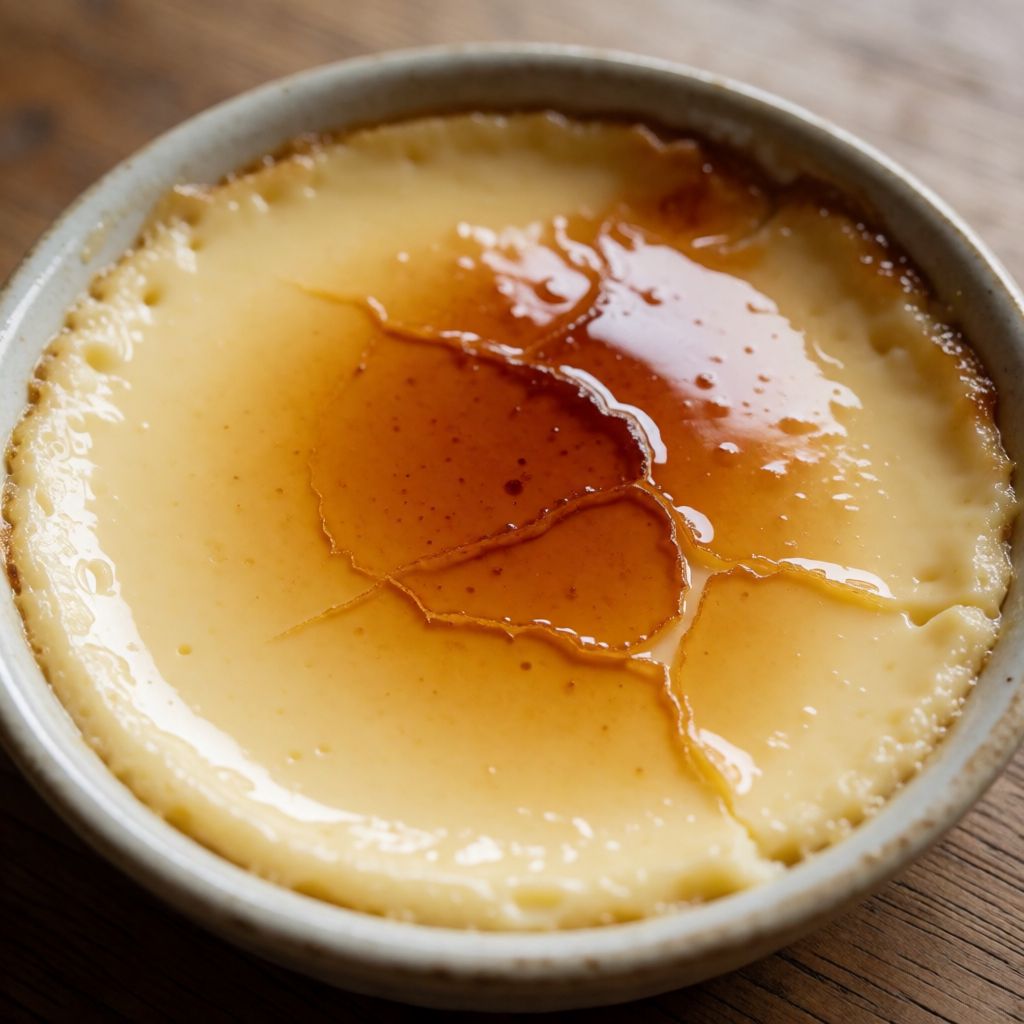
 AI photo
Homemade Custard with Caramelised Sugar
A simple homemade custard with a caramelised sugar topping, finished under the grill.
Labels are worked out automatically from the ingredients and can be wrong. Check the packaging if it matters to you.
Ingredients
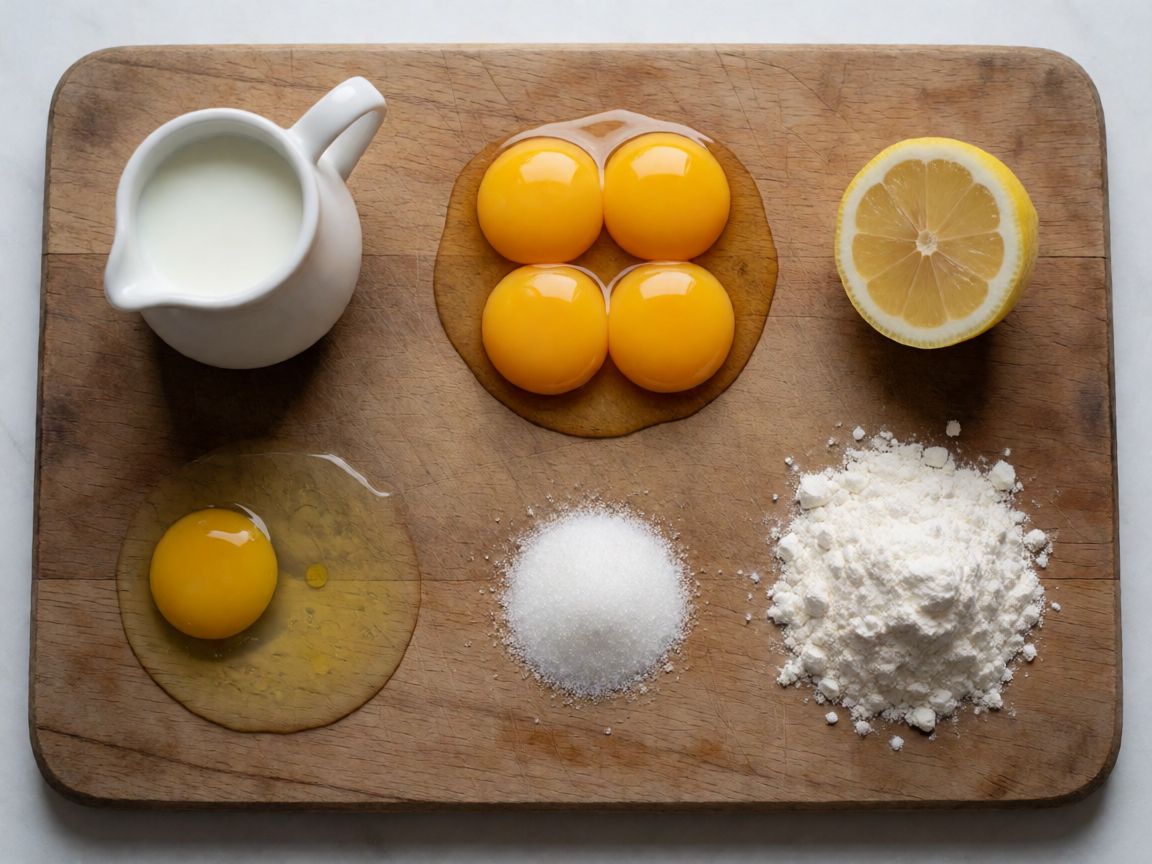
- 50 ml Milk
- 4 pcs Egg yolks
- 2 pcs Egg whites
- 170 g Sugar
- 1 tbsp Plain flour
- 0.5 pcs Lemon juice only





Steps
Whisk the egg yolks with 150 g of the sugar using a mixer.
Add the flour and 5–6 drops of lemon juice.
Bring the milk to the boil, pour in the egg yolk and sugar mixture, and cook over low heat.
10 minRemove the cream from the heat and gently fold in the egg whites, beaten to stiff peaks.
Leave to cool.
Divide the custard among 4 ramekins, sprinkle with the remaining sugar, and caramelise the surface with a kitchen torch or under the grill.
Serve.
This is a custard that works like crème brûlée's lighter, cheekier cousin — same caramel shell on top, but underneath not one dense block, something with air trapped in it. The egg whites, beaten and folded in at the end, are what puff the yolk custard into that in-between texture. That fold is the real decision point: too hot a base and the whites set in lumps rather than blending; too cold and they sit on top like oil on water, refusing to mix in.
What decides whether the base works is heat control on the yolks, not the clock on the hob. Egg yolks start to thicken somewhere around 70°C, and not far above that they go grainy — which is really just scrambled egg wearing a disguise. That's why low heat matters more than the ten minutes written down: low heat buys you time to watch and pull the pan off before you cross that line. No thermometer needed — watch for the moment the mixture coats a spoon and leaves a clean trail when you drag a finger through it. That's doneness, not a timer going off.
The caramel lid has its own, separate mechanism. A thin, even scatter of sugar melts into glass fast, before the heat has time to travel down and soften the custard underneath. Some say the grill does the job just as well as a torch — no, because the grill heats the whole oven cavity, custard included, while a torch heats only the sugar it touches. Chase an even caramel under the grill for too long and you get a lovely shell sitting on soup.
The milk is almost a rumour here — fifty millilitres against four yolks — which tells you this isn't a milk pudding borrowing custard's name. It's egg custard properly, rich, and the milk's job is mostly to carry heat evenly into the yolks and loosen the sugar a touch before it meets egg protein. Whole milk gives a slightly smoother set from the extra fat; skimmed will still work, since nothing here depends on milk for flavour.
The yolks are the backbone — fat and protein that gel softly once warmed within that narrow window below scrambling point. Keep them scrupulously free of any trace of white when you separate the eggs, and not out of superstition: a smear of yolk fat in the whites you're about to whip will kill the foam before it starts, because fat and air don't share space well. That's the whole reason behind the old kitchen rule, no mystery in it.
The whites, whipped separately to stiff peaks and folded in once the base has cooled a little, are what put air into the dish — this is the actual point of the recipe. Skip them and you've made a plain baked custard, which is a perfectly fine thing, just not this thing.
Sugar does two different jobs and that's why it's split. The bulk of it goes into the base early, dissolved into the yolks before cooking, so it sweetens without grinding roughly against the egg proteins and roughening the set. The smaller amount on top is there purely to melt into a thin, even shell — a job that caster sugar does slightly better than granulated, because finer crystals melt together rather than scorching in spots while the rest sits unmelted.
The flour is a stabiliser and nothing more romantic — a spoonful gives the yolks starch to cling to as they heat, which widens that safe window before curdling and is the real reason you can cook this custard in an open pan on a hob rather than over a bain-marie. Cornflour does the same job at roughly half the quantity, since it thickens harder gram for gram.
The lemon juice is five or six drops, nowhere near enough to taste — it nudges the egg proteins to set a touch more evenly as they warm. Some say any acid near egg will curdle it — no, not at this dose; you'd need a tablespoon before that became a real worry. Any mild acid does the same quiet work if you've no lemon to hand — a few drops of vinegar, or a pinch of cream of tartar whisked in with the sugar.