
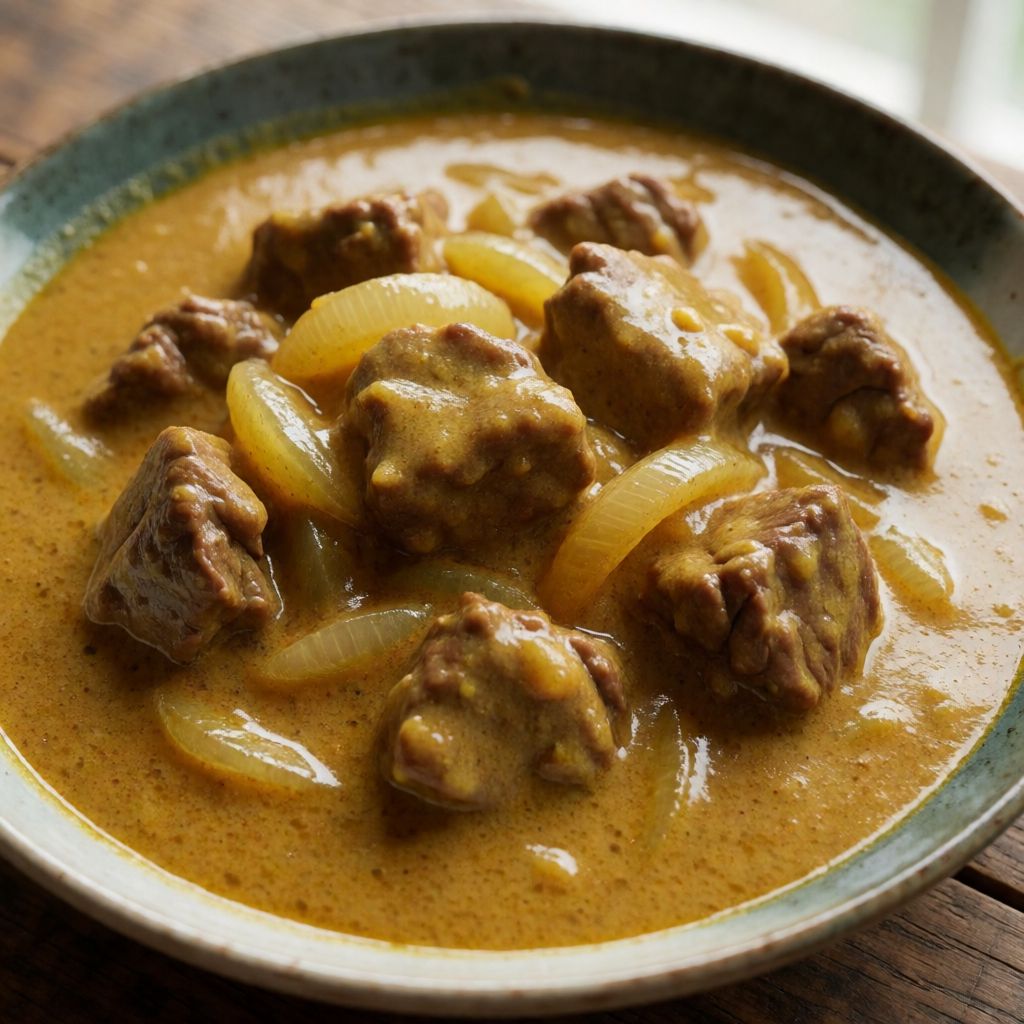
 AI photo
Beef with Curry
A hearty beef stew gently spiced with curry powder and simmered in milk until tender.
Labels are worked out automatically from the ingredients and can be wrong. Check the packaging if it matters to you.
Ingredients
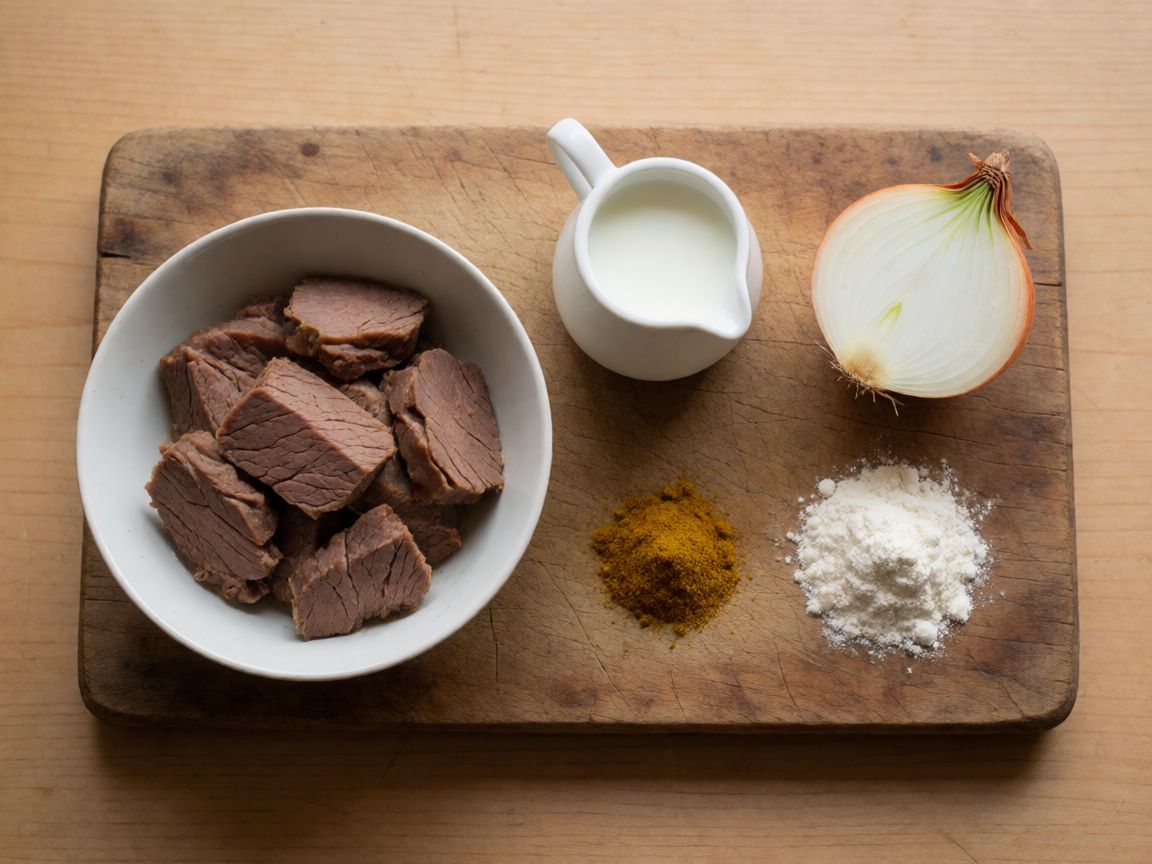
- 500 g Beef
- 250 ml Milk
- 0.5 pcs Onion
- 5 tbsp Olive Oil
- Curry Powder to taste
- Plain Flour to taste
- Salt to taste







Steps
Cut the beef into large cubes with a sharp knife, toss in flour and set aside.
5 minPeel the onion and cut it in half with a damp knife, then into thin slices.
3 minFry the onion in a non-stick pan with a little olive oil, then add the flour-coated beef.
5 minSeason with salt and fry over high heat for a few minutes.
3 minReduce the heat, sprinkle in the curry powder and pour in the milk.
2 minSimmer for about fifteen minutes until the beef is cooked through.
15 minWhen the sauce has thickened, turn off the heat and serve the beef curry hot.
2 min
This is a British home curry, not a subcontinental one — curry powder and milk standing in for a fresh spice paste and coconut milk, built for a weekday evening when you want the smell of spice in the kitchen but not three hours and a shopping list of rhizomes. What decides whether it works is matching the beef to the clock: fifteen minutes of simmering is not enough to soften a tough stewing cut, so you need meat that's already tender, not one that needs hours to give up its collagen.
The flour you dust the beef in before frying does two jobs, and neither of them is "sealing in the juices" — that's one of the oldest myths in the kitchen, and no, searing doesn't trap moisture, meat loses water however hard you fry it. The flour's real job is to brown into flavour on the meat's surface, and then, once the milk hits the pan, to dissolve back out and thicken the sauce around that same meat — a roux you've built without noticing you were building one.
The two heats here are not interchangeable. High heat at the start is for colour and crust on the beef; low heat once the curry powder goes in is to stop ground spice scorching into something bitter, because spice has far more surface area than a whole pod or seed and catches in seconds, not minutes. The milk that follows needs a gentle simmer, not a boil, or it will split — whole milk forgives you a little more than skimmed, because its fat buffers the proteins against the heat.
Beef, 500g for four people as a main with rice or mash: choose a cut that's naturally tender and quick-cooking, because you're only giving it a quarter of an hour of simmering. Rump, sirloin trim, even a careful chuck eye will do — but skip shin, brisket, or anything that belongs in the long, slow category with a Sunday roast's heavier cousin, the pot roast. That connective tissue won't melt in fifteen minutes, it will just stay rubbery, and no amount of extra simmering at this point fixes what the wrong cut started. Cut it in large cubes with a sharp knife — sharpness matters because a clean cut severs the fibres instead of crushing them, and crushed fibres weep juice into the pan before the heat's even on, which is where toughness actually starts, not where it's symptom shows up.
Onion, half, sliced thin: the "damp knife" in the method makes no real difference to tears — the sting comes from a gas released when the onion's cells rupture, and a wet blade doesn't stop that reaction. What helps a little is a sharp knife, because it tears fewer cells open, and a cold onion, because cold slows the enzyme that makes the gas. Slice it thin so it melts into the sauce rather than sitting there as crunchy rings; this isn't a dish built around the bite of raw onion.
Oil and flour are the supporting cast, and both are better understood by what they're for than by their quantity. Five tablespoons of olive oil sounds generous for frying, but a flavoured oil fighting a curry for attention isn't doing you any favours, and extra virgin oil scorches bitter before meat properly browns in it. The criterion: a fat with no strong smell of its own and a heat tolerance higher than the good stuff — light vegetable oil, sunflower oil, or plain refined olive oil if that's all you've got, saving the extra virgin bottle for the salad. The flour, despite being listed "to taste," isn't really a flavour choice — it needs to be enough to dust each cube lightly, not clump it. Too much and the excess falls loose into the pan raw, giving the sauce a chalky, uncooked edge before it's had time to cook out.
Curry powder is where "to taste" genuinely means something. It's a Victorian-era British invention — a packaged shortcut for people who wanted the taste of Indian spicing at home without sourcing and grinding a dozen separate ingredients, and it has been doing honest, unglamorous work in kitchens like this one ever since. Mild, medium, hot — that part is yours. What matters mechanically is adding it only once the heat is down, because ground spice has vastly more surface area than a whole seed or pod and will catch and turn bitter in the time it takes to glance away.
Milk, 250ml, whole rather than skimmed: the fat in it keeps the sauce smooth as the flour starts thickening it and buys you a little room before it looks like it's about to split. This dish leans on a British comfort with milk-based savoury sauces — the same instinct behind a white sauce or bread sauce at a roast dinner — rather than reaching for coconut milk or yoghurt, and that's not a thinner version of curry, just a different larder's logic. Serve it the way you'd serve most things saucy after a roast — rice or mash — or, if you want the full chip-shop version of this logic, over chips, since curry sauce on chips is its own small British institution built on exactly this kind of mild, milk-softened curry.