
 AI photo
Invisible Apple Pie
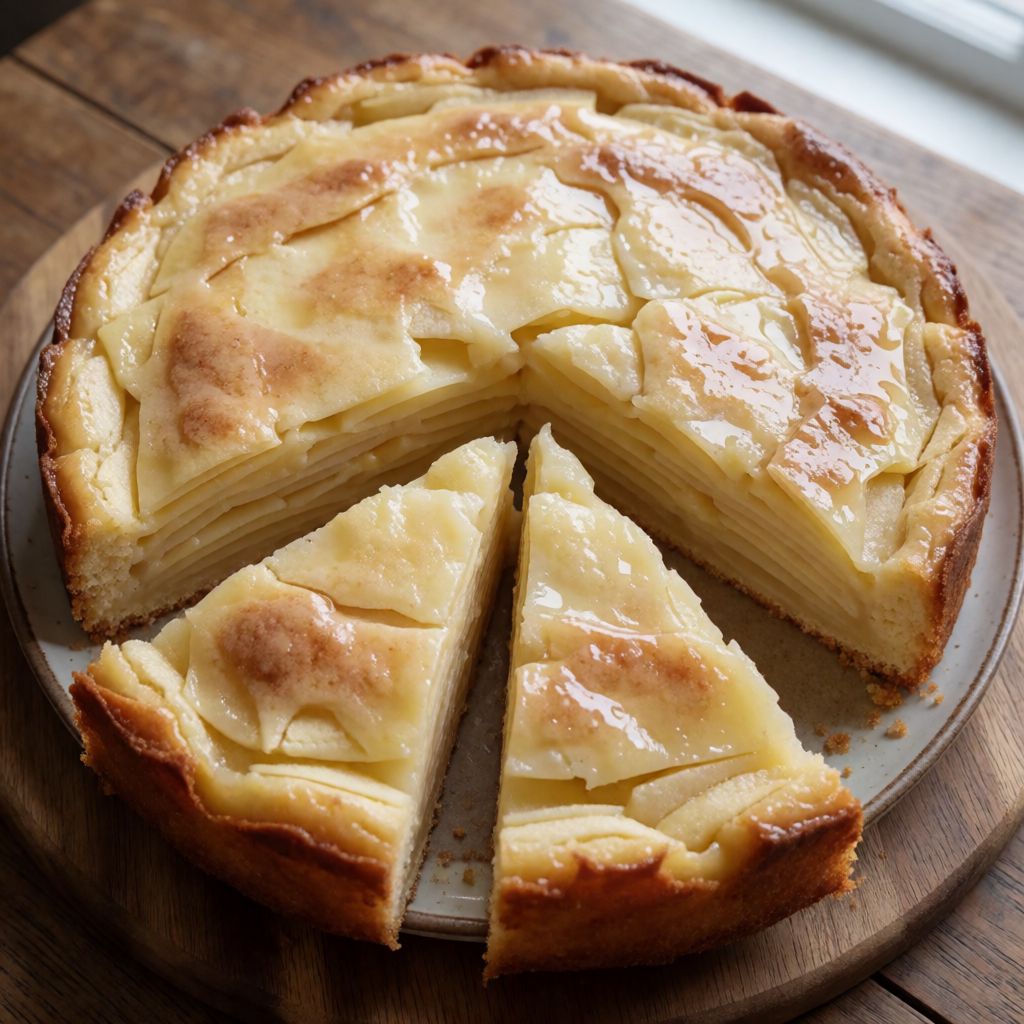
A delicate apple pie with wafer-thin apple slices suspended in a light batter, so fine the fruit seems almost invisible.
Labels are worked out automatically from the ingredients and can be wrong. Check the packaging if it matters to you.
Ingredients
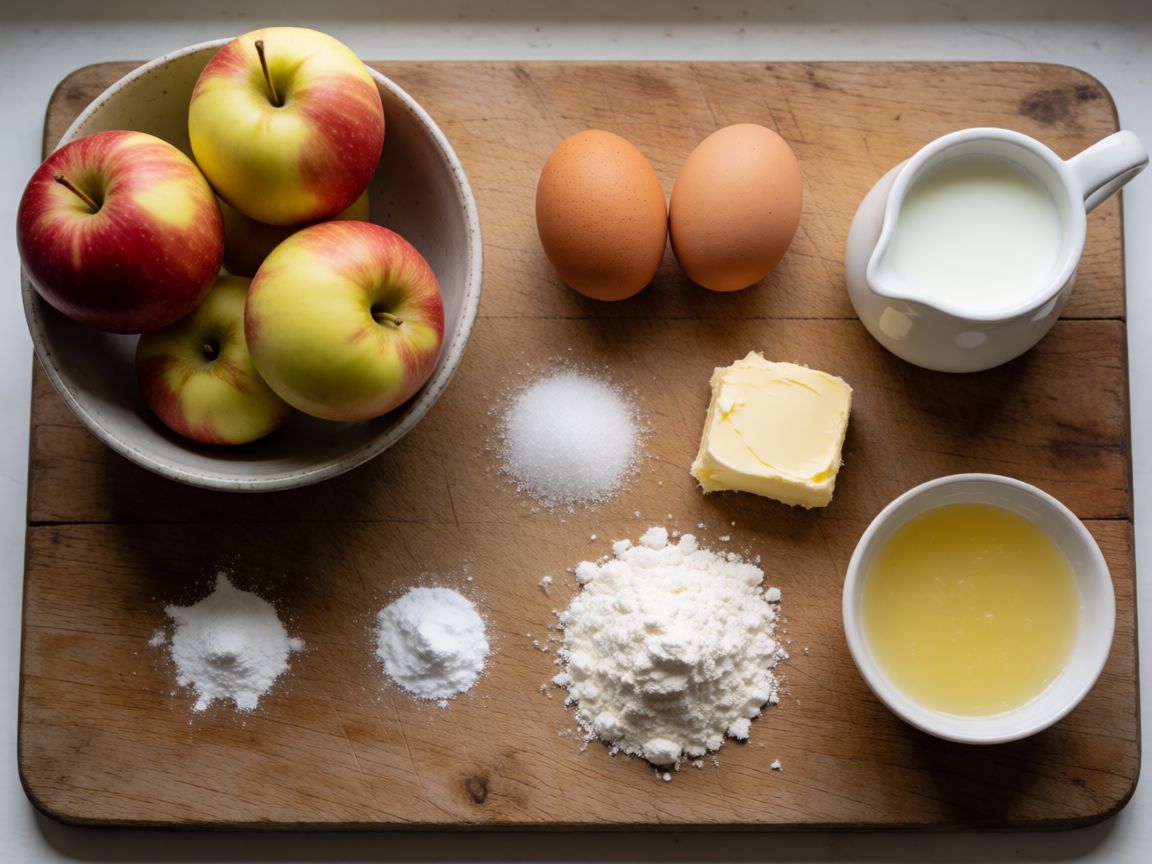
- 1 kg Apples
- 2 pcs Eggs
- 80 g Caster sugar
- 60 g Butter softened
- 100 ml Milk
- 70 g Plain flour
- 15 g Baking powder
- 1 pcs Lemon juice
- 1 pcs Lemon zest








Steps
Peel the apples and cut them into very thin slices. Put the slices in a bowl and pour over the lemon juice. Grate the lemon zest.
In a separate bowl, beat the eggs with the sugar until pale and creamy.
Add the softened butter and mix well.
Pour in the milk in a thin stream, mixing constantly.
Sift in the flour and baking powder, then fold into the mixture. Add the grated lemon zest and combine.
Pour the batter over the apples in the bowl and mix gently to coat all the slices.
Transfer everything into a 20–22 cm tin, greased with butter and dusted with flour. Smooth the top.
Bake in a preheated oven: at 170°C (fan) for 45-50 minutes or at 180°C (conventional) for 50-55 minutes.
50 min
This cake has an odd name for a reason. Cut into it and you don't see apple chunks sitting in dough — you see something closer to see-through, as if the fruit had melted into the batter and left only its outline. It isn't a cake with apple added. It's close to a kilo of apple held together by not much more than a teacup of batter — the usual cake ratio turned on its head.
What decides whether that trick works is how thin you cut the apple and how thin you keep the batter. Slice properly thin — translucent-thin, not "thin for you" thin — and the apple cooks through in the same stretch of time the batter sets around it, instead of staying raw in the middle while the top's already gone dark. Keep the batter loose, close to a thick crepe mix, because its job is to run into every gap between slices, not to wrap them the way a normal sponge batter would. If it sits stiff on the spoon, you've made a different, denser cake. Not a wrong one — just not this one.
Some say any apple does for a bake like this — no, not here. A soft cooking apple, the kind bred to collapse to fluff the moment it hits heat (Bramley is the classic British one), will dissolve past the point of showing a slice at all, and you've lost the one visual trick the whole cake is named for. You want something that softens without surrendering — Braeburn, Cox, Granny Smith — so that when you cut into the finished thing, you still see those pale, almost glassy ribs of apple running through the crumb.
Beating the eggs with the sugar until pale and thick isn't decoration — it's folding air into a batter that has almost nothing else to lift it with. 15 grams of baking powder against a kilo of apple is not a generous ratio; most of what keeps this from baking flat and dense is the air you whip in at this stage. Stir instead of beating and you'll still get a cake, just a shorter, denser one. The butter goes in soft and creamy, not melted — melted butter is liquid fat, and liquid fat knocks the air straight back out of that foam. If you've no butter, any fat that's solid but spreadable at room temperature will hold the same way; a neutral margarine does the job, though it won't give you the same flavour underneath the apple and lemon.
The milk goes in slowly, in a thin stream, because the mixture at that point is an egg-and-fat emulsion, and dumping cold liquid into fat all at once is how you split it — same principle as rushing a mayonnaise. Any milk works here; you've almost certainly got some in for tea already, and this isn't the dish where the type matters, only that it's there to loosen the batter without tasting of itself.
The flour and baking powder are sifted together on purpose, and there's deliberately little flour — 70 grams is barely a binder, not a structure. That's why the baking powder ratio looks heavy next to it: it's not lifting a cake, it's lifting a custard that happens to have flour in it. Keep that logic in mind if you reach for self-raising flour instead of plain — it already carries its own raising agent, and adding the full 15 grams of baking powder on top will give you a crumb full of holes, or a batter that climbs over the tin and then collapses. The lemon zest goes in with the dry ingredients because zest carries its perfume in oil, not water — that's a different job from the juice, and a different part of the fruit doing it.
The lemon juice poured over the raw apple slices does two things, not one. It stops the cut flesh browning in the air while you make the batter — plain oxidation, nothing more mysterious than that. But the acid also keeps the slices a little firmer as they bake, slowing how fast their pectin breaks down, so they don't turn to mush before the batter around them has had the chance to set. Some say the lemon's only there for looks. No — leave it off and the apple collapses faster than the batter can hold its shape.
Butter and flour the tin rather than lining it with paper — the batter needs to catch slightly against the metal at the edge to get any grip and rise, and paper just slides. A fan oven moves hot air around the cake constantly, which is why the fan temperature here sits ten degrees under the conventional one for the same result — don't set both ovens to the same number and assume it's the same heat reaching the cake. Go by what you see rather than the clock once you're near the time given: push a skewer to the centre and it should come out clean, no wet batter clinging, the top properly gold rather than pale, the edge just starting to pull back from the tin.
And give the apple its ten minutes in the lemon before you touch the batter. That's not dead time — that's the juice doing its slow work on the browning and the firmness both, and rushing past it is how people end up with a cake that looks fine on top and grey-brown underneath the first few slices.