
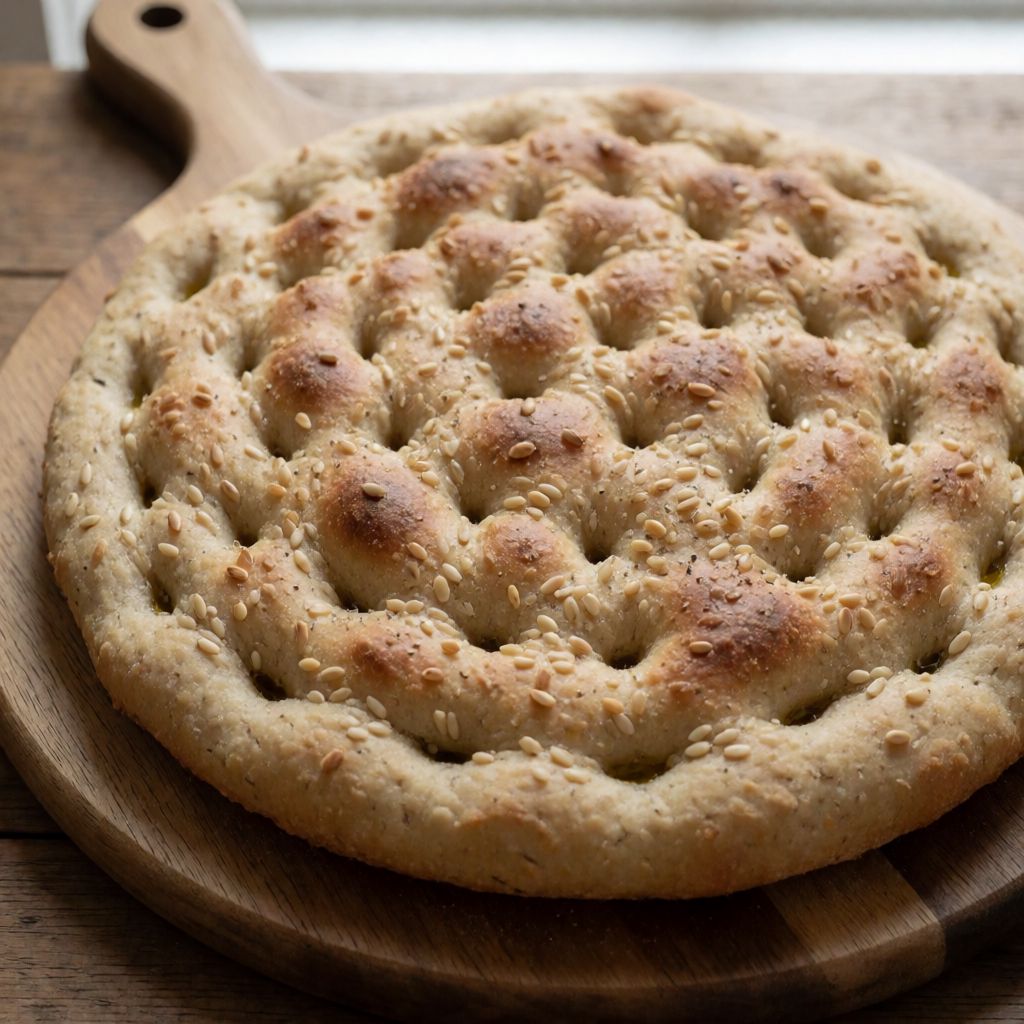
 AI photo
Kamut Flour Focaccia
A simple Italian-style flatbread made with kamut flour, olive oil and rosemary.
Labels are worked out automatically from the ingredients and can be wrong. Check the packaging if it matters to you.
Ingredients
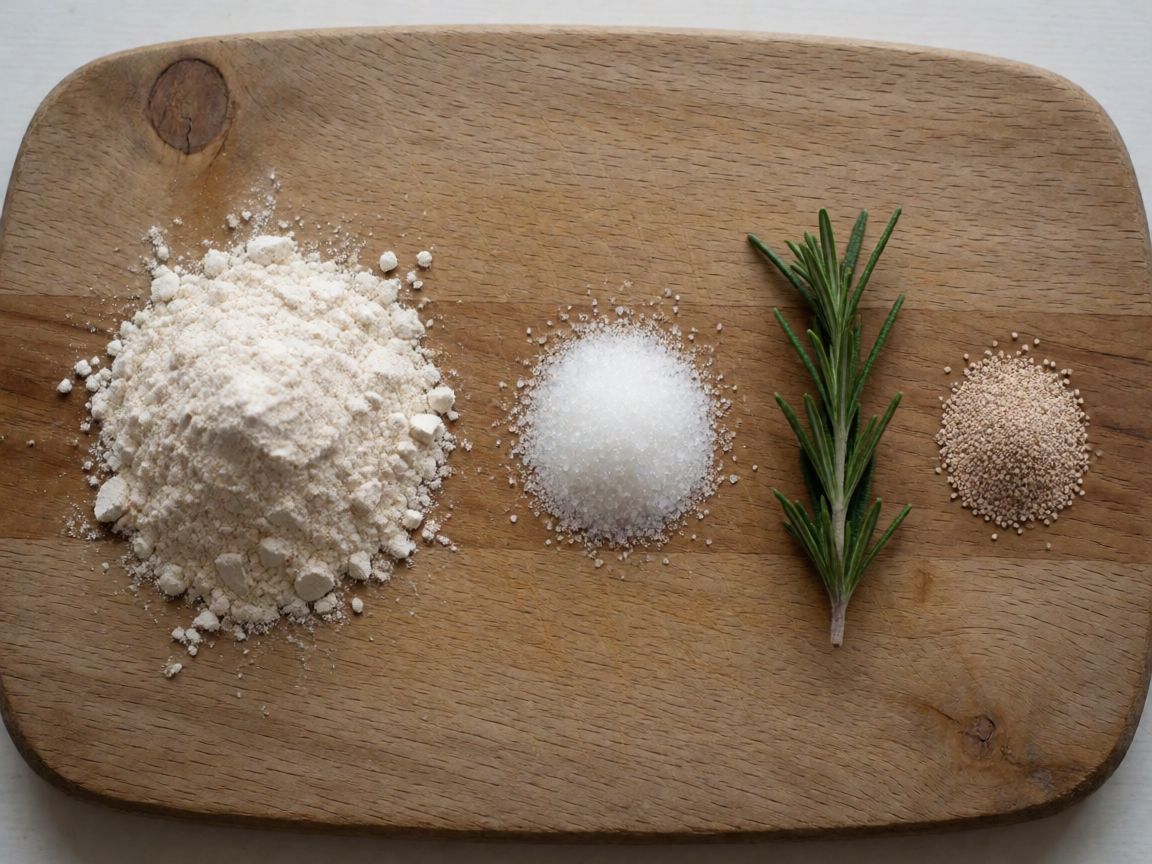
- 500 g Kamut flour
- 250 ml Water
- 15 g Salt
- 10 g Caster sugar
- 20 g Yeast or 1 sachet of dried yeast
- 100 ml Olive oil
- 1 pcs Rosemary a sprig
- 1 pinch Coarse salt to taste






Steps
Sieve the kamut flour. Add the yeast dissolved in a little warm water, the sugar, salt and olive oil.
Knead the dough, pouring in warm water in a thin stream until it's fully absorbed, then keep kneading until smooth and elastic.
Shape the dough into a ball and leave it to rest.
60 minTake a pizza tray and line it with baking paper or grease it with oil.
Place the dough on the tray and stretch it out with your fingers across the whole surface.
Brush the surface of the focaccia with olive oil and sprinkle with water for moisture.
Rub a sprig of rosemary over the surface and scatter a few grains of coarse salt.
Leave the dough to rest.
30 minBake in an oven preheated to 200°C.
30 min
Focaccia isn't really about the crumb inside. It's about the one centimetre of skin on top, and everything you do beforehand is just building a dough strong enough to carry that skin. In the oven, the oil you brushed on meets the water you flicked over it, the water flashes into steam trapped under the oil film, and that's what gives you blisters and a crust that shatters a little instead of going soft and dull. Two hours of resting before that moment are there to make sure the dough can hold the shape and the bubbles that make the blistering worth having.
Some say wet dough like this doesn't need proper kneading, you just stir it and let the oven sort it out. No — because even a loose, high-hydration dough still needs a gluten net, or it spreads flat with no lift and no open texture, more pancake than bread. You knead until it's smooth and elastic because you're building scaffolding for gas to push against, not frying a lump of batter.
What actually decides whether it works is the two separate rests, not one long one. The first, as a ball, is the dough learning to rise and the gluten unwinding after the stretch of kneading. The second, after you've flattened and dimpled it on the tray, is the shaped dough recovering its gas before the heat kills the yeast for good. Shorten either one and you still get something people will call focaccia — it just won't have any holes in it, and it'll sit in the stomach like a brick.
Kamut flour is just an old variety of wheat, nothing mystical — it carries decent gluten strength and a faint sweet, nutty taste that ordinary flour doesn't have. If you haven't got it, use any flour with enough protein to build a stretchy dough: strong white bread flour on its own, or cut with plain if that's what's in the cupboard. You'll get a different focaccia, not a worse one.
The water goes in slowly, in a thin stream, and that's not fussiness — it's so the flour can drink it as fast as it arrives. Dump it in all at once and the gluten you're trying to build can't catch up; the dough turns slack and sticky and never really tightens, which is the usual reason a focaccia comes out gummy rather than open and light. Salt does two jobs here: it tightens that same gluten, and it keeps the yeast from racing ahead of itself. The sugar is food for the yeast early on and, later, fuel for the browning on the crust — without it the top stays pale no matter how long you leave it in.
Proof the yeast in a little warm water before it goes anywhere near the flour. It costs you two minutes and saves you ninety — a dead sachet of yeast looks exactly like a live one until you've wasted an hour and a half waiting for a dough that was never going to move.
Olive oil does double duty: inside the dough it keeps the crumb soft rather than bready, and on the surface it's the half of the blister mechanism described already. Here it genuinely needs flavour, so don't reach for a neutral oil — use the kind you'd put on a salad, fruity rather than bitter, because you'll taste it directly on the crust. Rosemary works on top because it's a resinous, waxy leaf that can sit in a hot oven without scorching bitter the way a soft herb like basil would. Thyme is the honest substitute, same leaf structure, same reason it survives the heat. The coarse salt at the end is there for crunch and a burst against the blandness of the crumb, not to season the loaf — fine salt would just dissolve into nothing and you'd never know it was there.
One note for an ordinary flat oven: it won't have the stone floor of a pizza oven, so don't expect the same violent blistering a wood-fired bake gives you — the oil-and-water trick gets you most of the way there, which is the point of doing it. And if Sunday means a roast is already in there, there's no conflict: 200°C is roasting territory too, so the focaccia can go in as soon as the joint comes out to rest, using the oven's leftover heat instead of making it work twice.