
 AI photo
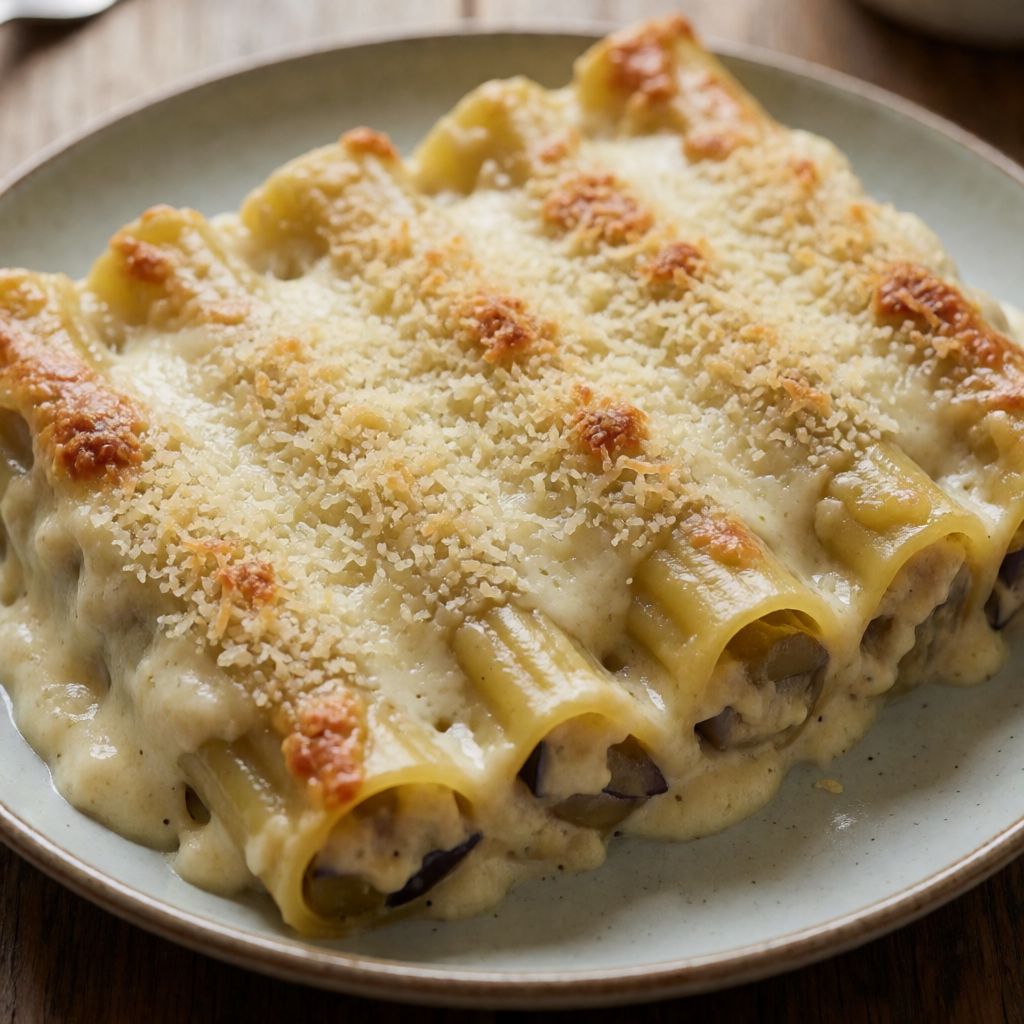
Aubergine Cannelloni
Pasta sheets rolled with a savoury aubergine, bread and cheese filling, baked under tomato sauce and béchamel.
Labels are worked out automatically from the ingredients and can be wrong. Check the packaging if it matters to you.
Ingredients
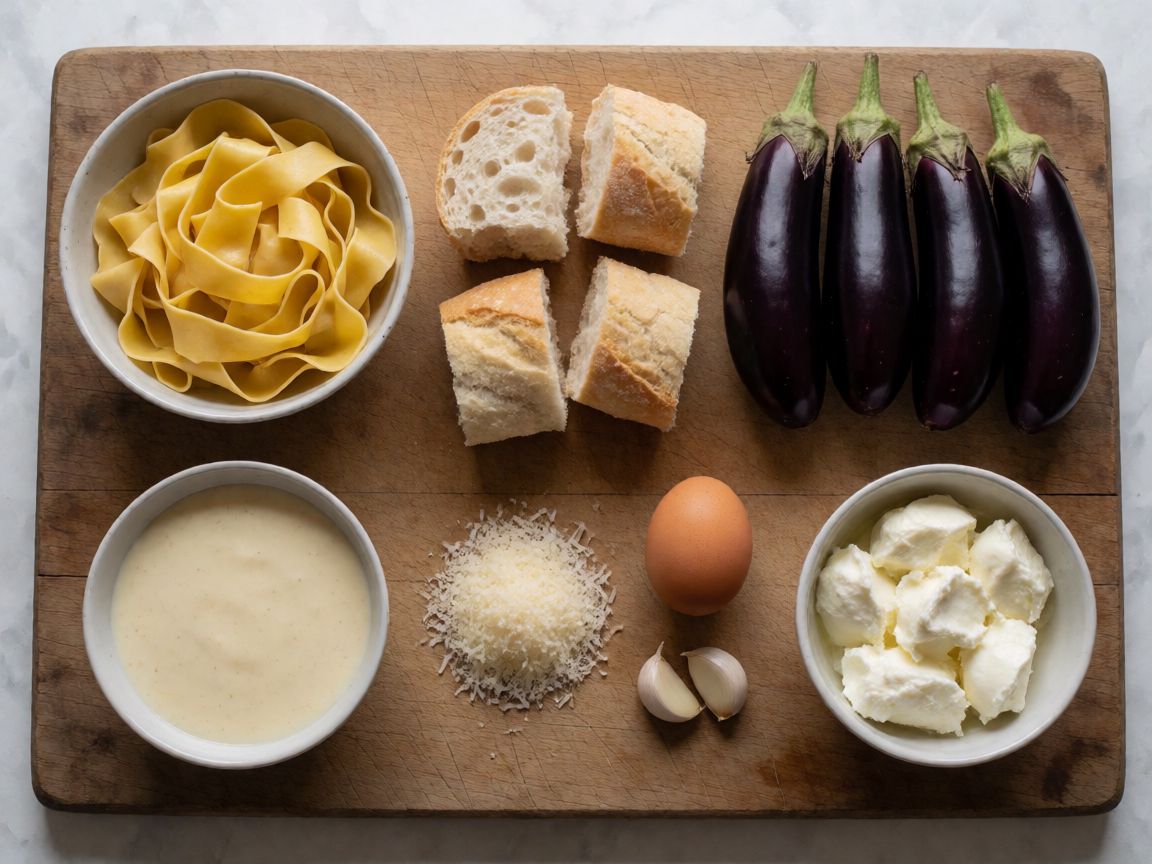
- 250 g Egg pasta sheets
- 4 pcs Toasting bread
- 4 pcs Aubergine
- 350 ml Béchamel sauce
- 1 pcs Eggs
- 100 g Parmesan
- 300 g Mozzarella
- 2 clove Garlic
- Milk to taste
- Olive oil to taste
- Salt to taste
- Tomato passata
- Basil









Steps
Wash the aubergines, peel them and cut into cubes.
Fry the aubergines in a pan with olive oil and finely chopped garlic.
Transfer the aubergines onto kitchen paper to drain off excess oil.
Cook the egg pasta sheets in salted water with a little oil.
Drain the pasta and leave it to cool on a clean tea towel.
Combine the aubergines, toasting bread, egg, Parmesan and mozzarella, and mix until smooth.
Spoon 2-3 teaspoons of filling onto each pasta sheet and roll up into a tube.
Heat olive oil in a saucepan and fry the garlic.
Add the tomato passata, season with salt and cook the sauce.
20 minAdd the basil leaves to the sauce.
Pour the sauce into the bottom of a baking dish, add the béchamel and arrange the cannelloni.
Add another layer of sauce and béchamel, then sprinkle with Parmesan.
Bake the cannelloni in an oven preheated to 200°C.
20 minSwitch on the grill to make the top crisp.
This is baked pasta doing two jobs at once — the comfort of lasagne and the lightness of a vegetable gratin — because the filling isn't meat, it's aubergine that's been fried down until it's given up most of its water and taken on the garlic and oil instead. That's the whole mechanism of the dish: aubergine flesh is mostly water held in a spongy structure, and frying it in hot oil collapses that structure, drives the water off as steam and lets the oil take its place. Skip that step, or rush it with oil that isn't properly hot, and you get filling that weeps grey liquid into the pasta tube and turns the béchamel watery underneath. The toasting bread in the mix isn't a strange economy move — it's there to blot up whatever moisture the frying didn't catch, the way breadcrumbs do in a meatball. Some say aubergine is a watery vegetable so there's nothing to be done about sogginess — no, the sogginess is a cooking fault, not a property of the vegetable; cooked right, it's dense and almost creamy.
Start with the aubergine itself, since it's the one ingredient that decides the whole dish and the one people get wrong most often. You want it cut into cubes small enough that the oil reaches the centre of each piece before the outside burns — too large and you get charred shells around a raw, bitter core. The classic worry is salting aubergine first to "draw out the bitterness." Modern aubergines, bred for the supermarket, don't carry much of that bitterness any more; what the salting mostly does is draw out water before frying, which helps, but frying hot enough does the same job faster. If you've got time, salt and let it sit twenty minutes on a paper towel — it's not superstition, it's just pre-emptive moisture loss, same job the oil does later, done for free.
Any oil with no flavour of its own and a smoke point that lets you fry rather than stew the aubergine — that's the only real rule. Olive oil is traditional because it's what's in the cupboard in the regions this dish comes from, and economically it made sense to use what you grow; a light, flavourless olive oil or a neutral vegetable oil both do the job on a domestic hob without smoking out your kitchen.
Toasting bread is there as a binder and a moisture sponge, not for flavour — any dry, plain white bread works, torn up, even a day or two stale, which is in fact better because it's already lost some of its own water and will absorb the aubergine's instead. The egg binds the mix so it holds its shape when rolled; without it the filling just crumbles out of the tube the first time you lift a slice with a spoon. Parmesan and mozzarella split the job between them — Parmesan for savoury depth and a bit of salt, mozzarella for the pull and the moisture that keeps the filling from drying into a paste in the oven. If you're out of mozzarella, any mild melting cheese does, though you'll lose some of the stretch when you cut into it.
Béchamel's job here isn't flavour, it's protection — a layer of fat and starch between the tomato sauce's acid and the pasta, stopping the tube's edges drying out and curling in the oven's heat. Milk, to taste, just means enough to loosen the sauce to a pourable consistency rather than a paste — if it seizes up too thick, more milk, warmed, whisked in gradually, not dumped in cold against a hot roux.
For the sauce, passata cooked down with garlic and basil for the full twenty minutes isn't optional — straight from the tin it's thin and sour; reduced, the water cooks off and the sugars in the tomato concentrate, which is what gives you a sauce with body instead of tomato-flavoured water pooling at the bottom of the dish. Basil goes in near the end, not at the start with the garlic, because its aromatic oils are delicate and a long simmer just cooks them away to nothing — you want the leaf still readable in the finished sauce, not boiled to green rag.
On the oven: 200°C with the final grill blast is doing a specific job, not just "cooking it through" — everything inside is already cooked, the aubergine fried, the sauce reduced, the pasta blanched. The oven time is about melting the cheese through and letting the layers set together so a slice holds its shape when it's lifted, and the grill at the end is purely cosmetic, there to brown the top Parmesan into a crust in the last few minutes you're watching, not a timer you walk away from — grills in a domestic oven work fast and uneven, so stand there and watch the colour turn from gold to the first brown spots rather than trusting a clock. This feeds four generously as a main, maybe six if there's bread and salad alongside, and it's one of those dishes that's better the day after — the layers have had time to settle into each other, which is just patience doing work you can't rush with heat.