
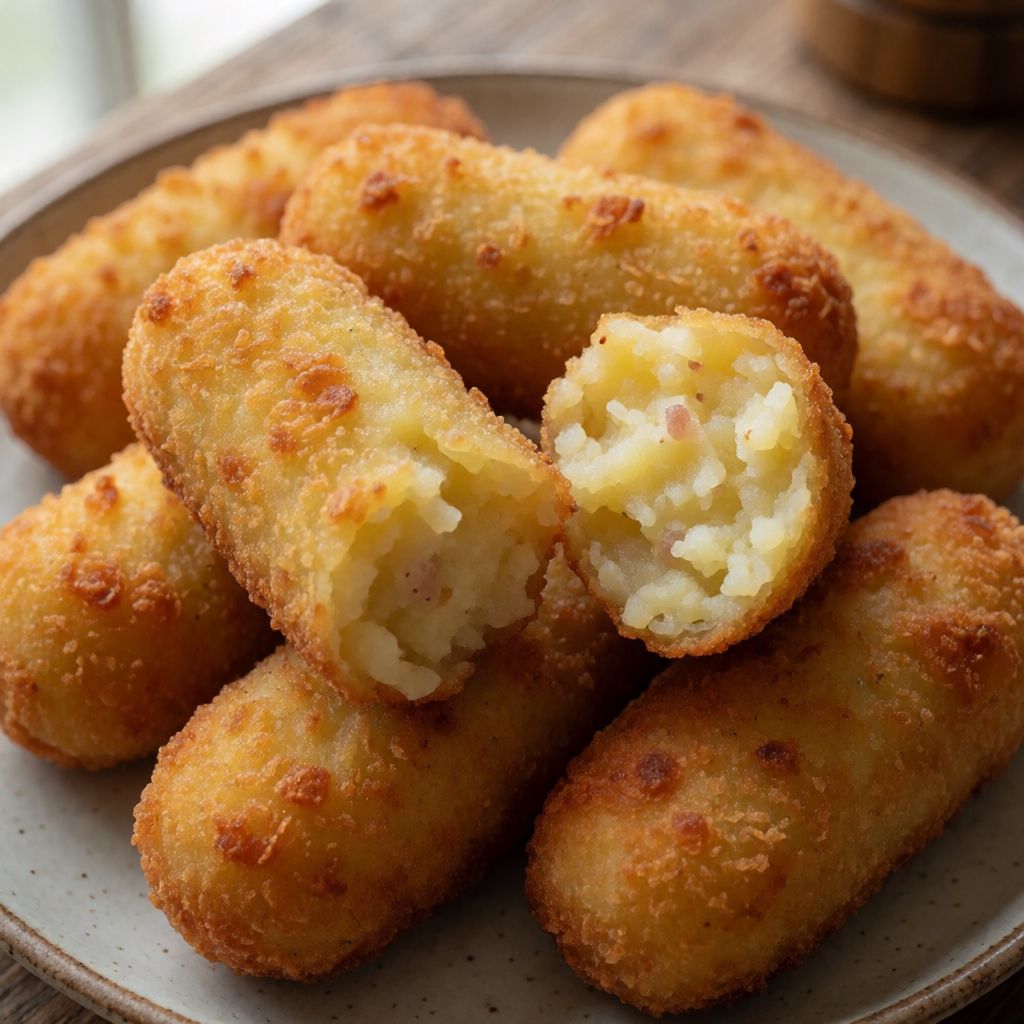
 AI photo
Potato Croquettes
Crispy potato croquettes with a hidden ham surprise, made from a smooth potato and Parmesan mash.
Labels are worked out automatically from the ingredients and can be wrong. Check the packaging if it matters to you.
Ingredients
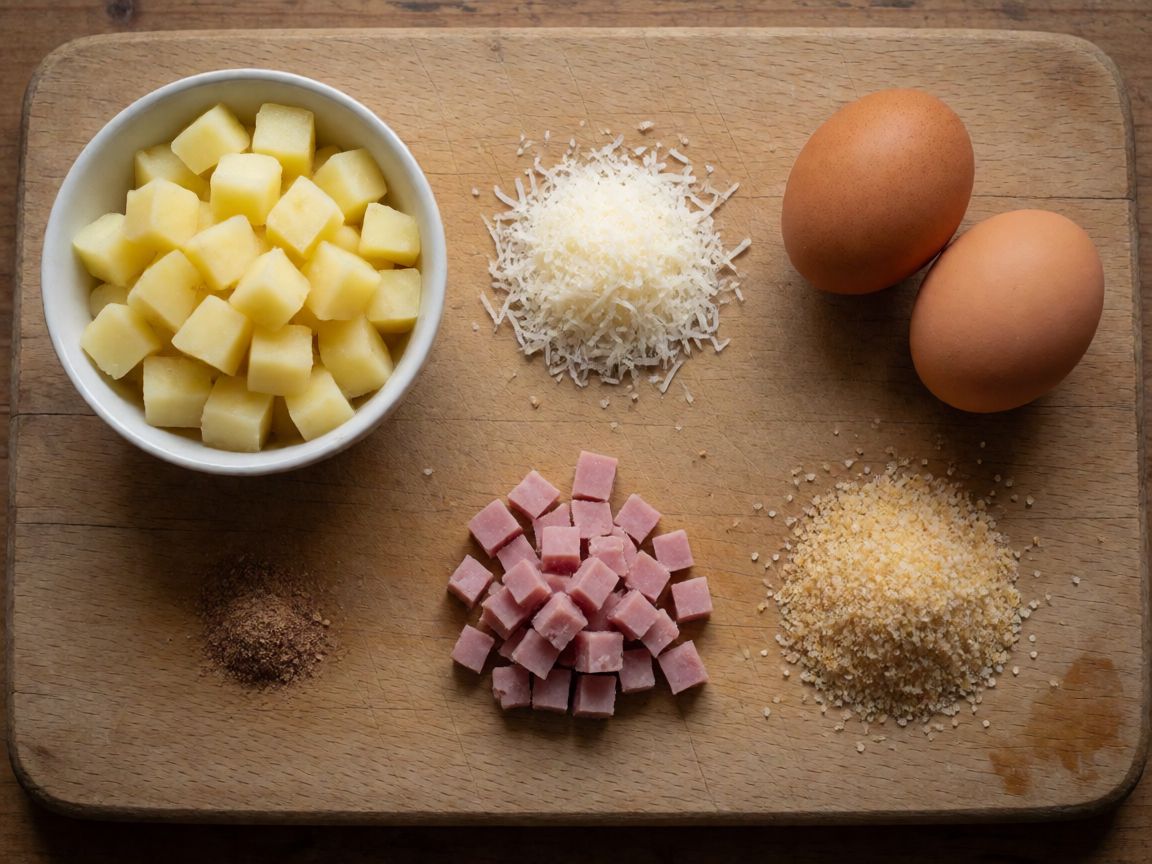
- 500 g Potato
- 50 g Parmesan
- 2 pcs Eggs
- 1 pinch Nutmeg
- 50 g Ham
- Vegetable oil to taste
- Breadcrumbs to taste
- Salt to taste
- Black pepper to taste








Steps
Wash the potatoes thoroughly and boil them in their skins in plenty of salted boiling water until tender.
Drain the water, transfer the potatoes to a colander and let them cool completely.
Finely chop the ham.
Peel the cooled potatoes and press them through a sieve or potato ricer until smooth.
Tip the mash into a large bowl, add a few breadcrumbs, the Parmesan, salt and black pepper to taste, a pinch of nutmeg and one egg. Mix with your hands until smooth.
Take a large spoonful of the potato mixture, gently flatten it in your hands and place a little ham in the centre.
Close the mixture around the filling and shape into a croquette. Repeat with the remaining potato mixture.
In a shallow dish, beat the second egg with a pinch of salt and pepper, and put breadcrumbs on another plate.
Coat each croquette first in egg, then in breadcrumbs, pressing gently so the coating sticks well.
Fry the croquettes in small batches in plenty of hot vegetable oil until golden brown.
Place the finished croquettes on kitchen paper to drain off excess oil.
Serve the potato croquettes warm on a plate, garnished with fennel if you like.
A croquette is a mashed potato that's pretending to be a cutlet. Underneath the crumb it's the same thing you'd scrape off the side of a Sunday roast plate — only dried out, salted properly, bound with egg and cheese so it holds its shape in hot oil, and given something hidden inside to be worth biting into.
What decides whether this works is moisture, almost entirely. Potato is mostly water, and water is the enemy of a croquette: too much of it and the inside turns to porridge the second it meets the oil, or the whole thing splits its coat and empties itself into the pan. That's why the potatoes are boiled in their skins — the skin is a barrier that keeps water out while the potato cooks, rather than letting the flesh soak like a sponge, which is exactly what happens if you peel first and boil naked chunks. And that's why they go into a colander to cool fully before anything else happens: warm mash is wet mash, full of steam looking for somewhere to condense, and pressing it through a sieve while it's still giving off heat just traps that moisture inside instead of letting it go.
Some say you can skip the ricer and just mash with a fork. You can, but a fork leaves lumps, and a lump is a weak point — it's drier or wetter than the stuff around it, so the croquette breaks there first. A ricer or fine sieve gives you one even texture, which is what lets it hold a shape with nothing but an egg and some breadcrumbs doing the binding.
Potato: use a floury, dry-fleshed one — the kind sold for mash or baking, not a waxy salad potato that stays wet and slippery no matter how long you cook it. A waxy potato holds water inside its cells even after boiling and pressing, and that water is what makes croquettes split in the oil. If you only have waxy potatoes, boil them a little longer and let them sit uncovered in the colander well past "cool" — you're chasing steam out, and it takes it.
Parmesan is here for two jobs, not one. It salts and seasons, yes, but it also dries the mixture slightly and adds a savoury backbone that plain potato doesn't have on its own. Any hard, well-aged grating cheese does the same work — a mature cheddar grated fine, or pecorino if you want more bite. A soft or young cheese won't: it adds moisture instead of taking it away, which is the opposite of what you need here.
Ham is the one piece of actual flavour hidden in the middle, the reason you're not just eating seasoned mash. Chop it fine enough that a spoonful of mixture can close over it without tearing — a fat chunk forces a thick wall of potato around it, which takes longer to cook through and is more likely to crack. Leftover gammon from a Sunday roast is, frankly, what this filling was invented to use up — a croquette is a tidy way to make yesterday's potatoes and yesterday's meat look deliberate instead of leftover.
Nutmeg is a small thing doing a specific job: it sits well with potato and dairy together — think béchamel, think gratin — and a pinch is enough to round the Parmesan off without anyone noticing nutmeg specifically. Overdo it and it turns bitter and medicinal, so a pinch means a pinch, not a spoon.
Oil: you want "plenty of hot oil," which in a British kitchen without a deep-fat fryer means a decent depth in a wide pan or wok, enough that the croquette is mostly submerged rather than sitting in a shallow puddle and frying unevenly on one side. Any flavourless oil with a high smoke point does the job — sunflower, rapeseed, vegetable oil are all fine; olive oil has too strong a character of its own and a lower smoke point, so save it for something else. Watch the croquette, not a clock: it's done when the crumb has gone an even, deep gold all round, not pale, not dark brown — pale means the inside hasn't had time to heat through either, dark means the sugars in the crumb have burnt before the potato's warm.
Fry in small batches, not all at once. Drop too many in and the oil temperature collapses — each croquette releases a little moisture and cold mass into the pan, and if there are too many, the oil can't recover fast enough, so they sit stewing in warm oil instead of sealing quickly in hot oil. That's the difference between a crisp shell and a greasy, soggy one. Kitchen paper afterwards isn't fussiness — it's pulling the surface oil off before it has time to soak back into the crumb while the croquette cools.
And patience is the real ingredient nobody lists. The cooling after boiling, the resting before frying — skip those because you're hungry now, and you'll be cleaning potato off the inside of your pan instead of eating it.