
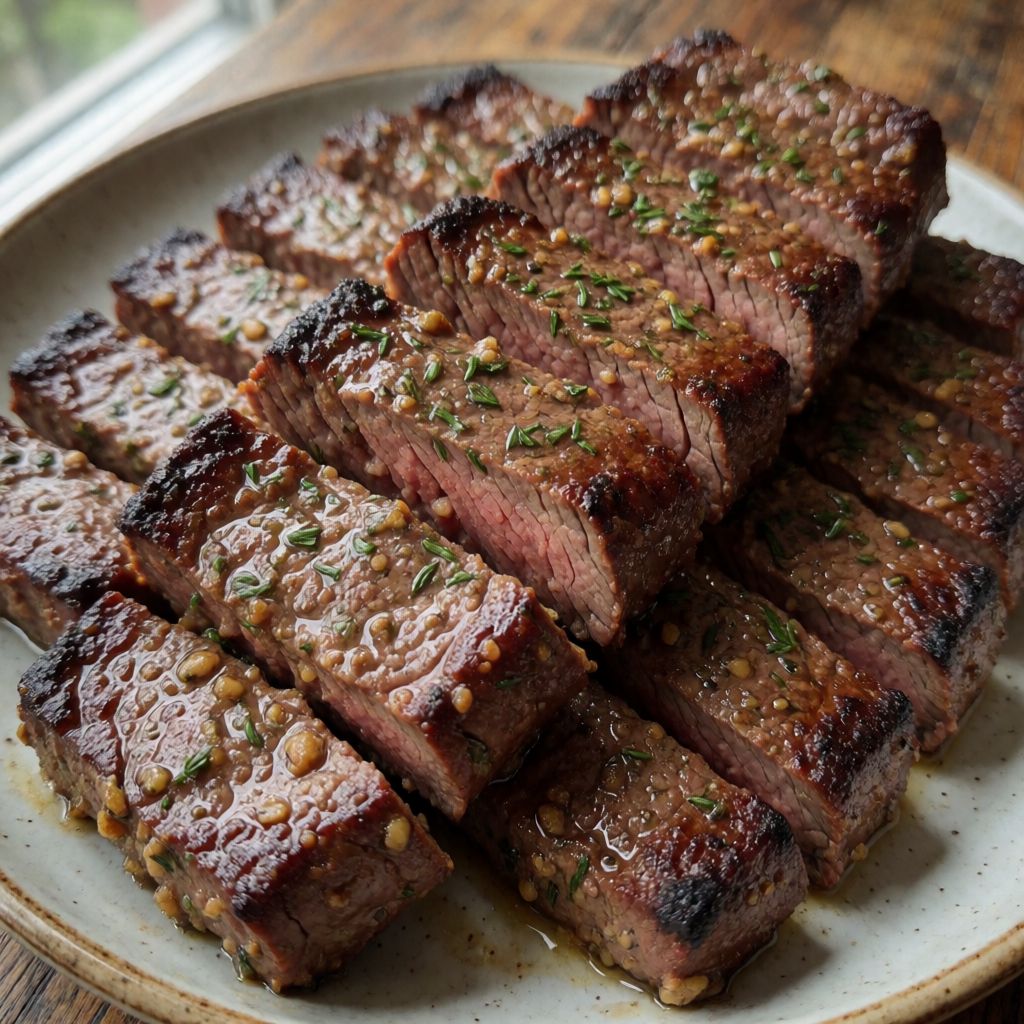
 AI photo
Simple and Quick Kebab
A quick, spiced beef kebab, pan-fried in thin slices and finished with fresh parsley.
Ingredients
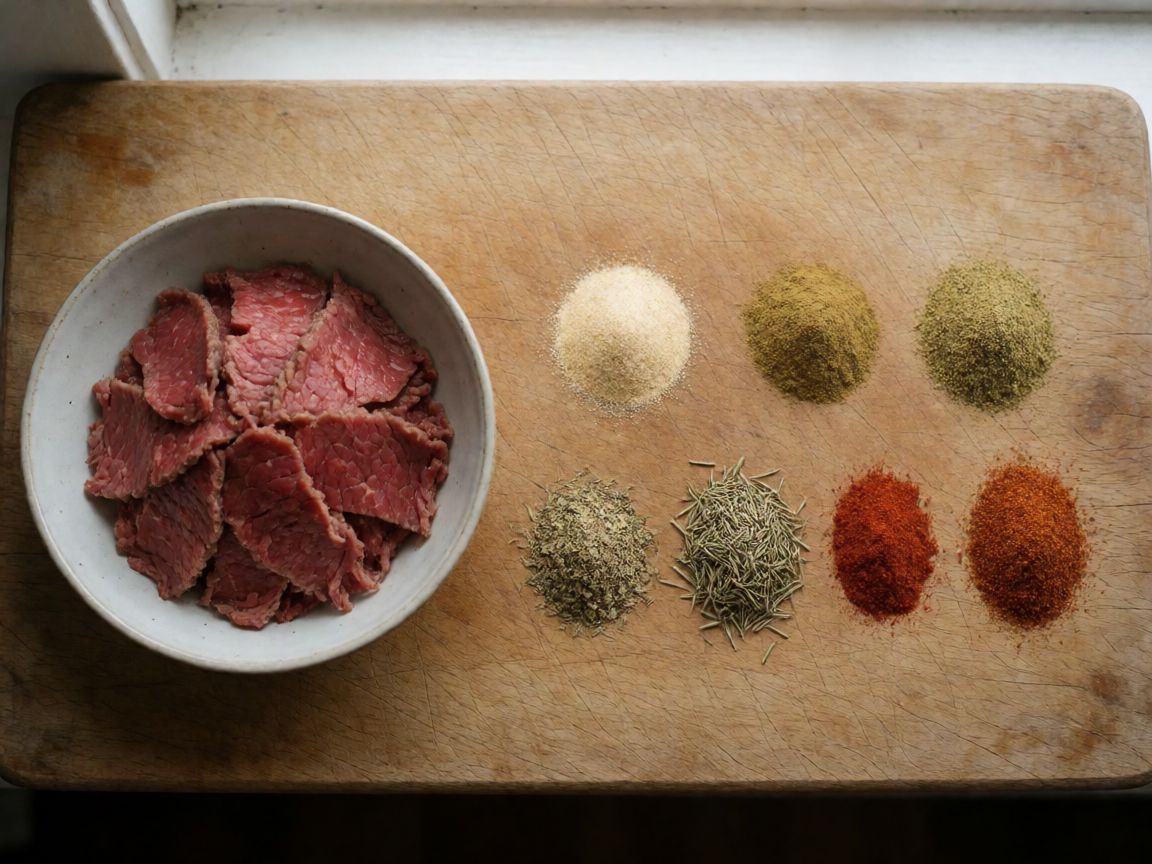
- 400 g Beef steak cut into very thin slices
- ½ tsp Garlic powder
- 1 tsp Cumin
- 1 tsp Ground coriander
- 1 tsp Oregano dried
- ½ tsp Dried rosemary
- 1 tsp Paprika
- 1 pinch Smoked paprika
- 1 pinch Cinnamon
- 1 pinch Cloves
- 1 pinch Chilli flakes
- Salt to taste
- Black pepper freshly ground, to taste
- 1 bunch Parsley finely chopped, for sprinkling
- 4 tbsp Olive oil for frying












Steps
Mix the spices well and coat the beef thoroughly in them.
5 minHeat a pan with the oil and fry the meat very quickly on all sides, removing it from the pan straight away.
10 minSprinkle with parsley before serving.
This isn't kebab in the skewer-and-charcoal sense — no one's claiming that. It's a name borrowed for something closer to a minute steak with a spice crust, and the whole dish stands or falls on one thing: how thin you cut the beef and how fast you get it out of the pan. Thin slices mean the meat cooks through before the crust burns. Thick slices mean you're choosing between raw middle and charred spice — there's no good outcome there.
The spice mix does the work a marinade usually does, except there's no time for a marinade here — ten minutes prep, remember. Cumin and coriander for warmth, paprika and smoked paprika for colour and a whisper of the fire you're not using, cinnamon and clove in pinch amounts because they're sharp enough to take over if you're generous, chilli for the back of the throat. Garlic powder, not fresh — fresh garlic burns in a hot dry pan and turns bitter before the meat is done. That's the whole reasoning for it; nothing mystical about powder over clove here, it's a timing decision.
What decides success is heat and speed, not minutes. You want the pan audibly hot before the meat goes in — a drop of water should skitter and vanish, not sit there sizzling gently. Beef this thin, in a pan this hot, needs seconds per side, not a countdown. Watch the colour change from red to brown creeping up the edge of each slice; that's your cue, not a clock.
The beef itself: steak, and "steak" here means something with enough fat marbling to survive a hard sear without drying into string — sirloin, rump, bavette, whatever's on offer that isn't stewing beef. Stewing cuts are built for long, slow, wet cooking; put them in a screaming hot dry pan for ninety seconds and you get shoe leather, because the collagen that makes them tender over three hours hasn't had time to soften and the muscle fibres just seize. That's the actual mechanism behind "use a good cut for quick cooking" — it's not snobbery, it's chemistry with a clock running against it.
Cut it thin — properly thin, the kind of slice you'd expect in a stir-fry, not a steak sandwich. This is easier if the meat is slightly firm, almost but not quite frozen; fifteen minutes in the freezer before you slice makes the knife's job much easier and your slices far more even, which matters because uneven slices cook unevenly, and then you're fishing thick bits back into the pan while the thin ones overcook on the plate.
The spice list reads long but it's cheap insurance, not extravagance — that's the real history behind a spice-heavy coating like this. Fresh herbs and long marinades cost time; a pantry full of dried spice costs pence and a spare ten minutes, and once dried spice became cheap and well-travelled (a very recent thing, historically — most of this country didn't have casual access to cumin or smoked paprika a couple of generations back), rubbing meat in a dozen of them instead of marinating it became the shortcut home cooks reached for. No mystery, just a trade of pantry space for prep time.
Oregano and rosemary, dried is fine and arguably better here — fresh herbs have water in them, and water in a hot pan means steam, and steam means your meat boils in its own moisture instead of searing. That's the actual argument for keeping the herb dried in a fast dry-fry, nothing to do with flavour intensity.
Oil: anything that can take real heat without protesting. Olive oil works, though if you want to push the pan hotter than olive oil's comfortable ceiling, a refined oil with no flavour of its own — sunflower, groundnut — does the job without burning bitter first. "No smell of its own" is the criterion; olive oil fails it slightly at very high heat, which is fine here because you're not holding that heat for long.
The pinch spices — cinnamon, clove, chilli — are there to be background, not headline. Pinch means pinch; double them and they stop seasoning the beef and start seasoning you, and cinnamon especially turns a savoury dish sweet and strange if your hand slips. Parsley at the end isn't decoration for the plate, it's the one cool, wet, green thing against a dish that's entirely brown and hot — contrast, not garnish.
Patience, oddly, is still the ingredient here even in a ten-minute dish — patience to let the pan actually get hot before anything goes in, which takes longer than people expect from a domestic hob, and patience not to crowd the pan. Crowd it and the meat steams in its own juice instead of searing, and you lose the crust that's the whole point of calling this a kebab in the first place.