
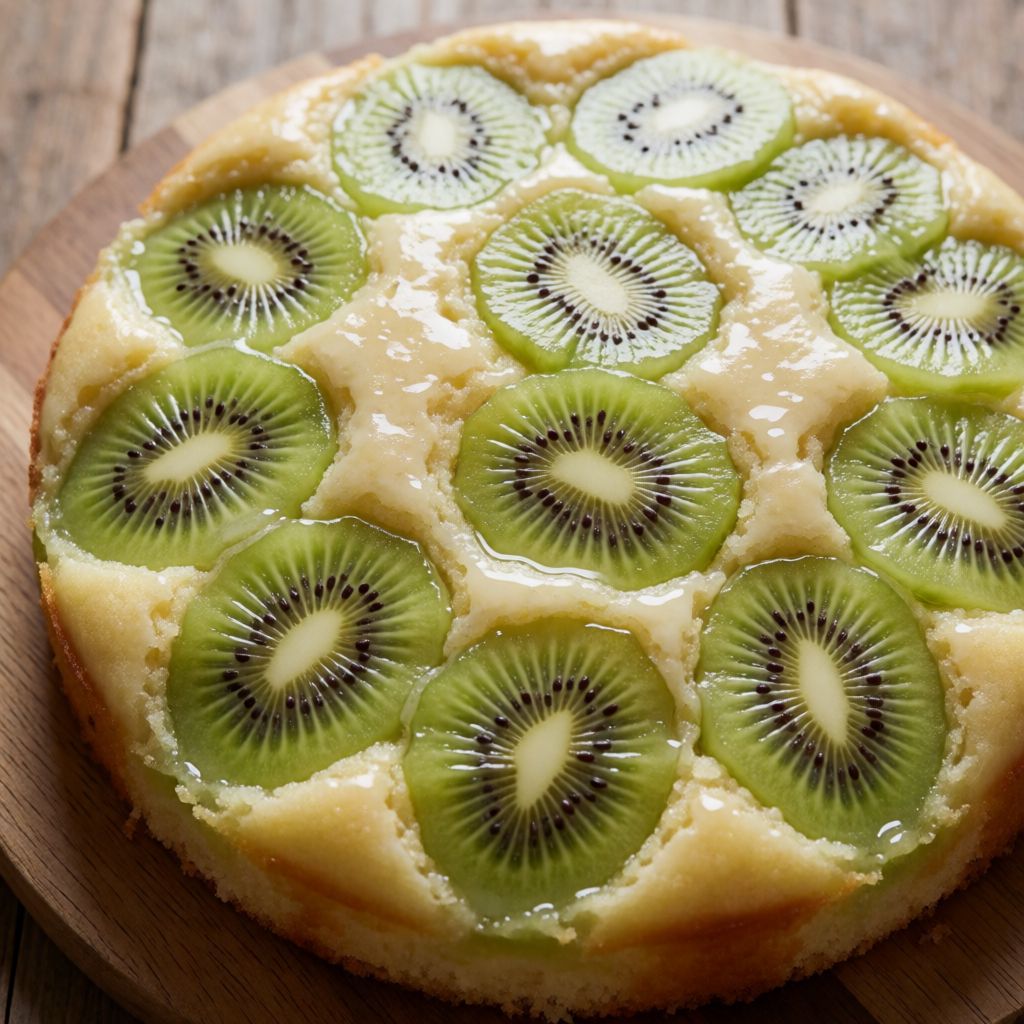
 AI photo
Kiwi Cake
An egg-free kiwi cake baked with kiwi slices arranged on the bottom and a fruity kiwi purée mixed into a simple oil batter.
Labels are worked out automatically from the ingredients and can be wrong. Check the packaging if it matters to you.
Ingredients
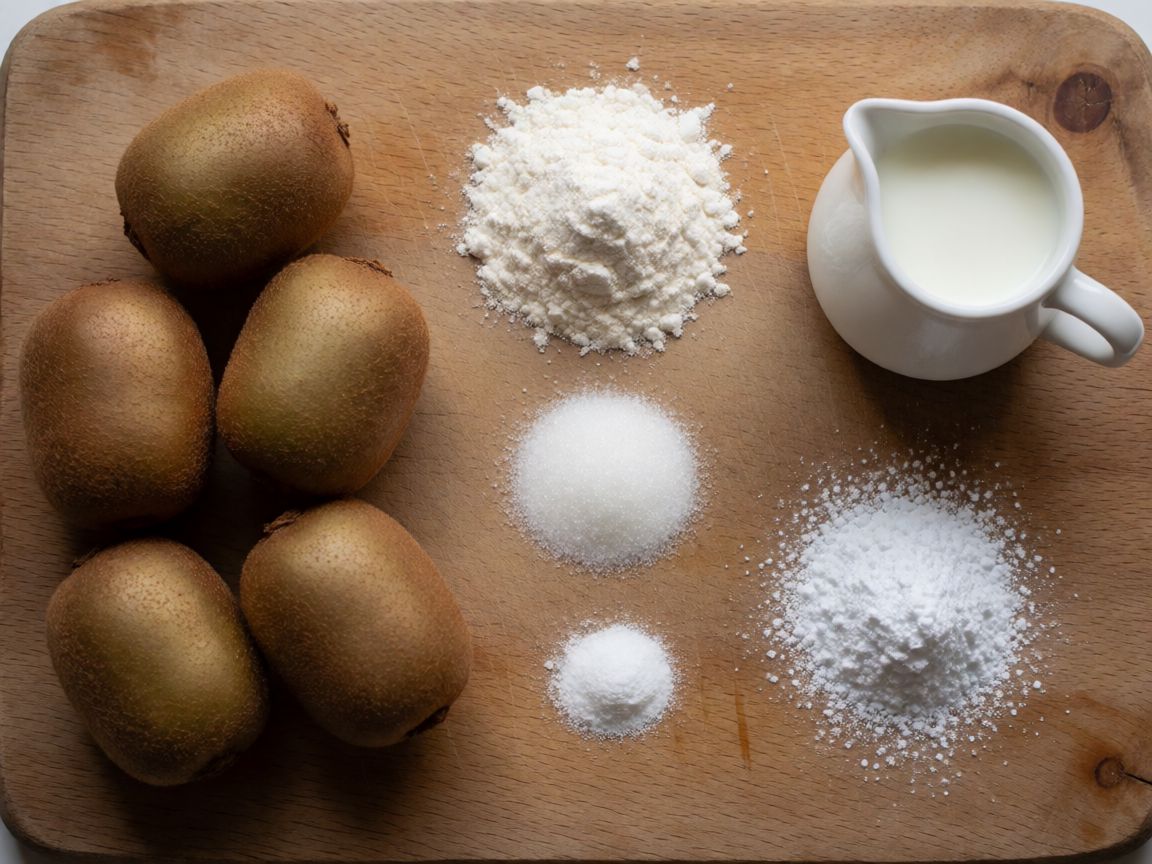
- 5 pcs Kiwi
- 180 g Plain flour sifted
- 100 g Caster sugar
- 50 ml Vegetable oil
- 50 ml Milk
- 8 g Baking powder
- 1 pinch Salt
- Icing sugar to taste, for dusting







Steps
Peel the kiwis and cut them into slices of equal thickness.
Line a baking tin with parchment paper and arrange the kiwi slices on the bottom.
Blend the remaining kiwis until smooth.
Add the vegetable oil, milk, sugar and a pinch of salt, then mix well.
Gradually add the sifted flour, stirring constantly to avoid lumps.
Pour the batter into the tin over the kiwi slices.
Bake the cake at 180°C for about 1 hour in a preheated oven.
60 minCheck it is done using a wooden skewer.
Serve the kiwi cake dusted with icing sugar.
This is a quick, eggless sponge where the egg's usual job — binding, giving body — is done by blended kiwi instead. Five kiwi, four of them pureed straight into the batter, one sliced and laid on the bottom of the tin before anything else goes in. By the time the hour is up, that bottom layer isn't a crisp decoration you flip the cake over to show off — it's softened into something closer to a thin fruit compote sitting under the crumb, and that's what you cut through when you serve it.
What decides whether this works is the kiwi itself, twice over: ripeness for the puree, thickness for the slices. A kiwi that's rock-hard is still mostly starch and acid — it hasn't finished turning into sugar, and it will make the batter sharp and thin instead of rounded. A kiwi gone soft and weeping is past the point of holding a slice shape at all. You want one that gives a little under your thumb, no more. For the sliced layer, cut it thin — a few millimetres. Some people cut it thick so it shows as a proper ring in the finished slice. Don't: thick kiwi doesn't cook through in an hour of gentle oven heat, and you end up with a cold, raw-tasting strip running through a warm crumb, which is worse than no fruit at all.
Kiwi does two different jobs here and it's worth separating them in your head. The four that go into the blender are standing in for egg — they bring the moisture and the slight thickening that holds flour and oil together into a batter rather than a slurry. This is why there's no egg on the list at all: egg's structural job has been handed to fruit, and the baking powder is doing the lifting that egg-whisking would normally help with. That's also why you shouldn't skip the sifting of the flour — with no egg to smooth things over, a lump of dry flour folded into wet puree will sit there as a pocket of raw starch right through baking.
The fifth kiwi, sliced and placed on the parchment first, has a completely different job: flavour and a bit of visual interest at the cut edge, not structure. Pick kiwi with no bruising and skin that gives gently — overripe fruit for this layer will collapse into mush and bleed its juice into the parchment rather than holding a slice.
The oil needs no smell of its own, so the kiwi stays the flavour you taste, not a background note fighting with it. Sunflower or a plain rapeseed oil does the job; olive oil is the wrong choice here — its own flavour would sit on top of the fruit instead of staying out of the way. Milk is just liquid and a little fat for a softer crumb; whole milk gives you more of that softness, but whatever's in the fridge for tea works fine, since there's nothing delicate here that depends on exact fat content.
Caster sugar is chosen for how fast it dissolves into a wet, pureed batter — granulated sugar sitting in fruit puree takes longer to break down and can leave a faint grittiness. If that's all you have, give it a minute longer in the mixing, not a minute less in the oven. The pinch of salt isn't there to season in any noticeable way — it's there to stop the sweetness from sitting flat, the same reason a pinch goes into most cake batters whether the recipe bothers to explain it or not.
The parchment lining matters more here than in a plain sponge, because kiwi juice runs and would otherwise catch and catch fire — figuratively, at least it'll stick and scorch — against bare metal at the base of the tin. It also means you can lift the finished cake out cleanly without tearing that softened fruit layer apart, which a bare tin, scraped at with a knife, would do.
I haven't made this one enough times to tell you how it behaves with frozen kiwi or a flour swap — if you try either, trust the skewer over the clock, since you'll be changing how wet the batter is and that changes the lower bound on baking time, not just the flavour.