
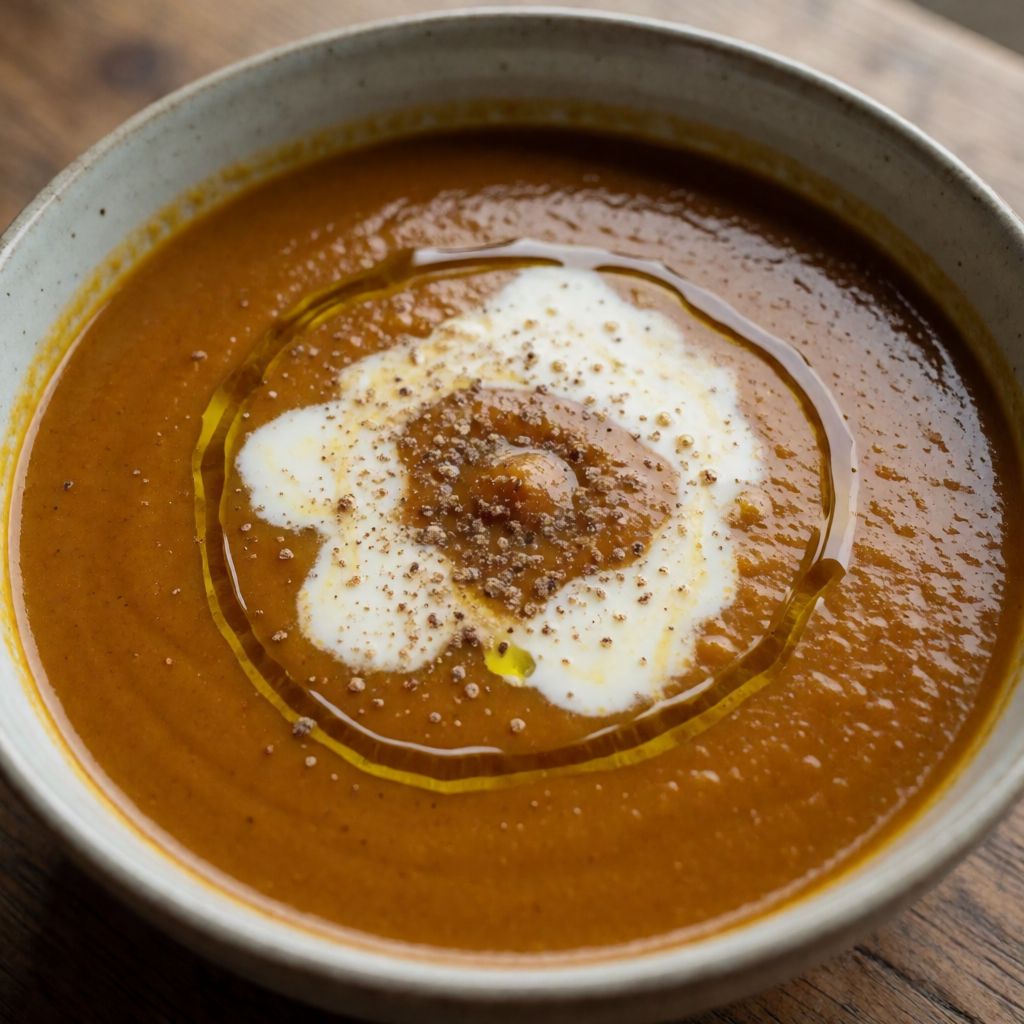
 AI photo
Creamy Pumpkin Soup
A comforting, silky pumpkin soup finished with a touch of nutmeg and good olive oil.
Labels are worked out automatically from the ingredients and can be wrong. Check the packaging if it matters to you.
Ingredients
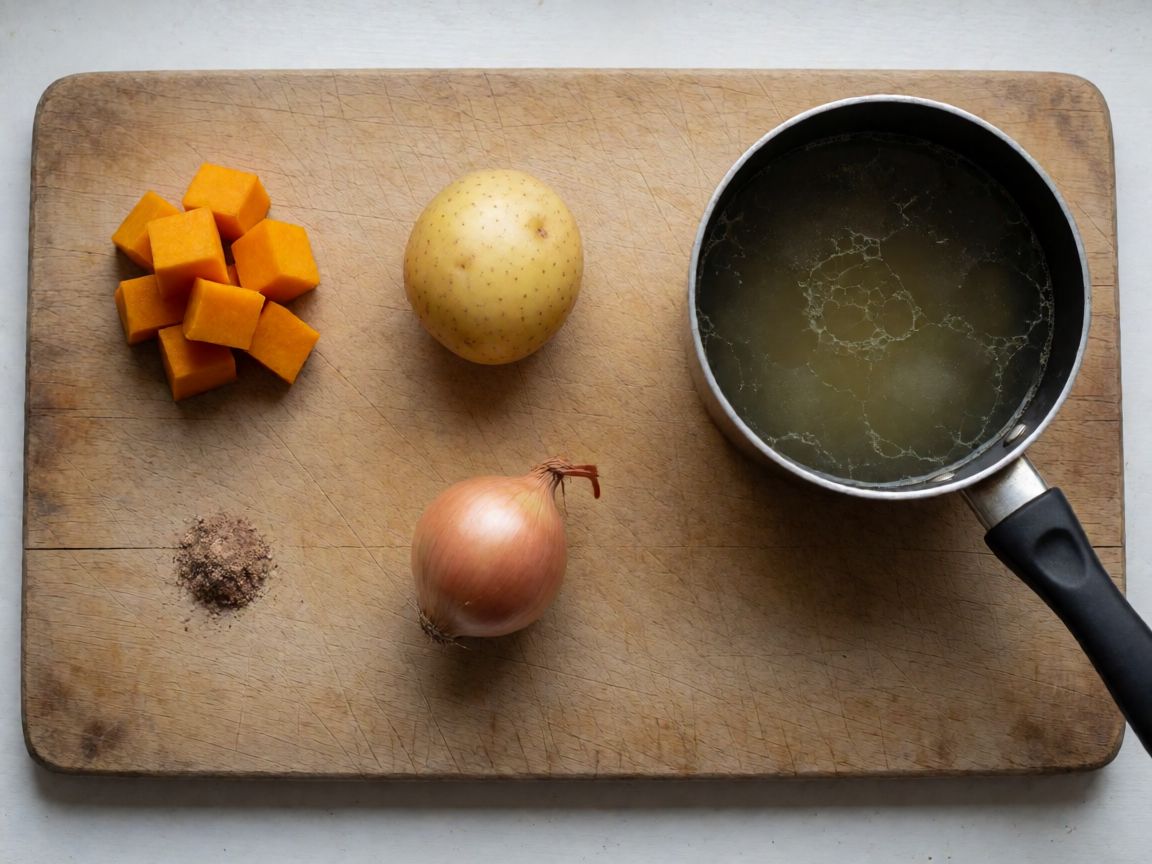
- 1 kg Pumpkin
- 180 g Potato
- 3 tbsp Olive oil
- 1 pcs Onion
- 1 l Vegetable stock
- Nutmeg to taste
- Salt to taste
- Black pepper to taste








Steps
Wash the potatoes, peel and dice them finely. Peel and dice the pumpkin, removing the seeds and fibres.
Chop the onion, put it in a pot with the olive oil and sauté over medium heat for a few minutes.
Add the potato and pumpkin, stir and season with salt and pepper.
Pour in the vegetable stock, cover and simmer gently.
30 minBlend with an immersion blender until smooth.
Season with nutmeg, drizzle with a little fresh olive oil and serve hot.
"Creamy" is doing something sneaky here — there's no cream, no milk, nothing dairy at all. The thickness comes from potato breaking down in the stock and pumpkin flesh collapsing once it's properly soft. Call it creamy because it behaves creamy, not because dairy's in the pot. That's the old trick behind pumpkin soup across half of Europe — a way to get the texture people associate with richness when cream was expensive or simply not in the larder.
Onion goes in first, but softened, not browned — heat just enough to make it sizzle quietly, turning pale and see-through, no colour, no snap or spit. Some cooks let onion catch gold for extra sweetness; here you don't want that, because browning adds a sharp, almost caramel edge that fights the pumpkin's own sweetness instead of backing it up.
What actually decides this soup is the simmer before you blend, and the test isn't a clock, it's a spoon. Push a cube of potato against the side of the pot — if it gives without resistance, you're there. If it still has bite, keep going. Turning the heat up won't get you there faster; it just boils the stock away while the outside of the potato goes to mush and the inside stays stubborn. Keep it low, lid on — a proper lid, or in a flat-bound kitchen a plate that actually sits flush on the rim — so the steam stays trapped and does the cooking, not the open surface of the liquid.
Pumpkin choice matters more than people expect. A lot of what's sold in UK shops around autumn is the big orange carving kind, bred to look good lit up on a doorstep, not to be eaten — mostly water and loose fibre inside, and it'll give you a thin, flat soup no matter how carefully you do everything else. Look for flesh that's heavy for its size and deep orange right through, not pale near the skin. Butternut squash or a Crown Prince will beat a carving pumpkin every time — that's not fussiness, it's just what's actually in the flesh.
Potato needs to be the kind that goes fluffy and grainy under heat — Maris Piper, King Edward — not a waxy salad potato that holds its shape in a boil. Waxy potato won't break down; it just sits there as little cubes doing nothing for the texture. The starchy kind is the one that falls apart into the stock and does the actual thickening work the title promises.
Stock should taste like a background, not a seasoning competing with the pumpkin. Homemade is better for that reason — it stays quiet. A cube or bouillon paste is fine if that's what's in the cupboard, just go easy on salt early, since most cubes arrive already salted hard, and you can always add more at the end once you can taste where you actually stand.
Oil has two separate jobs here, and they're not the same oil in spirit even if they're the same bottle. What you sauté the onion in just needs no flavour of its own getting in the way this early — any oil with no smell of its own will do, or butter if you don't mind the soup stopping being vegan, which plenty of kitchens here do without a second thought. The oil you drizzle on at the end never meets heat, so whatever flavour it has survives into the bowl — that's where a decent olive oil, one that actually tastes of something, earns its place.
Nutmeg freshly grated off a whole nut smells like something; the pre-ground kind that's sat at the back of a cupboard for two years mostly smells of cardboard. A few passes on a fine grater here will change the finished bowl more than any other single swap on this list.
And give the simmer real time rather than rushing it with more heat to get dinner on the table faster. Thirty minutes is the floor the recipe hands you, not the ceiling — on some hobs, with some pumpkins, it'll want longer. Let it have that time. Patience is doing real work in this pot, not just filling space while you wait.