
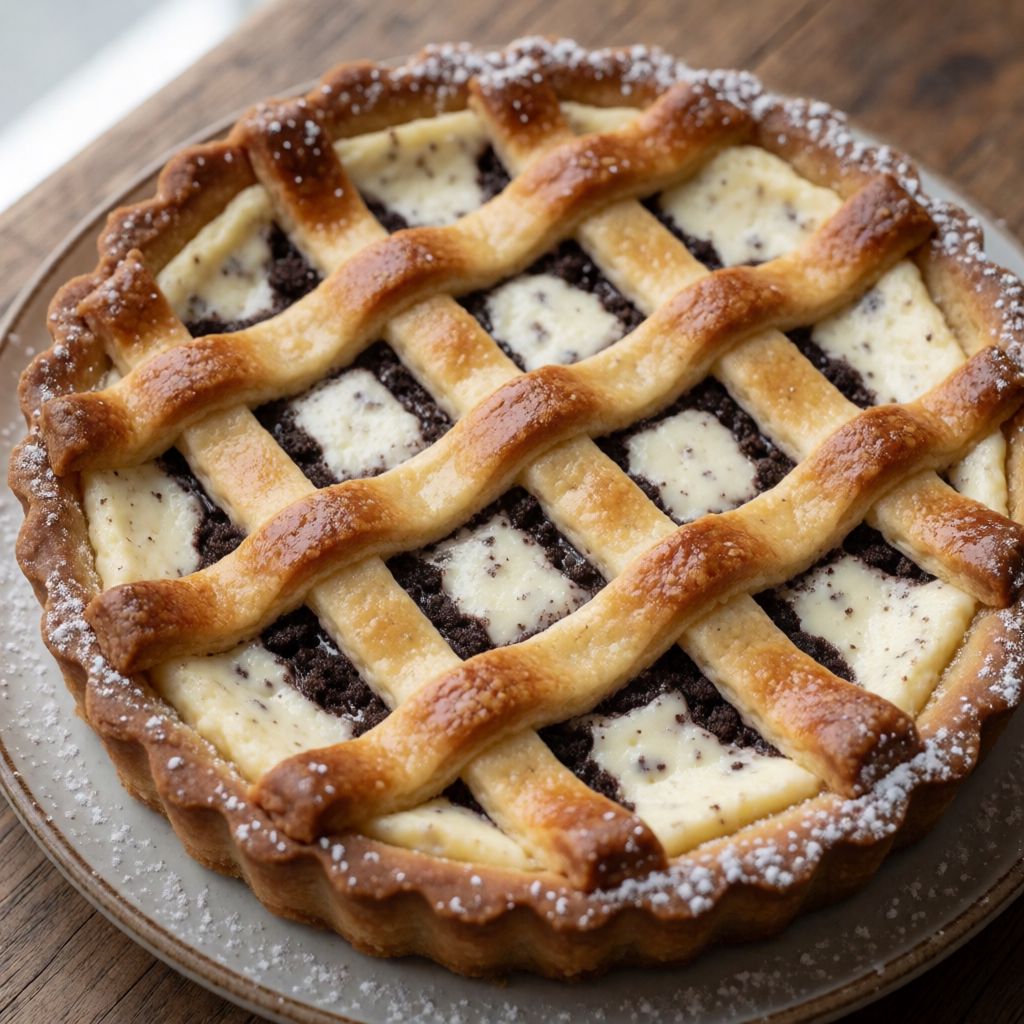
 AI photo
Ricotta and Pan di Stelle Biscuit Crostata
An Italian-style crostata with a cocoa pastry shell and a sweet ricotta and chocolate biscuit filling.
Labels are worked out automatically from the ingredients and can be wrong. Check the packaging if it matters to you.
Ingredients
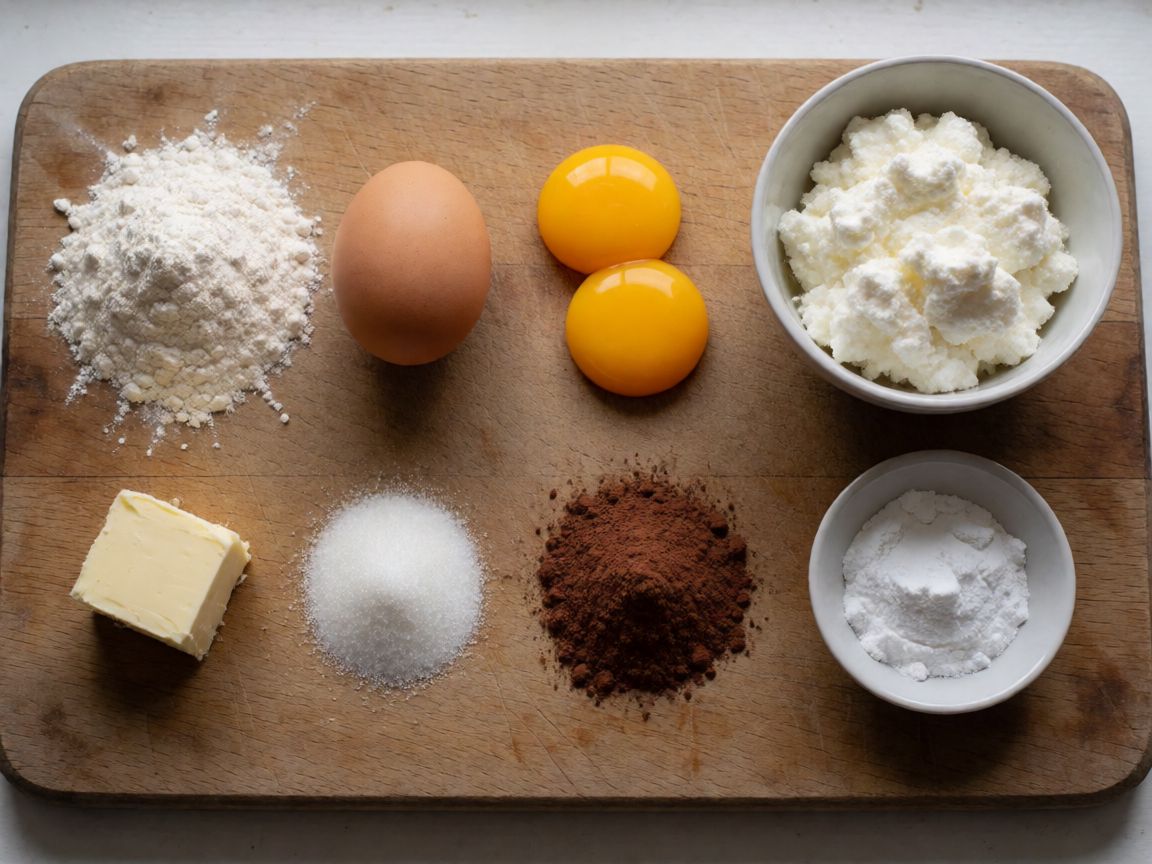
- 250 g Plain flour
- 1 pcs Egg
- 2 pcs Egg yolk
- 100 g Butter cold
- 100 g Sugar
- 4 g Baking powder
- 20 g Cocoa powder
- 350 g Ricotta
- 100 g Pan di Stelle biscuits
- 100 g Icing sugar










Steps
Pile the flour on a work surface, make a well in the centre and add the egg and two egg yolks.
Add the sugar and the cold butter, cut into small pieces.
Add the baking powder and cocoa powder, and work the ingredients together by hand until the dough is smooth.
Wrap the dough in cling film and chill in the fridge.
30 minBeat the ricotta with an electric mixer until smooth, then add the icing sugar and crushed Pan di Stelle biscuits.
Roll out the dough with a rolling pin to a thickness of about 4-5 mm.
Transfer the dough into a 22 cm tin, buttered and dusted with flour.
Spread the ricotta and biscuit filling, and form strips from the leftover dough into a lattice pattern.
Brush the surface with milk and bake in the oven at 180°C with fan assistance.
23 minLet the finished crostata cool, and dust with icing sugar if you like.
This is a pastry case — cocoa pasta frolla, Italian in name only by now — holding a filling that is really ricotta cheesecake wearing biscuit crumbs for texture. The whole thing lives or dies on one tension: the dough must stay cold enough to hold its shape as a lattice, and the ricotta must be beaten smooth enough that it doesn't weep in the oven and turn your lattice soggy from underneath.
Pasta frolla is not shortcrust pastry's fancy cousin — it's the same logic, butter coating flour before water can, so gluten never gets the chance to organise into something chewy. Some say you can skip the chilling step and roll straight away: no, because warm butter means the fat starts melting into the flour on the counter instead of in the oven, and you lose the shatter — you get a biscuit that's merely crumbly, not one that cracks clean under a fork.
The filling is the part people underestimate. Ricotta out of the tub is often wetter than it looks — supermarket ricotta here in the UK tends to sit in more whey than the stuff from an Italian deli counter. Beat it hard with the mixer not for fluffiness but to break down any lumps and, if it's loose, let it sit in a sieve over a bowl for twenty minutes first. A wet filling doesn't ruin the top — it ruins the base, soaking into the dough and giving you a soggy bottom under a perfectly good lattice. That's the real enemy here, not appearance.
Flour is just flour here — plain, nothing clever, because baking powder is doing the lift and you don't want gluten-forming bread flour fighting that. The egg plus two extra yolks is the fat-and-richness trick: whole egg for structure, the extra yolks for colour and a dough that stays tender instead of tough, since yolks carry fat and whites carry the protein that toughens. If you've only got large eggs rather than the medium standard in continental recipes, don't panic — a slightly wetter dough just needs a few more minutes resting in the fridge before it behaves.
Butter must be cold, and I mean fridge-cold, cut into pieces, not softened on the side like you would for a Victoria sponge. This is the whole mechanism of frolla: cold fat stays as distinct lumps that melt only once they hit oven heat, puffing tiny pockets of steam that give you that short, sandy crumble instead of a dense biscuit. Any butter with a clean, unsalted flavour works — salted butter isn't a sin, just drop a pinch of any salt you'd add elsewhere, since this is a sweet case holding a sweet filling.
Baking powder, 4 grams, is barely a teaspoon — don't double it thinking "more rise is better." This isn't a cake. You want enough lift to stop the base feeling like a cracker, not enough to turn it into shortbread scone. Cocoa powder is for colour and a bitter edge against all that sweet ricotta — use the plain unsweetened kind, not drinking chocolate, which carries sugar and milk powder that will throw your ratios off.
Ricotta is the heart of the filling and the one ingredient worth being picky about. Proper ricotta — drained, slightly grainy, faintly sweet from the whey — holds its shape when baked. If all you can get is the very wet tub kind sold in most UK supermarkets, drain it in a sieve lined with kitchen paper for twenty minutes before using; skip this and you're baking a crostata with a small lake under the biscuit crumbs. No real substitute does the same job — cream cheese is too dense and tangy, cottage cheese too lumpy even blitzed — but if ricotta is truly unavailable, a well-drained strained yoghurt gets you closer than either.
Pan di Stelle biscuits are a specific Italian product — cocoa biscuits with a slight hazelnut note — and they're doing double duty: crunch against the smooth ricotta, and a second hit of chocolate flavour to match the pastry. Any plain chocolate digestive-style biscuit crushed coarsely will stand in — don't go for anything cream-filled or heavily spiced, since that fights the simple cocoa-and-cheese balance rather than supporting it.
The lattice itself isn't decoration — it's ventilation. An unbroken sheet of pastry on top traps steam from the ricotta underneath, and that moisture has to go somewhere: usually back down into your base. Strips with gaps let it escape upward instead. Milk brushed over the top isn't about shine for its own sake, it's there so the exposed pastry strips brown instead of staying pale and raw-looking next to the darker filling — an egg wash would do the same job harder, more gloss, slightly more colour, your call.
And patience — real patience, not the recipe-card kind — comes in at the cooling stage, which the method doesn't dwell on but should. Ricotta filling is still setting as it cools; cut it warm and it slumps. Let it sit until it's properly room temperature, better still a little cooler, and the filling holds its line when you slice it rather than oozing across the plate.