
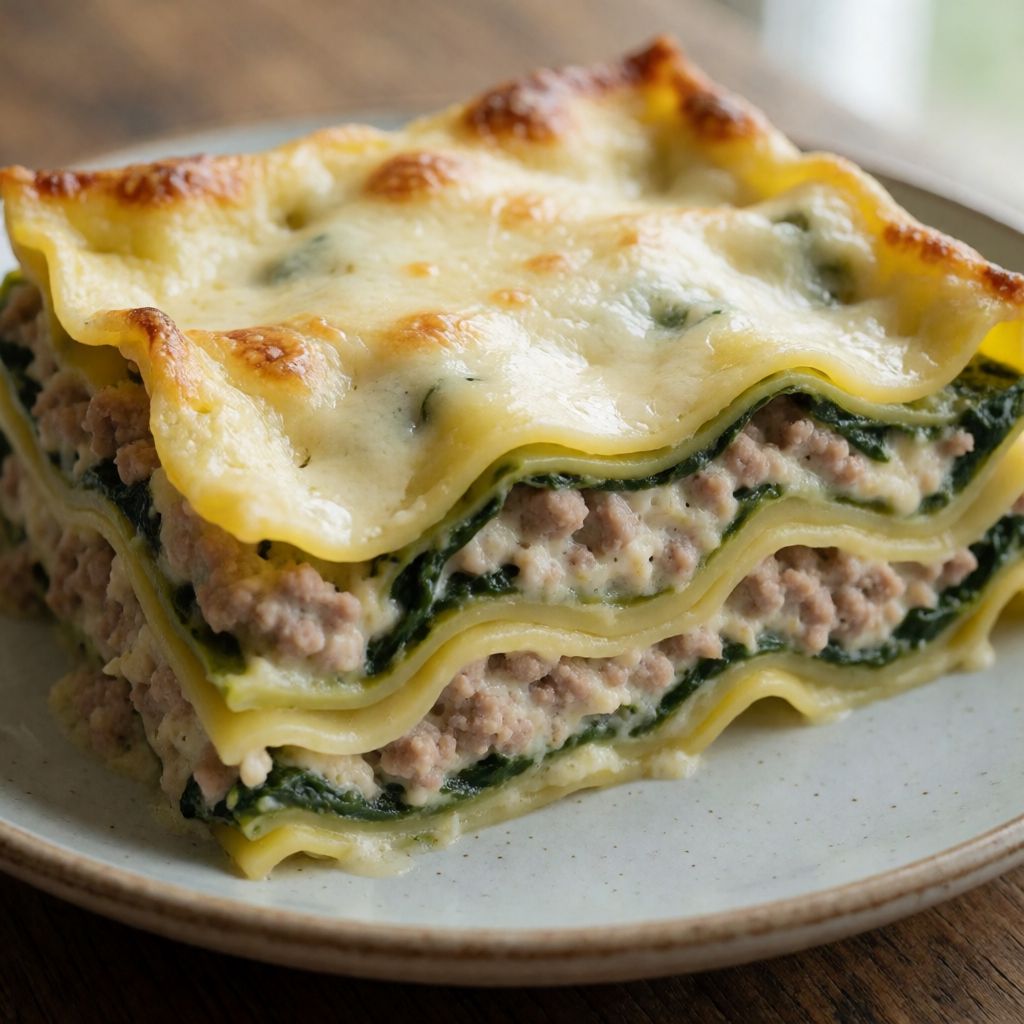
 AI photo
Yellow and Green Lasagne
A layered lasagne of yellow and green pasta sheets with a meat ragù and creamy béchamel.
Labels are worked out automatically from the ingredients and can be wrong. Check the packaging if it matters to you.
Ingredients
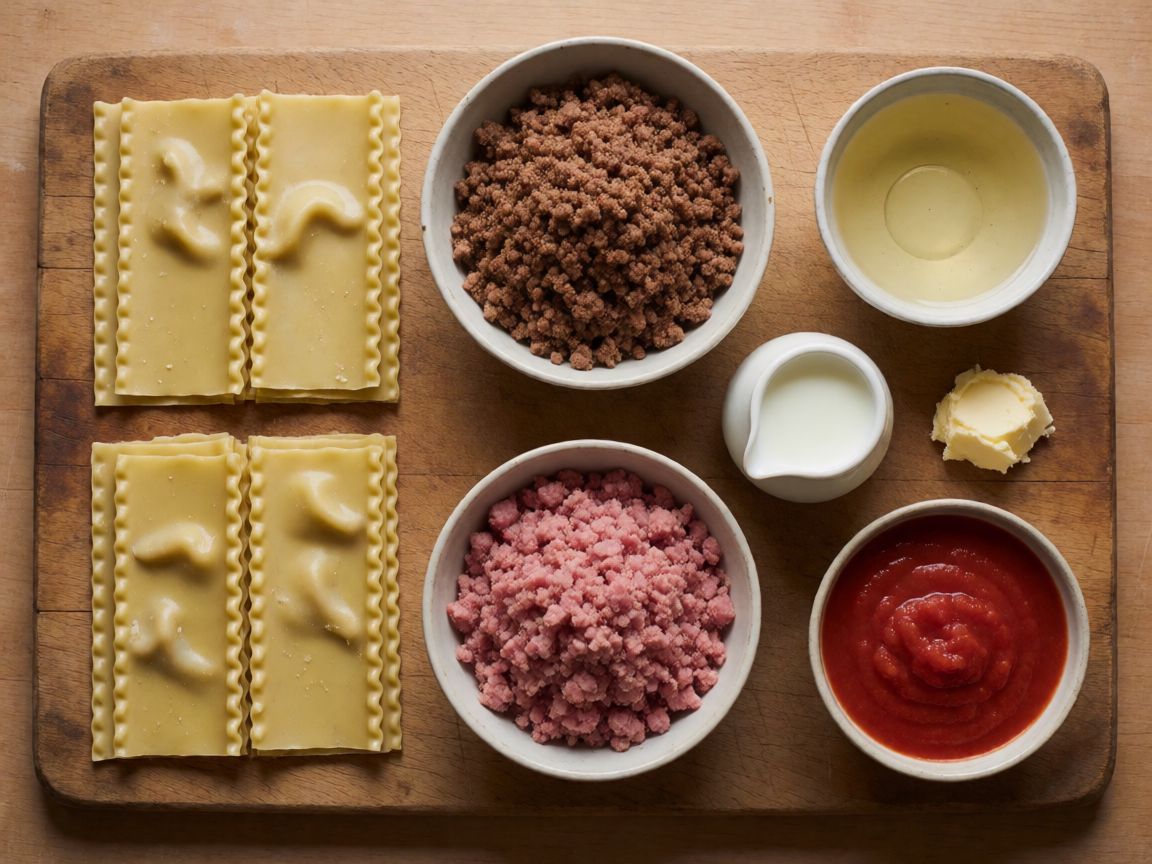
- 6 pcs Lasagne sheets
- 6 pcs Green lasagne sheets
- 300 g Minced veal
- 200 g Minced pork
- 250 ml White wine
- 500 ml Milk
- 50 g Butter
- 700 g Tomato passata
- 1 pcs Carrot
- 1 pcs Celery stick
- 1 pcs Onion
- Nutmeg to taste
- Salt to taste
- 50 g Plain flour
- Parmesan to taste













Steps
Cook the lasagne sheets in salted water, then drain and pat dry on a tea towel.
3 minFinely chop the carrot, celery and onion and gently fry until soft.
Add the minced veal and minced pork, brown slowly, then pour in the white wine.
Add the tomato passata and simmer until the meat is cooked through (at least 71°C internal temperature).
Melt the butter, stir in the flour, pour in the milk and cook, stirring, adding the nutmeg and salt.
In a baking dish, layer the yellow and green lasagne sheets with the ragù, béchamel and Parmesan.
Bake in a fan oven preheated to 180°C.
30 min
This is Bologna's answer to showing off two things at once — egg pasta dyed green with spinach next to its plain yellow sister, and a kitchen that could afford butter, milk and two kinds of meat in the same pot. The stripes aren't decoration for its own sake: they're what a rich house did in the nineteenth century when everyone else was eating pasta with nothing on it. Whether yours comes out right has nothing to do with how fancy the ingredients look on the shelf and everything to do with three small failures of patience: wet pasta, a thin ragù, and a lumpy béchamel.
Wet pasta is the real enemy here, not undercooked meat. Sheets straight out of the pot carry a film of water on them, and that water has nowhere to go once it's sandwiched under sauce in a baking dish — it just sits there and turns your lasagne into soup with a crust. Pat them dry on a cloth, properly, sheet by sheet. It feels fussy. It's the whole difference between layers that hold their shape when you cut them and a dish that collapses into itself on the plate.
The ragù has to lose its looseness before it goes anywhere near the pasta. You're not making a soup to ladle over spaghetti — you're making something thick enough to sit still between sheets without seeping. If it still runs when you tip the pan, it isn't ready; put it back on the heat and wait, don't compensate by piling in more flour later in the béchamel.
The two meats aren't a thrift measure, they're a texture one. Veal on its own browns dry and stringy because it's lean; pork alone turns the whole ragù greasy and sweet. Put them together and the pork's fat carries the veal through the long simmer without letting it seize up. If you've only got one mince in the house, pork mince with a splash more oil in the pan gets you closer than veal alone ever will — veal alone is the one combination I'd actually steer you away from.
Carrot, celery, onion, finely chopped and softened in fat before the meat goes in — this is the base every long-cooked Italian sauce starts from, and it earns its place by dissolving into sweetness rather than staying as vegetable. You're not browning it hard; you want it gone soft and pale, no colour change beyond translucent, because scorched sugars here will sour the whole pot for the next ninety minutes. No celery in the fridge — leave it out rather than substitute something with a loud flavour; onion and carrot alone still carry the dish.
The wine isn't for taste so much as for lifting the browned bits off the base of the pan — that's where flavour was hiding, stuck to the metal, and only an acidic liquid gets it back into the sauce. Any dry white does this job; it doesn't need to be good enough to drink, just acidic enough to do the scraping.
Passata rather than chopped tomatoes because you want body straightaway, not thirty extra minutes reducing watery chopped tomatoes down to the same thing. If passata isn't to hand, tinned chopped tomatoes blitzed smooth get you there, just simmer a touch longer to drive off the extra water they carry.
Butter, flour, milk: that's béchamel, and the single thing that ruins it is cold milk meeting hot roux all at once — the flour seizes into little hard dots before the liquid has a chance to get around each granule. Warm the milk first, or at least add it gradually while you keep stirring, and the lumps simply never form. This is a sauce that punishes you for walking away, even for a minute — treat the whisk like it's attached to your hand. Nutmeg in there isn't tradition for tradition's sake; it's doing the job salt can't, cutting the flatness that plain milk-and-flour always has.
The green sheets are spinach-dyed egg pasta, the yellow are the same dough without it — same cooking, same texture, the colour split is purely so the dish shows both halves of itself when you cut in. If you can only find one colour, use it for the whole thing; you lose the stripe, not the mechanism. Either way, don't over-boil them — three minutes is there to make the sheets pliable enough to layer, not to cook them through, because they finish cooking inside the dish, under sauce, in the oven's steam. Parmesan on top for salt and for the brown it goes once the oven's heat reaches it — any hard, well-aged grating cheese does the same job if Parmesan's not in the shop that day.