
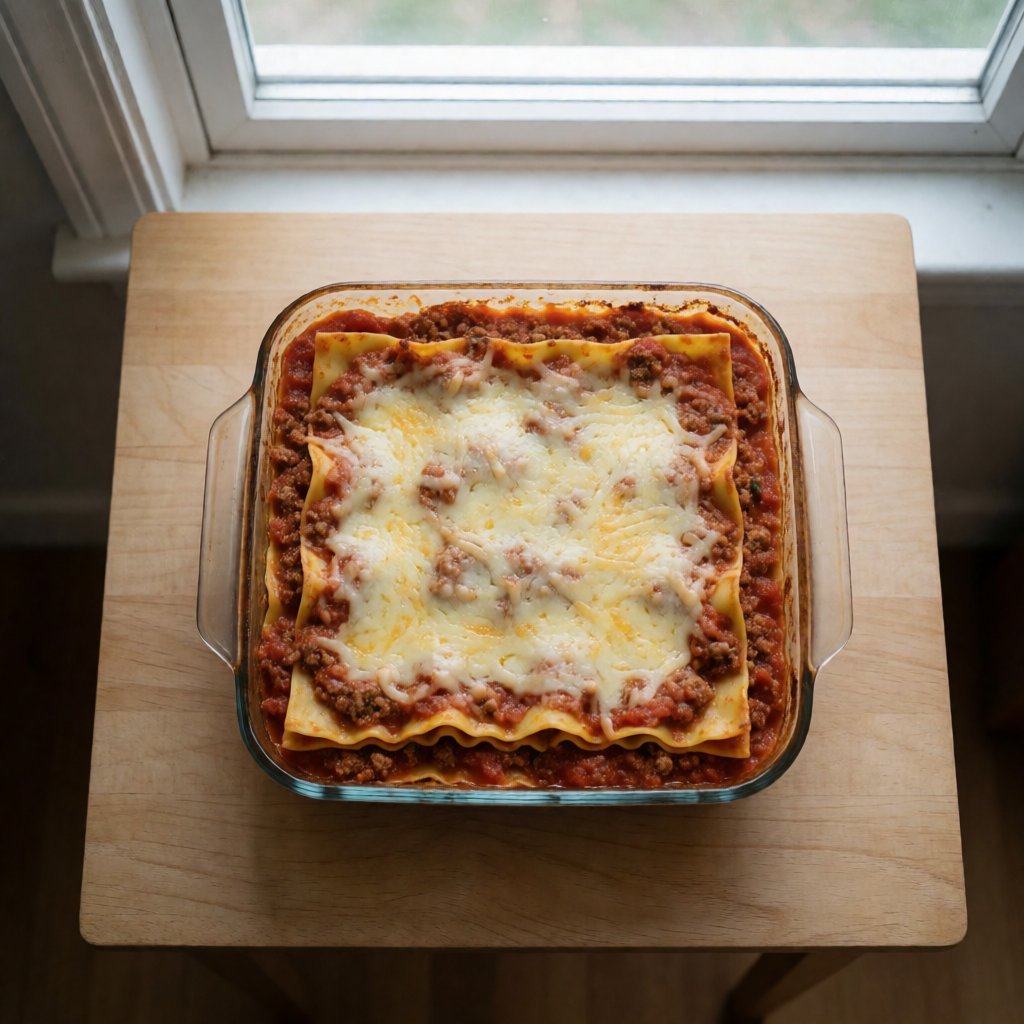
 AI photo
Classic Beef Lasagne
A classic beef lasagne with a creamy béchamel and melted cheese, baked until golden.
Labels are worked out automatically from the ingredients and can be wrong. Check the packaging if it matters to you.
Ingredients
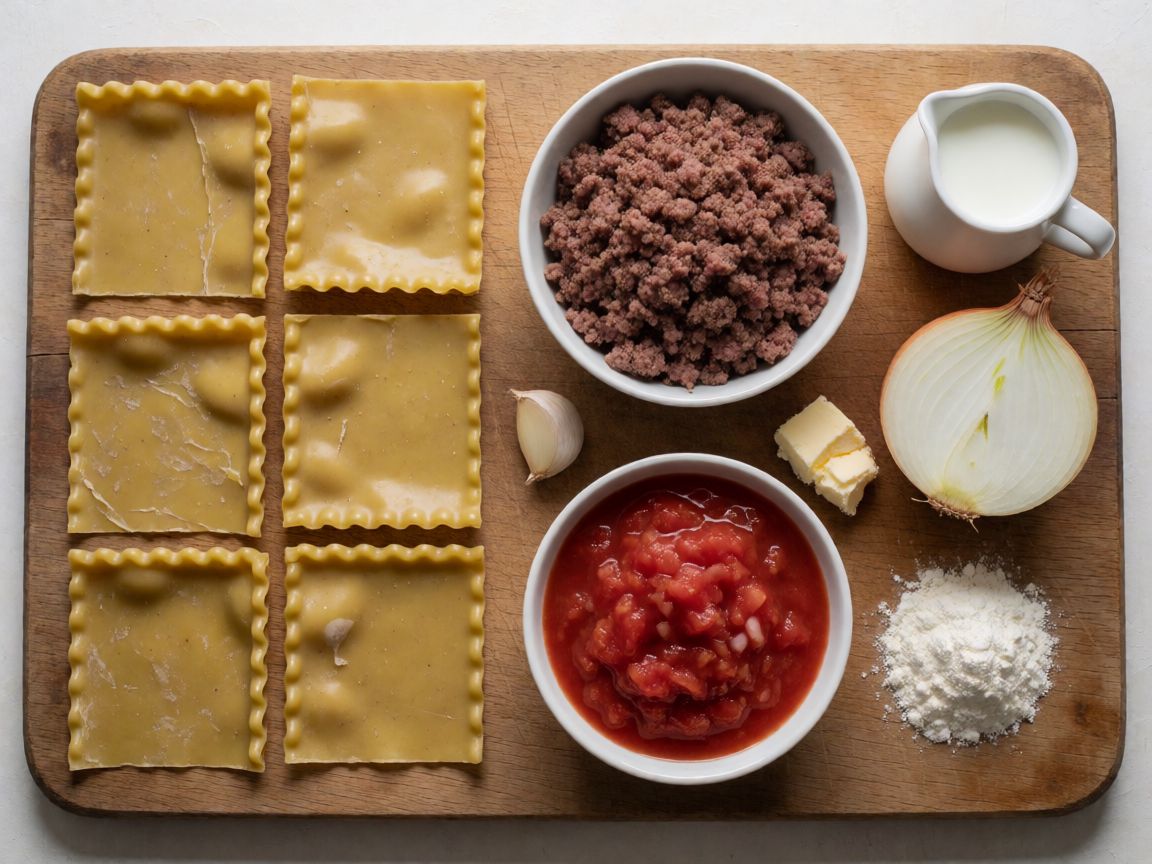
- 90 g lasagne sheets 6 sheets, no pre-cooking required
- 250 g beef mince
- 250 g chopped tomatoes
- 0.5 pcs onion finely chopped
- 1 clove garlic
- 1 pinch salt to taste
- 300 ml milk for the béchamel
- 20 g butter for the béchamel
- 20 g plain flour for the béchamel
- 1 pinch nutmeg to taste
- 100 g mozzarella or a hard cheese











Steps
Mix the beef mince with the tomatoes, onion, garlic and salt; cook the béchamel on the stove.
In a baking dish, layer: a little béchamel, a lasagne sheet, the meat sauce, béchamel, cheese — repeat to the end; finish with béchamel and cheese on top.
Cover the dish with foil and bake in the oven for 35 minutes.
35 minRemove the foil and bake for a further 10 minutes, until the centre reaches 71°C.
10 minTake the dish out of the oven.
Forget the word casserole. What you're building here is a rehydration engine: dry pasta sheets going from brittle to soft using nothing but the moisture trapped around them. There's no water bath, no pre-boil — the sheets steal their liquid from the sauces stacked against them, top and bottom. That's why the béchamel sits under and over every sheet: it's not decoration, it's the delivery system.
What decides whether this works is the thickness of your two sauces. The béchamel should coat the back of a spoon in a thin film and drip off slowly — if it stands up like porridge, it won't give the pasta enough to drink and you'll bite into a chalky centre. The meat sauce needs to stay loose and wet from the tinned tomatoes, not reduced to a dry mince. Too wet, though, and the whole stack slides when you cut it. You're aiming for a sauce that pools slightly when spooned, not one that holds a shape.
The bake happens in two acts for a reason. Foil on, the dish is a sealed little steam room — that's the phase doing the actual cooking of the sheets and the raw meat inside them. Foil off, you're doing something different: driving off surplus liquid so the layers tighten and the cheese gets the dry heat it needs to blister and go gold rather than just melt into a puddle. The internal 71°C isn't a suggestion — mince isn't a solid piece of muscle, it's meat worked through with air and surface area from the grinder, so the whole mass has to clear that line, not just the crust.
Beef mince: look for something around 15–20% fat if the label gives it, because that fat is what keeps the sauce glossy through the uncovered phase. Go too lean and the second ten minutes — the drying phase — will leave you with grainy, dusty mince instead of a sauce that still moves. You don't need extra oil in this pan; the fat you want is already in the meat.
Chopped tomatoes: tinned, not fresh, unless you're prepared to deal with the extra water fresh tomatoes bring. Their job is acidity, cutting through the fat of the beef and the richness of the cheese on top — without it the dish turns heavy and flat. Any crushed or pureed tomato with no added sugar does the same job; passata is the obvious stand-in.
Onion and garlic: there's no separate frying step here — they go in raw with the meat and tomatoes and soften as the sauce simmers. That's fine at this scale; half an onion isn't asking for caramelisation, just for sweetness to leach out slowly into the liquid as it cooks.
The béchamel is the one bit of actual technique in this dish, so respect the order: butter melted, flour stirred in and cooked briefly until it loses its raw, pasty smell — that smell is the tell that the flour hasn't been cooked through, and it's the real cause of a béchamel that tastes of wallpaper paste. Only then does the milk go in, gradually, whisked — the butter coats the starch so it swells evenly instead of clumping. Nutmeg isn't there for flavour in the showy sense; it cuts the flatness of warm milk and butter, nothing more, so a pinch is plenty.
Mozzarella, or any cheese that melts without weeping too much water and will take colour under dry heat rather than just going rubbery — mature cheddar does this well and is the obvious swap in a British kitchen, with a sharper flavour than mozzarella but the same job done. A soft, wet fresh mozzarella ball will dump extra liquid onto your top layer right when you want it drying out, so reach for the firmer block type if you have a choice.
On the sheets themselves — "no pre-cooking required" only works because they're thin and there's sauce meeting them on both faces in a sealed dish. If your dish is shallow and foil won't tent properly over it, use a second sheet of foil or even an upturned plate as a lid substitute; the point is sealing in steam for the first phase, not the material doing it. And once it's out of the oven, give it ten minutes before cutting — that's not laziness, that's the béchamel setting enough to hold a slice together instead of running across the plate the moment you lift it.
·