
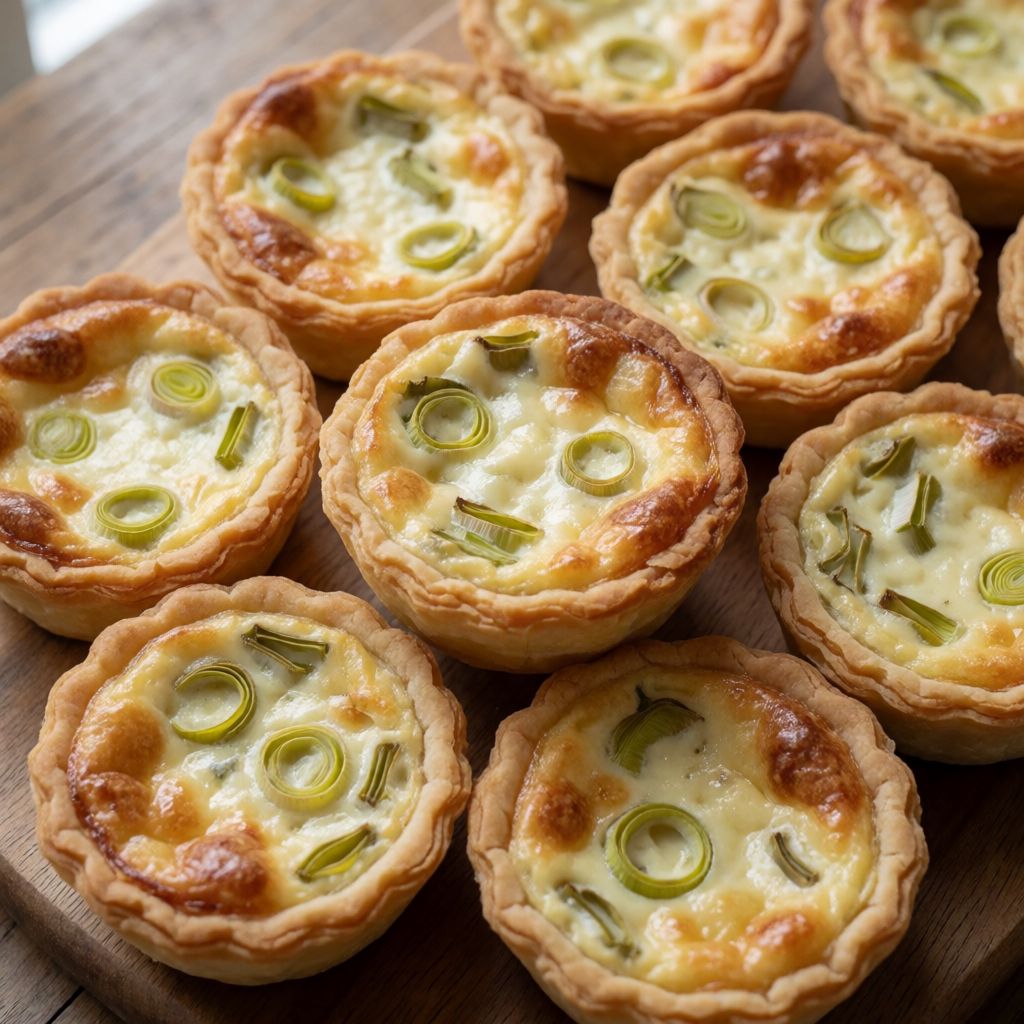
 AI photo
Mini Leek and Gruyère Quiches
Buttery pastry cases filled with tender leeks, Gruyère and a rich egg custard, baked until golden.
Labels are worked out automatically from the ingredients and can be wrong. Check the packaging if it matters to you.
Ingredients
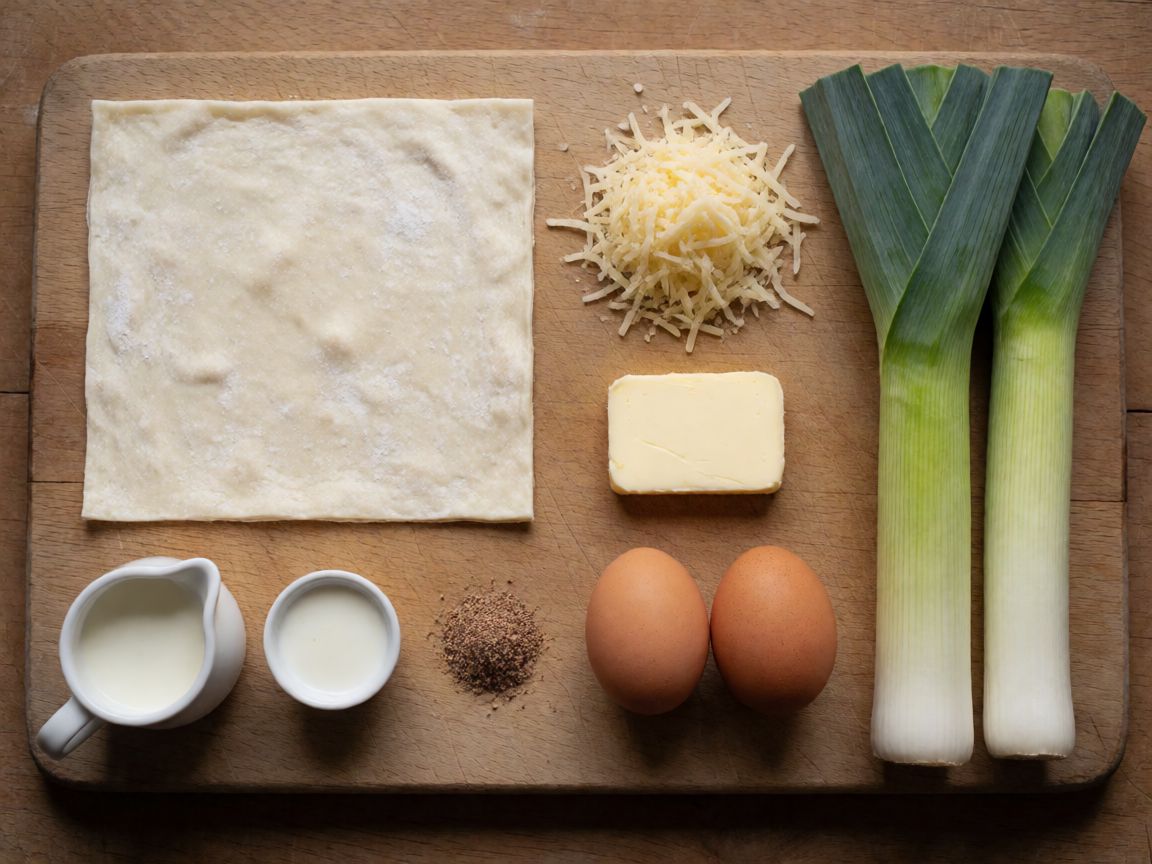
- 1 pcs Puff pastry
- 20 g Gruyère
- 2 pcs Leek
- 1 pcs Butter slice
- 2 pcs Eggs
- 200 g Double cream
- pinch Nutmeg to taste
- pinch Salt to taste
- pinch Black pepper to taste







Steps
Slice the leeks into very thin rings, using both the white and green parts.
Melt the butter in a non-stick frying pan and add the leeks.
Cook gently so the leeks become soft without browning.
Let the leeks cool.
Crack the eggs into a bowl and whisk them well with a fork.
Add the double cream, a pinch of nutmeg, salt and black pepper.
Take the pastry from the fridge, unroll it and roll it out.
Using an 8 cm cutter, cut circles from the pastry.
Line greased tartlet tins with the pastry circles.
Fill the tartlets with the leeks, Gruyère and the egg and cream mixture.
Bake the mini quiches in an oven preheated to 200°C for 25 minutes.
25 minRemove from the oven, let cool and serve.
A quiche this small is really just an egg custard with a job: hold leeks and cheese still long enough for pastry to turn crisp underneath. The whole dish stands or falls on two things happening separately before they ever meet in the tin — the leek has to lose its water and sharpness in butter, low and slow, and the custard has to be mixed properly so it sets smooth instead of curdling into scrambled egg with cream.
Some say leeks need high heat to cook fast — no, because leek is mostly water held in tight layers, and high heat just browns the outside while the inside stays raw and bitter. Gentle heat, lid or plate over the pan, lets that water steam the leek from within until it goes soft and sweetly oniony rather than sharp. Skip this and your quiche filling will weep liquid into the pastry base, and you'll get a soggy bottom no amount of blind-baking fixes.
The egg-to-cream ratio here is what makes it a custard and not an omelette with cream on top: two eggs loosen and bind two hundred grams of cream, and that's what sets at 200°C into something that holds a slice without leaking. Push the egg up too far and it turns rubbery; push the cream up too far and it never sets at all — it stays sauce.
Four small tartlets, not one big tart, because small ones cook faster at the edges and the centre, so the custard sets evenly before the pastry has a chance to burn. That's not fussiness, that's physics working in your favour on a domestic oven that runs less evenly than a professional one.
Puff pastry here is doing a supporting job, not a starring one — it needs to be thin enough to crisp under a wet filling without the quiche becoming a pastry-dominant dish. Shop-bought is completely fine; nobody making four mini quiches on a Tuesday is laminating butter into dough themselves, and puff pastry's real virtue — layers of butter trapped between flour — only shows itself properly in its own right when there's no custard sitting on top weighing it down anyway. If you only have shortcrust, use it; it won't puff, but it will hold its shape better under liquid filling, which for a tartlet this small is arguably the more useful trait.
Leek, both white and green parts, gives you the full range of flavour the vegetable has to offer — the white is mild and sweet once cooked, the green is where more of the oniony punch lives. Slicing it into very thin rings matters because leek cooks by surface area meeting heat; thick rounds stay raw-centred no matter how patient you are. If leek isn't available, a mild onion or a few shallots cooked the same slow way will get you close, though you lose that faint sweetness leek has that onion doesn't.
The butter you melt the leek in should have no strong flavour of its own beyond butter itself — this isn't the place for a cultured or heavily salted one, since it's meant to coax moisture out of the leek, not compete with it. Any neutral fat works if you're out of butter — a flavourless oil will do the softening job, you just lose the last bit of richness butter folds into the leek as it cooks down.
Gruyère brings a nutty, slightly sharp melt that holds its structure in the oven rather than turning to oil, which is exactly what you want scattered through a custard rather than pooling at the bottom. Any firm, good-melting cheese with some sharpness substitutes honestly — a mature Cheddar, since you're in the UK and it's sitting in every fridge, does the job without pretending to be Gruyère; it'll just taste more assertively British and less nutty.
Double cream is chosen for fat content, not tradition — it's rich enough to set into a dense, sliceable custard rather than a loose, weepy one. Thinner cream — single, or even whole milk — will still set with egg, but the custard will be softer, closer to a savoury flan edge than a firm quiche filling, so don't expect the same hold when you cut into it.
Nutmeg is there for the same reason it turns up in béchamel and other egg-and-dairy mixtures — it cuts the richness of cream with something warm and slightly sharp that you taste only as "something's right here," never as nutmeg itself. A pinch is patience too: more than a pinch and you'll know exactly what it is, which defeats the point.