
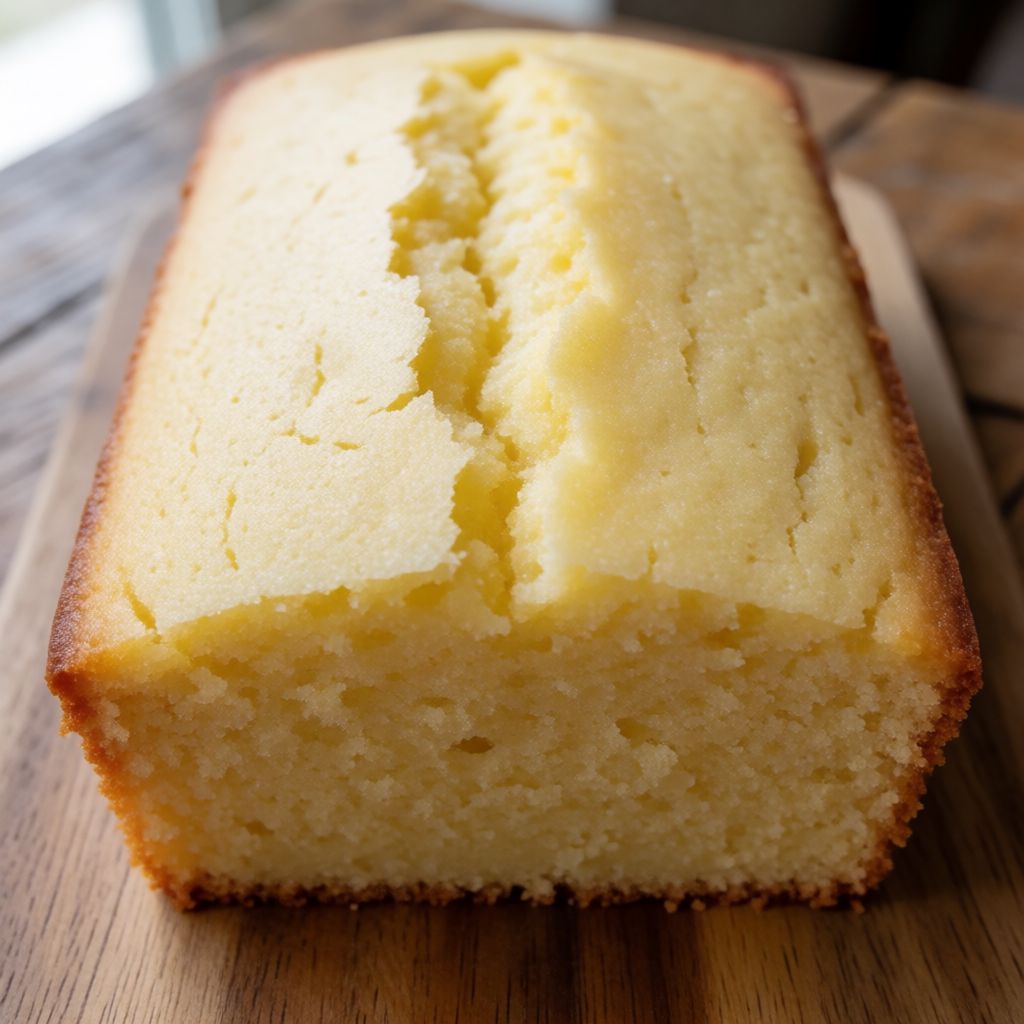
 AI photo
Lemon Loaf Cake
A soft lemon loaf cake, light and fluffy, finished with a dusting of icing sugar.
Labels are worked out automatically from the ingredients and can be wrong. Check the packaging if it matters to you.
Ingredients
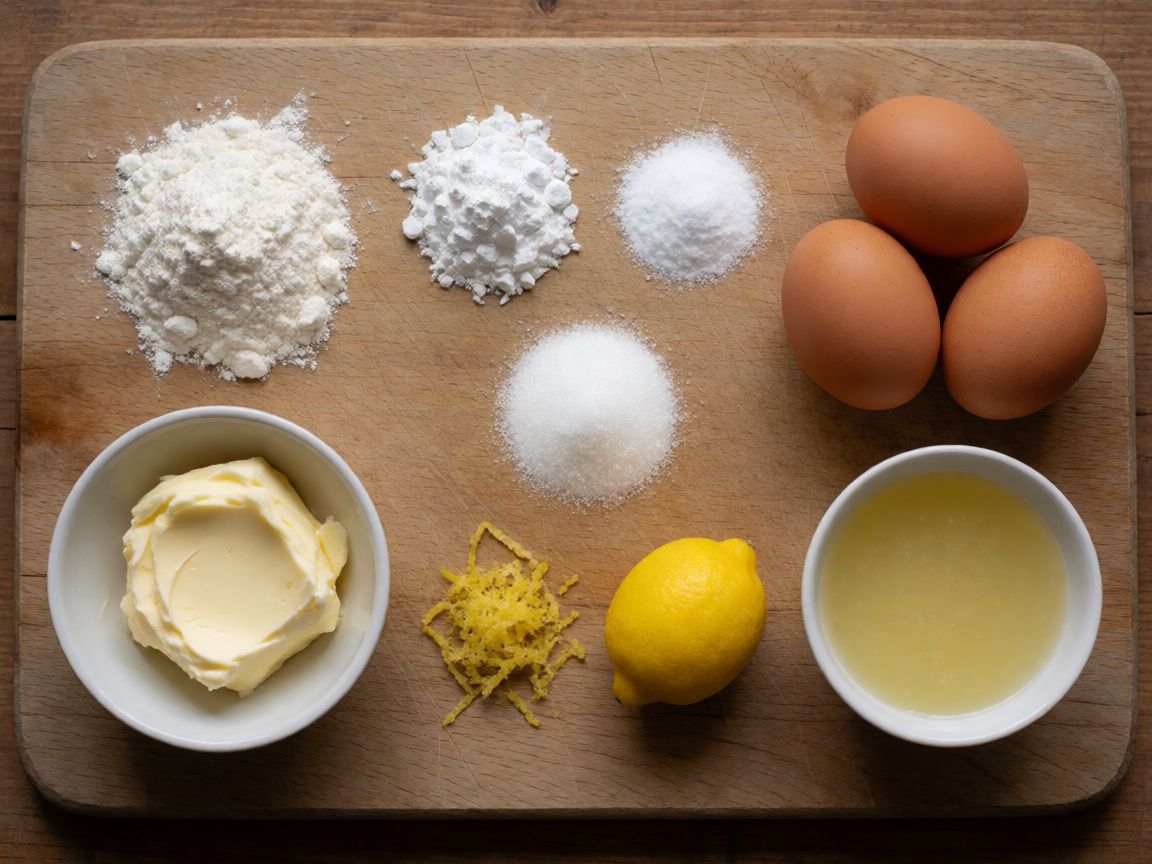
- 200 g Plain flour
- 30 g Potato starch
- 16 g Baking powder
- 160 g Caster sugar
- 150 g Butter softened
- 3 pcs Eggs
- 1 pcs lemon zest from a well-washed, preferably unwaxed lemon
- 50 g Lemon juice
- 125 ml Yogurt
- 1 tbsp Icing sugar for dusting










Steps
Beat the softened butter at room temperature with the sugar using a mixer until smooth and fluffy.
Add the eggs one at a time, mixing thoroughly before adding the next.
Sift the flour and fold it into the mixture in parts, stirring until smooth.
Pour in the lemon juice, then add the sifted potato starch and baking powder.
Add the lemon zest, then pour in the yogurt and mix until smooth.
Pour the batter into a loaf tin, greased with butter and dusted with flour.
Bake in a preheated fan oven at 175°C.
52 minRemove the finished cake from the oven and leave to cool completely.
Dust with icing sugar before serving.
A lemon loaf is really just butter cake wearing citrus as a coat. The whole thing turns on two things: how much air you beat into the butter at the start, and whether you let the zest do its job before the acid gets involved. Get those right and you have something that rises evenly and tastes of lemon right through, not just on top where the icing sugar sits.
The butter-and-sugar beating is not a formality. Caster sugar has sharp edges — look at it under light and you'll see the crystals are small but still crystals — and when you drag butter against them with a mixer, those edges cut thousands of tiny air pockets into the fat. That's your first rise, done mechanically, before baking powder ever gets involved. Some say you can skip straight to "mix everything together" with a food processor — no, because then the sugar just dissolves into the fat instead of tearing it, and you lose that aerated structure. The fluffy, pale look you're after is the visual proof the air is in there, not a cosmetic stage.
Potato starch alongside the flour is doing a specific job: it has no gluten, so it dilutes the flour's gluten-forming power and keeps the crumb short rather than chewy. A British loaf cake made with flour alone tends toward bread-like density once it's cooled a day; the starch keeps it tender for longer. If you don't have potato starch, cornflour does the same dilution job — same principle, no gluten, just interrupting the flour's structure.
The baking powder works alongside the air already beaten into the butter — it's the chemical rise that takes over once the oven heat kicks the reaction off, not the only rise, which is why skipping the beating step and relying on baking powder alone gives you a cake that's tall but coarse, full of big irregular holes instead of the fine, even crumb you actually want. 16 g for 200 g flour is a fairly generous ratio for a British kitchen used to seeing a teaspoon or two per cake — this loaf wants the lift because the batter is heavy with butter and yogurt.
On eggs: adding them one at a time and beating each one in before the next is about keeping the butter-sugar emulsion from splitting. Butter is fat, egg is mostly water, and if you dump three eggs in at once the water can overwhelm the fat before it's had a chance to bind, and you get a curdled-looking mixture that bakes into a denser, slightly greasy loaf. If it does split on you, a spoonful of the measured flour beaten in will usually rescue it — that's a kitchen fix worth knowing, not a step you need to add on purpose.
Yogurt earns its place for two reasons: fat and acid. The fat keeps the crumb moist for days — this loaf, unlike a sponge, is meant to sit on the counter under a cloth for a few days and still be good, which is rather the point of a loaf cake as a format: it was always the "keeps well, slices well, travels well" cake, the one you'd have with the Sunday afternoon tea rather than serve formally. The acid in yogurt also reacts gently with the baking powder, helping the rise along. If you've only got soured cream or buttermilk in the fridge, either works on the same logic — fat plus acid, nothing more mysterious than that.
The lemon juice, 50 g of it, is doing flavour and a little extra acid-liquid balance, but go carefully if you're squeezing by eye rather than weighing: too much thins the batter and you lose structure, which is why the recipe asks for juice before the starch and powder go in — the dry ingredients that follow soak up any excess liquid and steady the mix again.
On the oven: 175°C fan is a genuinely moderate heat, chosen so the middle of a loaf — which is thick and slow to heat through — can cook without the outside burning first. A domestic fan oven runs more evenly than a conventional one, which matters here because a loaf tin is deep and narrow, and unevenness shows up as a cake that's done at the edges and raw in the centre. 52 minutes is the baker's starting point, not a deadline — the real test is a skewer or thin knife pushed into the centre coming out clean, or the top springing back when you press it lightly rather than leaving a dent. If your oven runs hot or your tin is a different size, trust the skewer over the clock.
Letting it cool completely before dusting with icing sugar isn't fussiness — a warm cake sweats, and icing sugar on a warm surface dissolves into damp patches within minutes instead of sitting as a clean white layer. Patience here costs you nothing but ten more minutes with the kettle on for your tea, and it's the difference between a loaf that looks dusted and one that looks like it's been left out in the rain.